Skip to content

Your browser is older than this page. The catalogue still reads here: the list, the filter and the cards all work. Your browser will mark filter choices with plain checkboxes, as best it can. Update your browser to see the page as it was built.

Museums near Kolomenskoye

We do not ask your browser where you are. We collect no data about people. Place the point on the city map yourself — we will find the nearest museums that suit your preferences.

Distance
Filter
How much time
We count what is left today: from now — or from opening, if the museum has not opened yet — to the last admission. The closing hour is of no use for such a count: past the last admission nobody is let in. Where the last admission is not established we allow half an hour: erring towards «you will not make it» costs less than sending someone to a locked door.
When I go
We show those open on at least one of the days chosen. Today is Friday.
Who with
One thing is asked here: whether a child will find it interesting inside. The ease of the way and of the rooms is a question of another kind, and it stands under “Access”. In the entry this shows as a mark, and the age in the note beside it.
What to see
Access
The accessibility of a museum and the accessibility of the way to it are different things, and we keep them apart. It happens that everything inside is arranged faultlessly while the door itself cannot be reached in a wheelchair; it happens the other way round too.
How valuable
What sets it apart
Showing 24 museums

Drag the pin or press the map.

open nowclosed nowhours not known

Map — OpenStreetMap

Nearest museums · 24
History · since 1859

The Romanov Chambers

significant
The Romanov Chambers
Ludvig14, CC BY-SA 3.0 · Wikimedia Commons
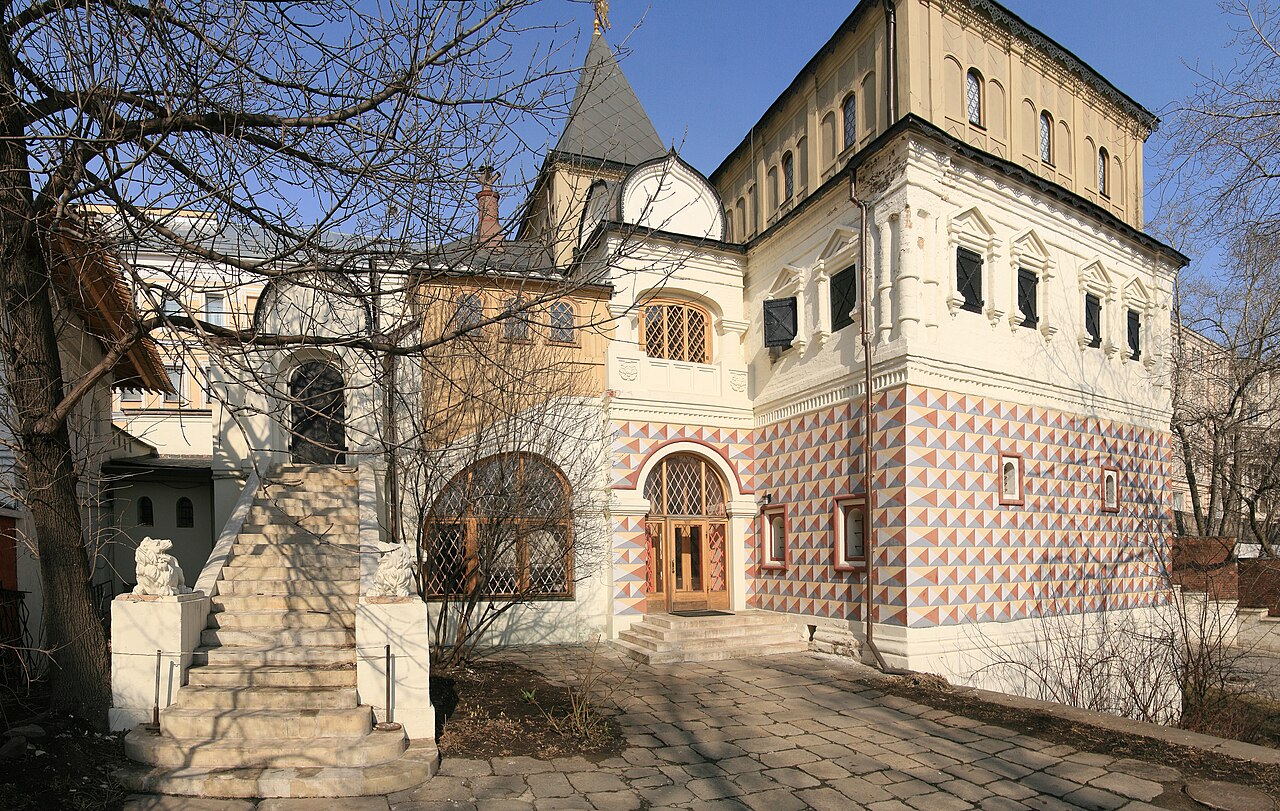
One of the first museums in Russia: it opened in 1859, thirteen years before the Historical Museum, and opened already as a reconstruction of boyar life — an idea unheard of at the time. What is to be looked at is not authenticity down to the nail but the conception itself: how the middle of the nineteenth century pictured the seventeenth, and what came of it. Barry and Pugin were building Westminster in those same decades, and the case is the same — a century imagining an earlier one and building it in earnest. The collection meanwhile is real: furniture, vessels, textiles, tiles. Together with the Old English Court two steps away, this is the best pair in Moscow about the city before Peter.

The sixteenth-century undercroft, the one genuine part of the building. The interiors recreated by Richter in the 1850s: the dining chamber, the boyarynya’s room, the light room. Tiled stoves, chests, vessels and textiles of the seventeenth century.

9.7 km from here · Varvarka Street 10 ·
· No. 77
History · since 1994

The Old English Court

significant
The Old English Court
O.Bragina, CC BY-SA 3.0 · Wikimedia Commons
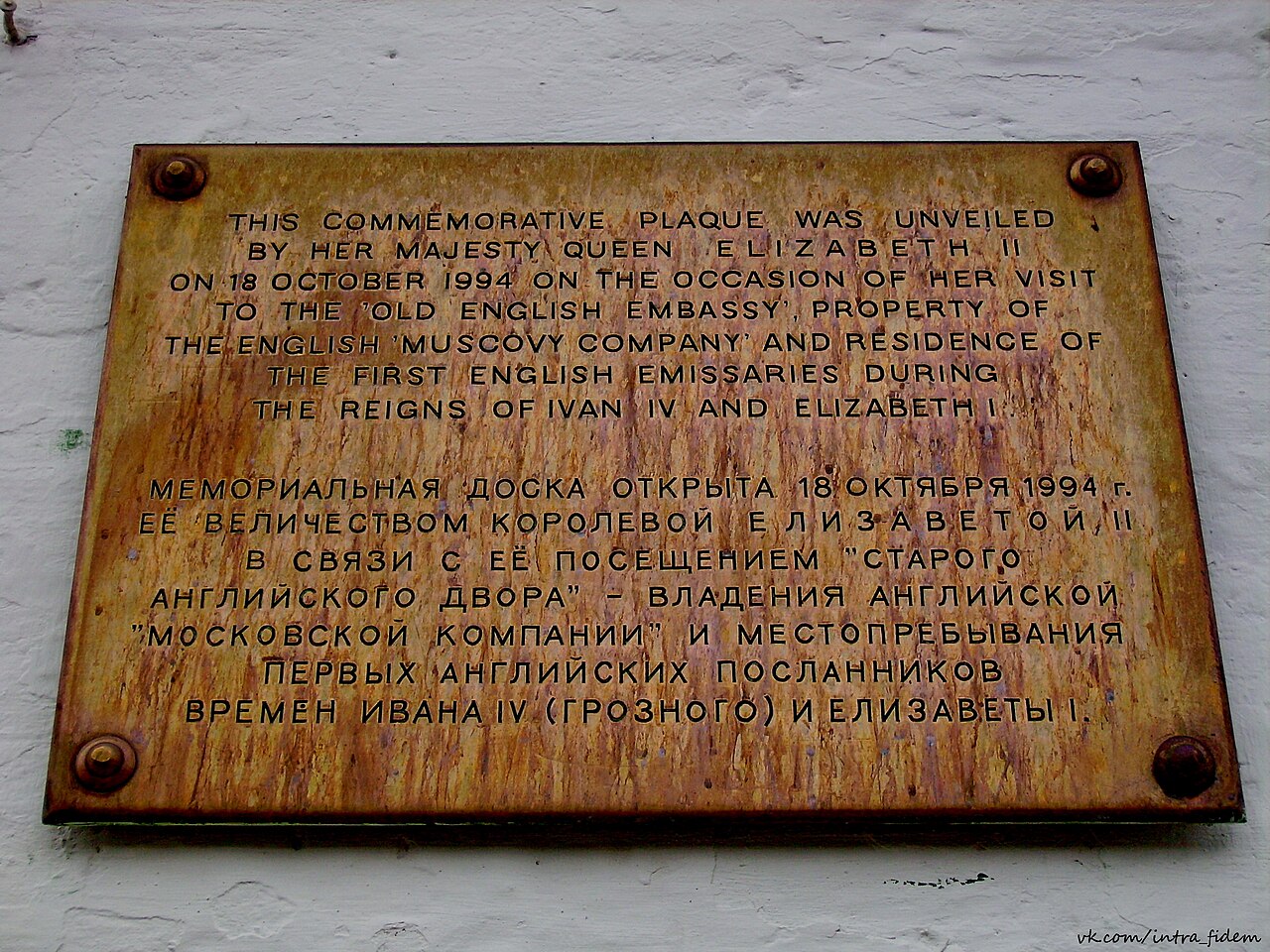
The oldest surviving secular building in Moscow. The value is in the vaults themselves: almost no 16th-century interiors are left in the city, and these were recovered by Baranovsky, the restorer who saved half of it.

The Treasury Chamber with its 16th–17th-century interior and the original vaults; the display on Russian–English trade and finds from the Zaryadye digs.

And we came to the Mosco the 4. day of October, and were lodged that night in a simple house: but the next day we were sent for to the Emperour his secretarie…
George Killingworth, 1589 in full
9.7 km from here · Varvarka 4a (Zaryadye Park) · ·
· No. 18
History · since 1806

The Armoury Chamber

world-class
The Armoury Chamber
Ludvig14, CC BY-SA 3.0 · Wikimedia Commons
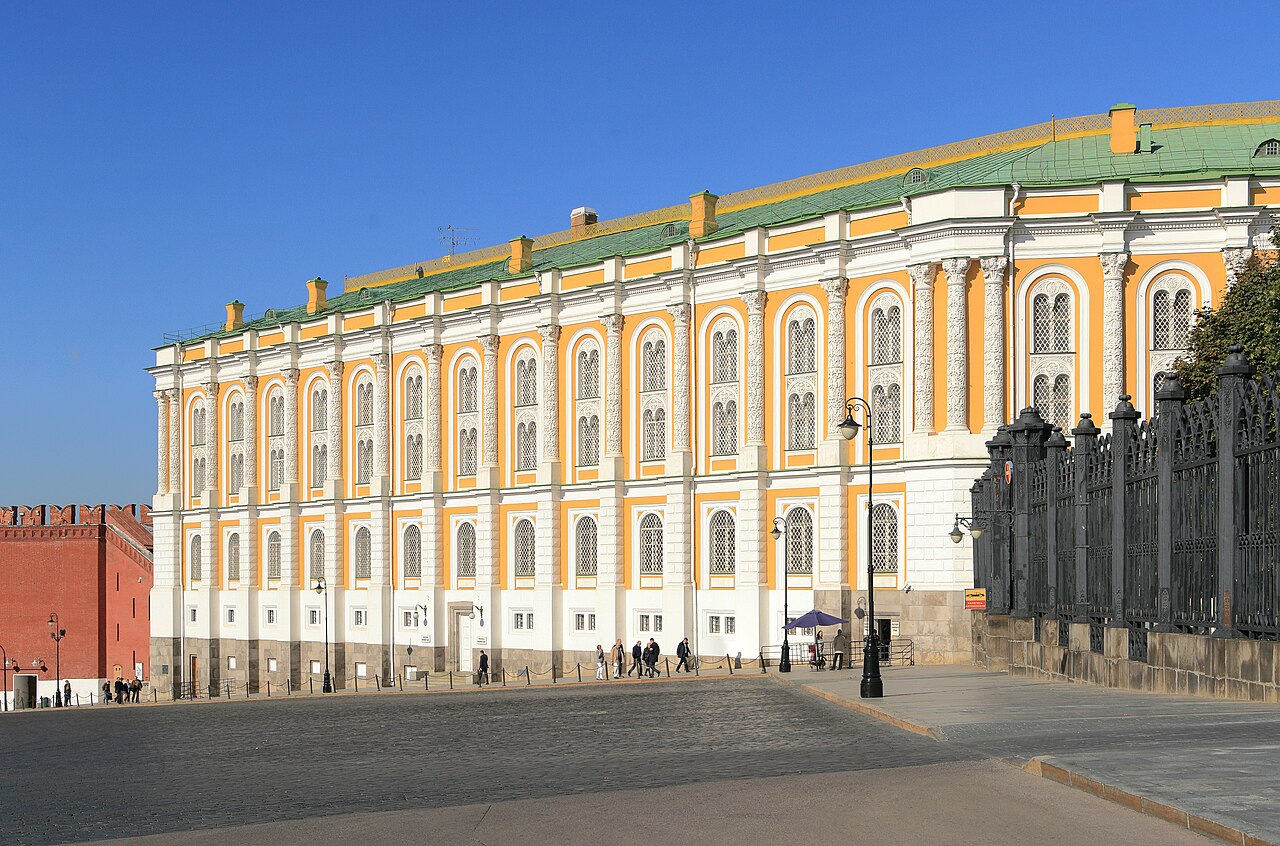
A treasury formed by keeping rather than by collecting: things entered as the sovereign’s property or as an embassy gift, and so came through where in Europe they went to the crucible. English silver of the sixteenth and seventeenth centuries stands here more fully than in England itself — the royal plate at home was melted under the Commonwealth, while what had been sent to Moscow was never touched. Neither the Tower nor the Victoria and Albert can be as complete about that English century as this room in Moscow. There is no painting here at all: this is a chamber of objects.

The Cap of Monomakh and the double throne of the boy tsars Ivan and Peter. Tudor and Stuart silver, a holding with no equal anywhere. Fabergé Easter eggs. Icon covers, panagias and chalices of pre-Mongol Rus. The carriage rooms: coronation coaches of the eighteenth century.

9.8 km from here · The Moscow Kremlin (entrance through the Kutafya Tower) · ·
· No. 59
Science and nature · since 1951

MSU Botanical Garden

for enthusiasts
MSU Botanical Garden
TanyaChu, CC BY-SA 4.0 · Wikimedia Commons
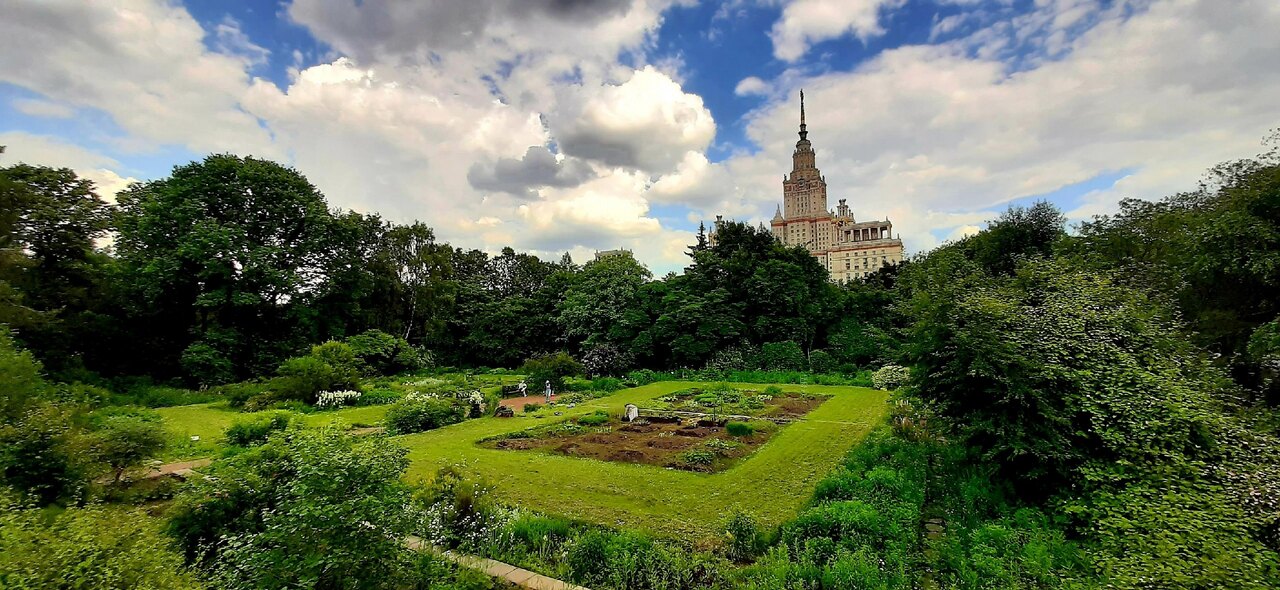
The garden was laid out in 1951 together with the new university buildings on the Lenin Hills, and it is kept as a collection: every holding has its name, its count of varieties and its year. The flowering part by the gate is open to walk through on your own — lilacs, irises, roses, peonies, perennials. There are more than two hundred and fifty varieties of lilac here and about seven hundred irises; the tree peonies were bred in the university itself. Every plant here has its own name and its own provenance.

Lilacs: more than two hundred and fifty varieties, Russian and foreign; the display plot was laid out in 1974. Irises — about seven hundred, from bearded to bulbous. Roses, more than two hundred varieties. Peonies, more than three hundred, among them tree peonies bred in the university itself. Daylilies, about two hundred varieties, from the old ones to the present.

9.9 km from here · Leninskie Gory 1, bldg 12 · ·
· No. 99

5 museums have no point set. They are not in this count.