Your browser is older than this page. The catalogue still reads here: the list, the filter and the cards all work. Your browser will mark filter choices with plain checkboxes, as best it can. Update your browser to see the page as it was built.
We do not ask your browser where you are. We collect no data about people. Place the point on the city map yourself — we will find the nearest museums that suit your preferences.
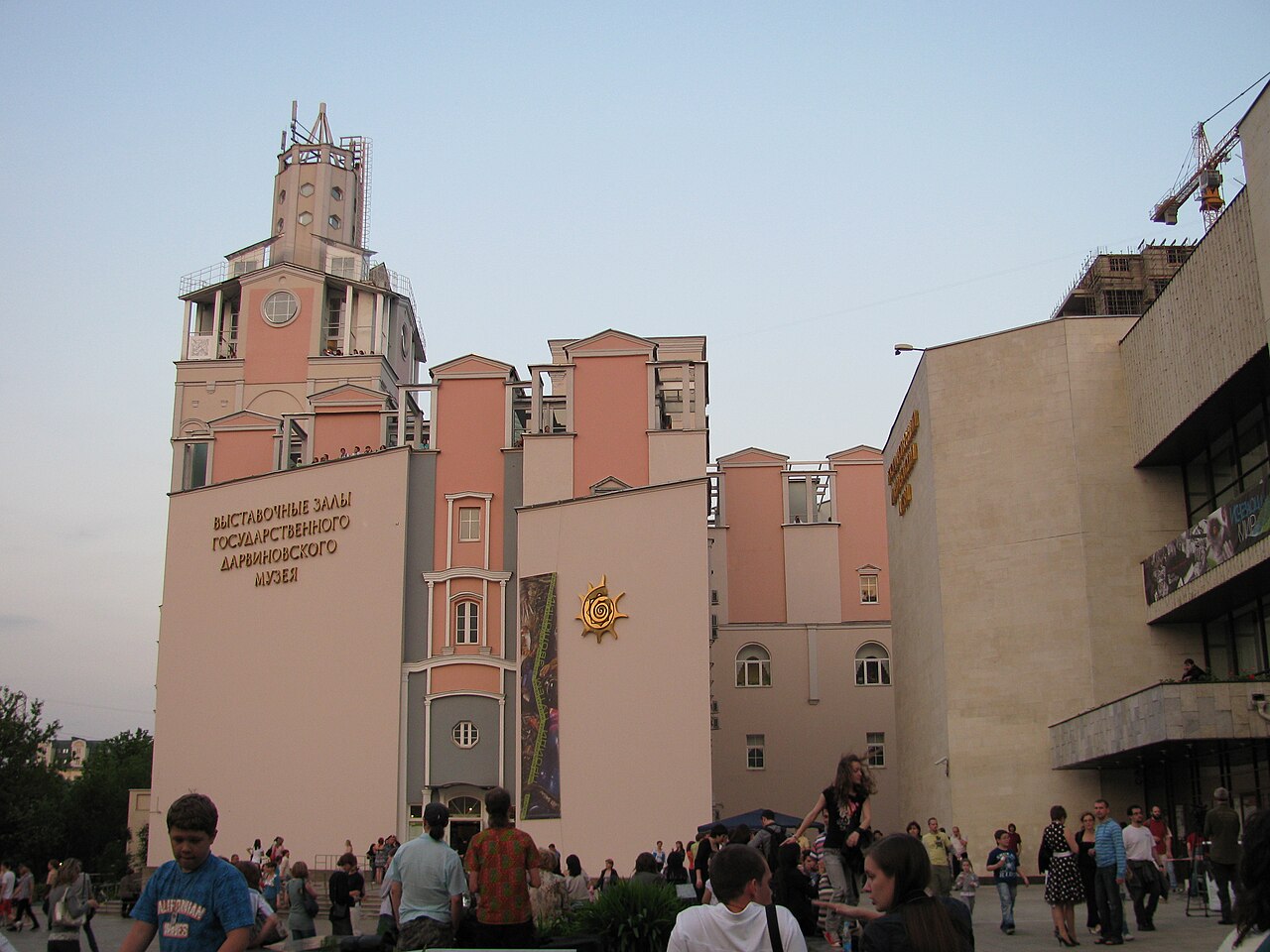
The oldest museum of evolution in Russia, built around an idea rather than around a case of stuffed animals: Kots collected proofs of variability, and the display serves the proof. It cannot match Vienna or Berlin for material, but its way of arguing stands on its own.
Early 20th-century taxidermy by Filipp Fedulov, among the finest anywhere; the collection of albinos and melanists gathered by Kots as visible proof of variability; the Living Planet hall.
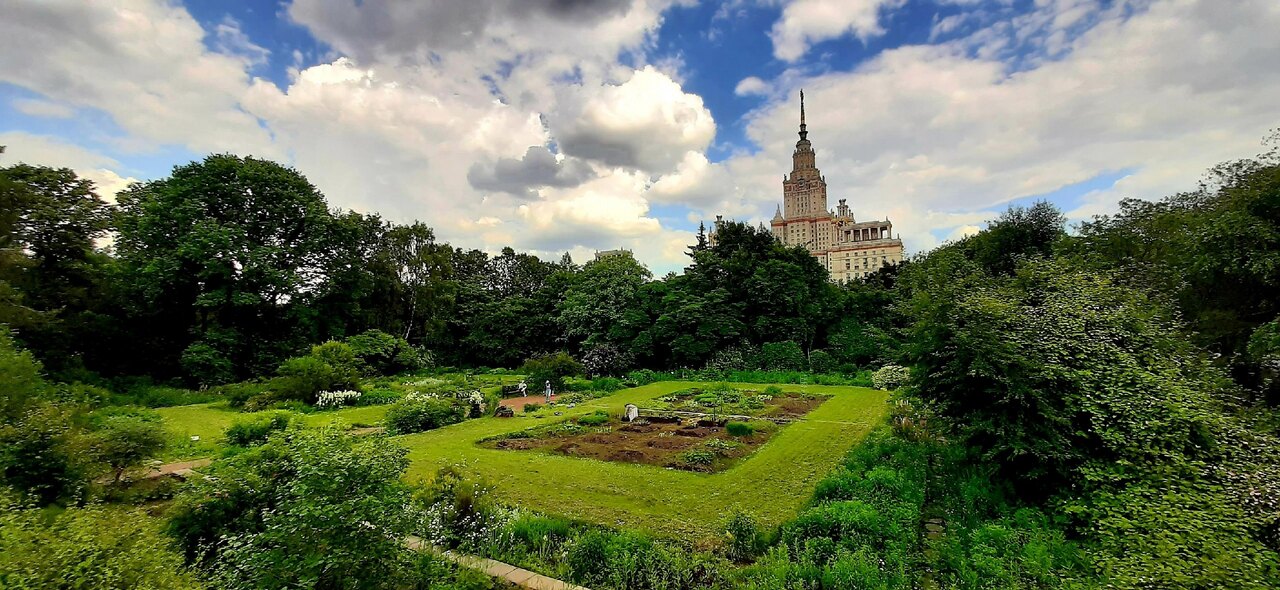
The garden was laid out in 1951 together with the new university buildings on the Lenin Hills, and it is kept as a collection: every holding has its name, its count of varieties and its year. The flowering part by the gate is open to walk through on your own — lilacs, irises, roses, peonies, perennials. There are more than two hundred and fifty varieties of lilac here and about seven hundred irises; the tree peonies were bred in the university itself. Every plant here has its own name and its own provenance.
Lilacs: more than two hundred and fifty varieties, Russian and foreign; the display plot was laid out in 1974. Irises — about seven hundred, from bearded to bulbous. Roses, more than two hundred varieties. Peonies, more than three hundred, among them tree peonies bred in the university itself. Daylilies, about two hundred varieties, from the old ones to the present.
9.1 km from here· Leninskie Gory 1, bldg 12 ··
· No. 99
5 museums have no point set. They are not in this count.