Skip to content

Your browser is older than this page. The catalogue still reads here: the list, the filter and the cards all work. Your browser will mark filter choices with plain checkboxes, as best it can. Update your browser to see the page as it was built.

Museums near The Arcade Machines Museum

We do not ask your browser where you are. We collect no data about people. Place the point on the city map yourself — we will find the nearest museums that suit your preferences.

Distance
Filter
How much time
We count what is left today: from now — or from opening, if the museum has not opened yet — to the last admission. The closing hour is of no use for such a count: past the last admission nobody is let in. Where the last admission is not established we allow half an hour: erring towards «you will not make it» costs less than sending someone to a locked door.
When I go
We show those open on at least one of the days chosen. Today is Friday.
Who with
One thing is asked here: whether a child will find it interesting inside. The ease of the way and of the rooms is a question of another kind, and it stands under “Access”. In the entry this shows as a mark, and the age in the note beside it.
What to see
Access
The accessibility of a museum and the accessibility of the way to it are different things, and we keep them apart. It happens that everything inside is arranged faultlessly while the door itself cannot be reached in a wheelchair; it happens the other way round too.
How valuable
What sets it apart
Showing 46 museums

Drag the pin or press the map.

open nowclosed nowhours not known

Map — OpenStreetMap

Nearest museums · 46
Art · since 1856

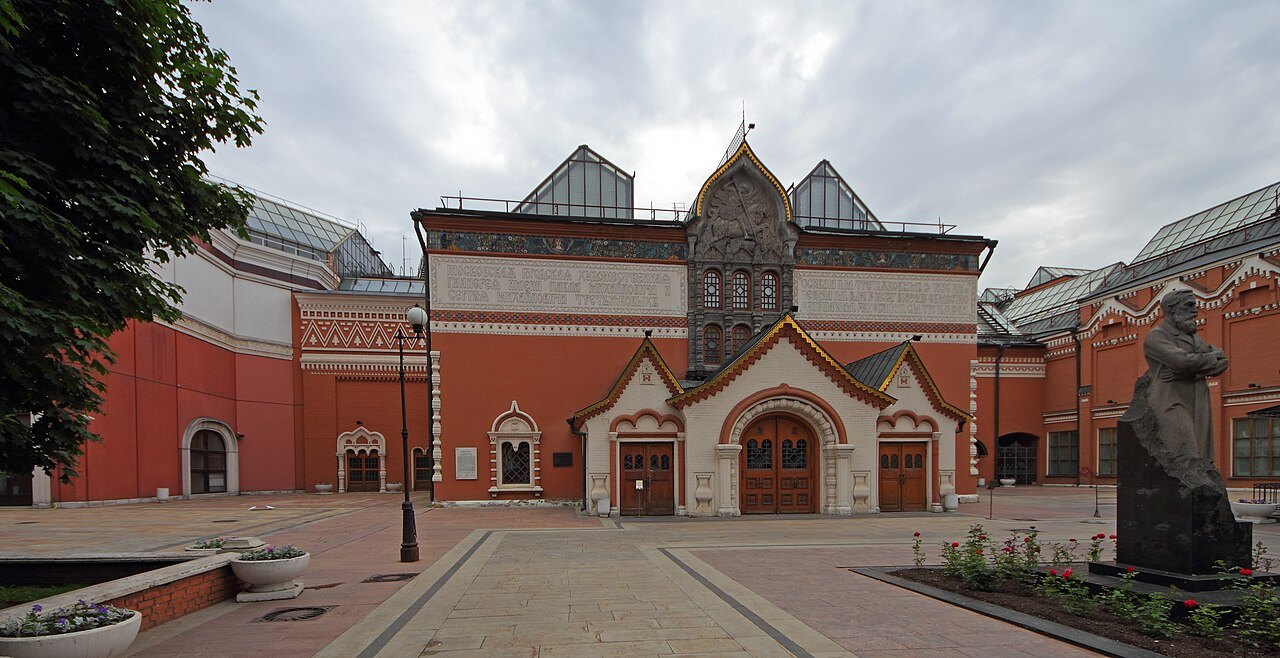
The Tretyakov Gallery

world-class
The Tretyakov Gallery
A.Savin, CC BY-SA 3.0 · Wikimedia Commons
Russian art of the 11th to early 20th century is nowhere else assembled so fully — only the Russian Museum compares. But the canon was formed here: Tretyakov bought from living artists what he himself thought mattered, and one man’s private judgement became what we now call the Russian school. Seeing the 19th century elsewhere means seeing fragments.

Ivanov’s The Appearance of Christ Before the People in its own hall; Surikov’s Boyarynya Morozova and Morning of the Streltsy Execution; Repin’s Ivan the Terrible and His Son; Serov’s Girl with Peaches; Vasnetsov’s Bogatyrs; the icon halls. Rublev’s Trinity is no longer here: it was handed to the Church in 2023.

2.5 km from here · Lavrushinsky Lane 10 · ·
· No. 1
House museums · since 1922

The Scriabin Museum

significant
A flat from which nothing was carried out: Scriabin rented it for his last three years and died here in 1915, and it became a museum in 1922 — almost without a gap. Furniture, books, piano and the fittings of the study are the very ones. But the chief thing is another: Scriabin conceived music together with light, and the trace of that conception survives in the flat — the colour score of Prometheus and the light apparatus. No other composer’s museum in Russia shows the idea and not merely the domestic life.

The Bechstein grand at which the last works were written. The study and the library with the owner’s markings. The colour score of Prometheus and the colour-light apparatus assembled to his design. A concert hall in the same house.

2.6 km from here · Bolshoy Nikolopeskovsky Lane 11
· No. 76
Architecture and estates · since 2020

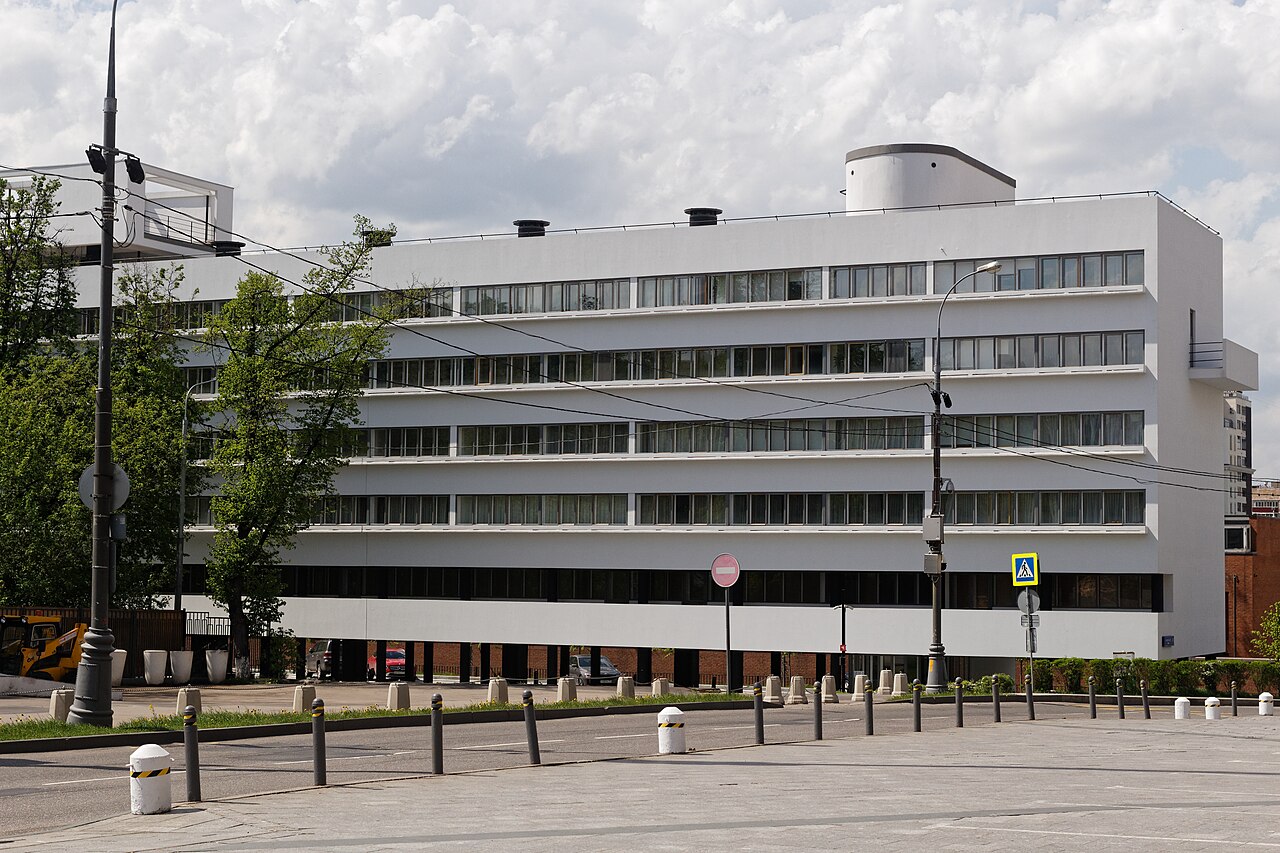
The Narkomfin Building

significant
The Narkomfin Building
Retired electrician, CC0 · Wikimedia Commons
The 1930 house by Ginzburg and Milinis is the transitional commune-house with which any conversation about twentieth-century housing begins: two-level units, a corridor every second floor, kitchen and laundry taken out of the flat. Le Corbusier knew this building and leaned on it in the Unité d’habitation at Marseille — the ribbon window, the pilotis and the interlocking sections are all here first. But expectations must be squared honestly: the restoration of 2017–2020 gave the house back to its residents, and the museum here is one restored unit, not a building. Looking is done from outside and in a single flat, by appointment.

A restored type F unit, furnished to Ginzburg’s drawings. The building itself: the residential block on columns, the communal block, the bridge between them.

2.8 km from here · Novinsky Boulevard 25, block 1 · ·
· No. 74
Literature · since 1957

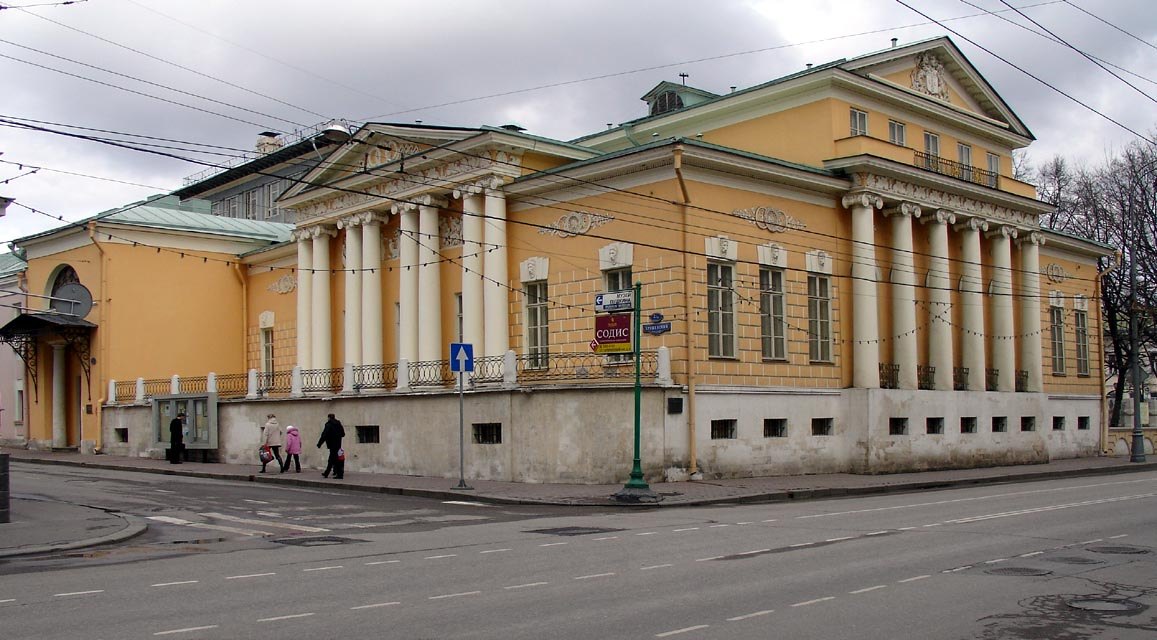
The Pushkin Museum on Prechistenka

significant
The Pushkin Museum on Prechistenka
NVO, CC BY-SA 2.5 · Wikimedia Commons
There is no memorial Pushkin house in Moscow — he did not live here. The value is not authentic walls but a complete age: objects, books and portraits from which the Pushkin era can be reconstructed whole. For relics go to the Moika in Petersburg; for the era, here.

The permanent displays Pushkin and His Age (fifteen rooms of the manor house) and Pushkin’s Fairy Tales; first editions, portraits of his circle, everyday objects of the early 19th century.

2.8 km from here · Prechistenka 12/2 ·
· No. 2
House museums · since 1911

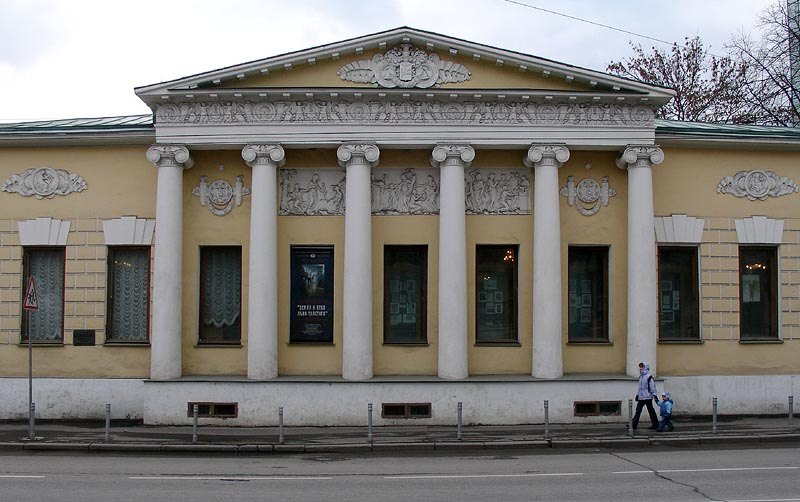
The Tolstoy Museum on Prechistenka

significant
The Tolstoy Museum on Prechistenka
NVO, CC BY-SA 2.5 · Wikimedia Commons
The largest manuscript fund of any single writer in the world. The value is scholarly: you see how the text was made — Tolstoy rewrote a sentence ten times, and you can watch it happen. For the house he lived in, go to Khamovniki.

Manuscripts in Tolstoy’s hand, first editions, portraits and photographs of the writer and his family. The display follows the books, from Childhood to Resurrection.

2.9 km from here · Prechistenka 11/8 · ·
· No. 7
History · since 2012

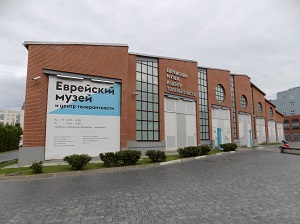
The Jewish Museum

significant
The Jewish Museum
Come for two things at once: the Bakhmetevsky garage by Melnikov and Shukhov, a building of world significance, and the history of Russian Jewry told from inside as nowhere else. The holdings of originals are modest, and that is worth knowing beforehand.

The building itself — the Bakhmetevsky garage of 1926–1927, one of Konstantin Melnikov’s principal works with steel structures by Vladimir Shukhov; the Café on Basseynaya, a reconstruction of shtetl life.

3.0 km from here · Obraztsova 11, bldg 1a · ·
· No. 47
Art · since 1947

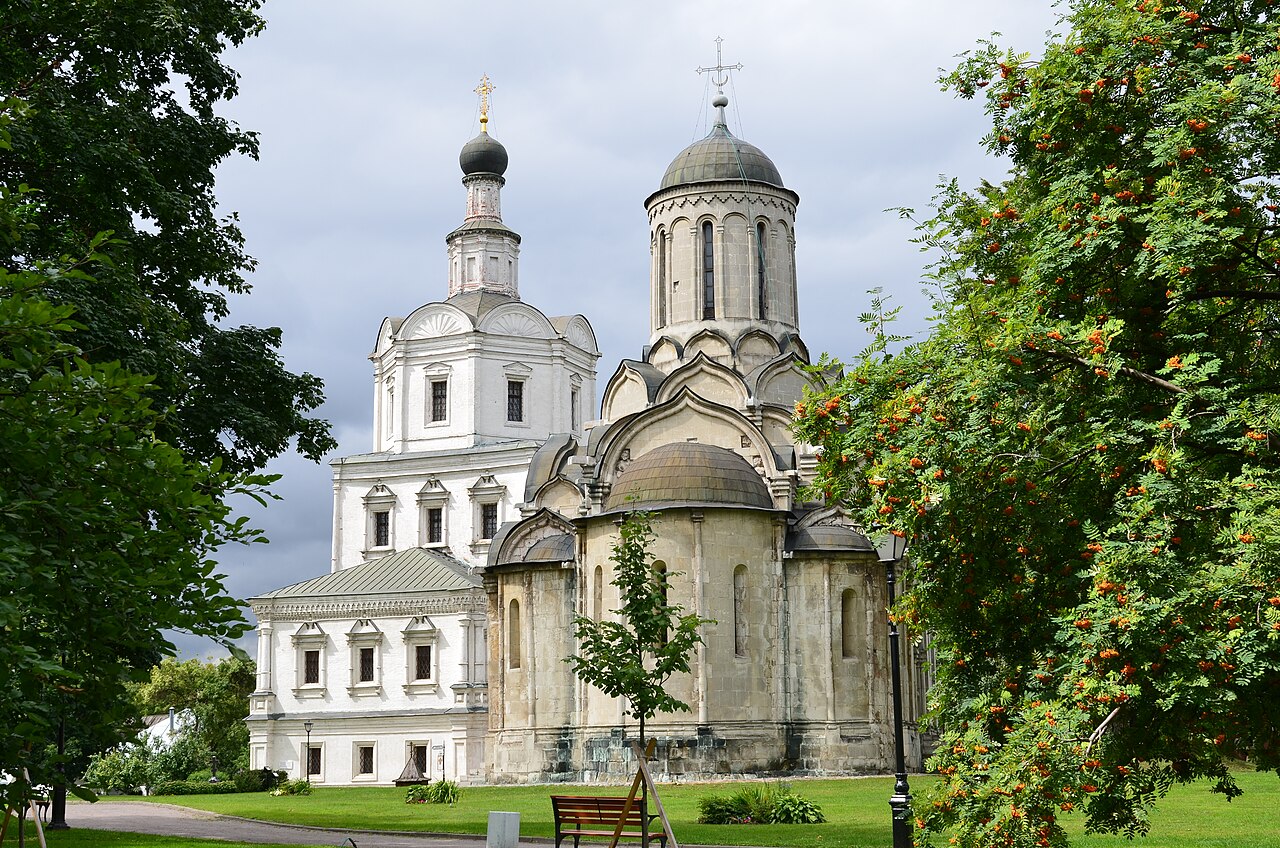
The Rublev Museum

outstanding
The Rublev Museum
Pegushev, CC BY-SA 3.0 · Wikimedia Commons
The third collection of Russian icons after the Tretyakov and the Russian Museum, and the only one built as a museum of one subject: here the icon does not stand in a row of Russian art but is explained in itself, from the board and the gesso to the iconography. The holding was formed from things brought out by the museum’s expeditions from closed and ruined churches, and its value is the completeness of the line rather than single stars: famous names are almost absent, but the sequence runs unbroken from the thirteenth century to the seventeenth. In Britain icons are met in ones and twos, in Byzantine rooms and in the trade; a museum where the subject has a building of its own does not exist there. The monastery’s Saviour Cathedral, in which all this stands, is the oldest surviving building in Moscow.

Icons of the thirteenth to seventeenth centuries, gathered by the museum’s own expeditions. Royal doors and whole iconostasis sets. Fragments of wall painting. The Saviour Cathedral of the 1420s — the oldest building in Moscow, with remains of ornamental painting associated with Rublev.

3.3 km from here · Andronyevskaya Square 10 · ·
· No. 61
Art · since 1969

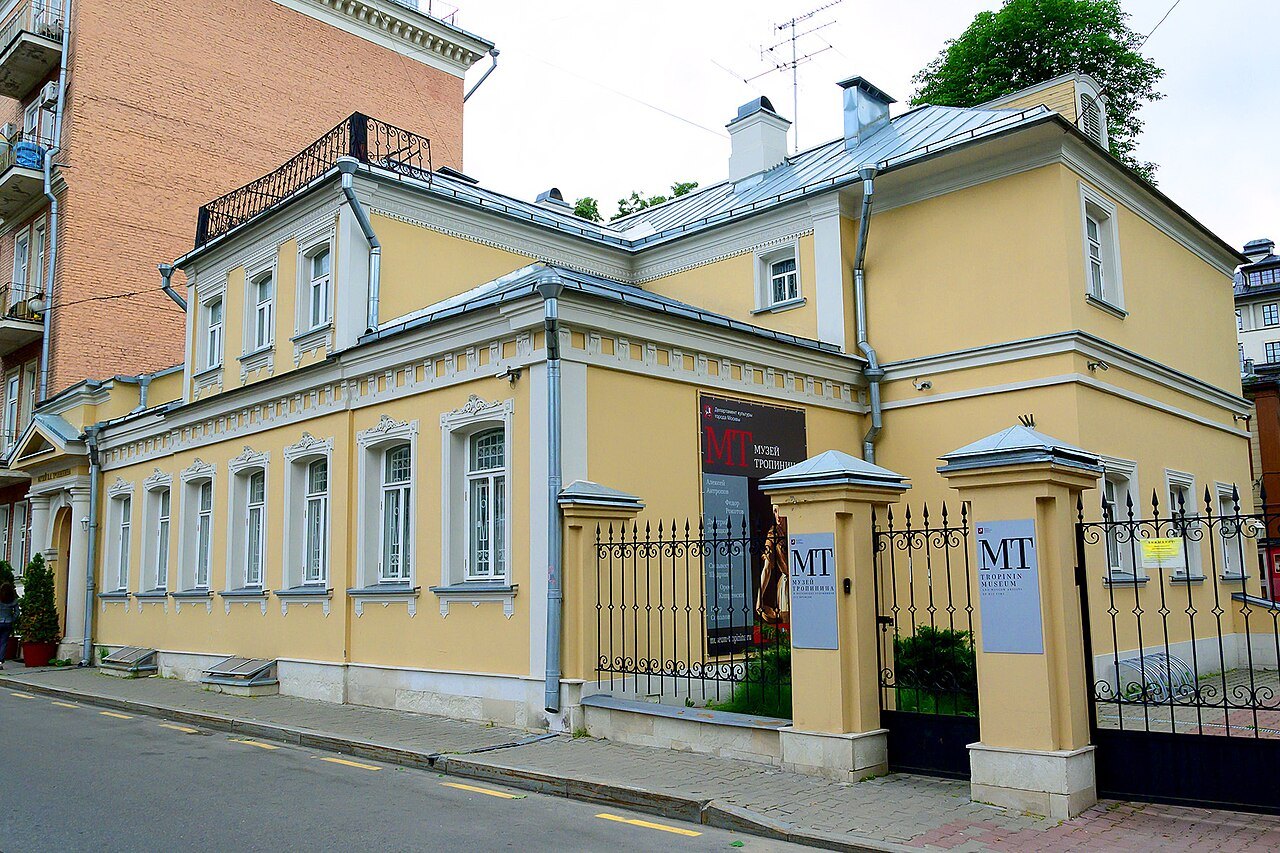
The Tropinin Museum

significant
The Tropinin Museum
Andrei Raikin, Alexei Sidelnikov, Andrei Lobanov, CC BY 3.0 · Wikimedia Commons
The Moscow portrait of the first half of the 19th century is nowhere else so densely gathered. The value is also in the origin: Vishnevsky’s private collection given to the city, a model of how Russian museums came to be.

Portraits by Vasily Tropinin and his Moscow contemporaries, work by serf artists, Russian Biedermeier. The quiet Zamoskvorechye lane and the house itself are half the pleasure.

3.4 km from here · Shchetininsky Lane 10, bldg 1 · ·
· No. 31
Unusual · since 2009

The Chocolate Museum

niche
The Chocolate Museum
An industrial tour rather than a museum: the value is the walk into the working shop and the history of Einem. As a collection it is next to nothing, and we do not hide that.

A walk into the working shop where sweets are wrapped in front of you; the history of Einem and Krasny Oktyabr in original wrappers and advertising.

3.3 km from here · Malaya Krasnoselskaya 7 (entrance from Lobachika 1, bldg 1) · ·
· No. 41
Art · since 1986

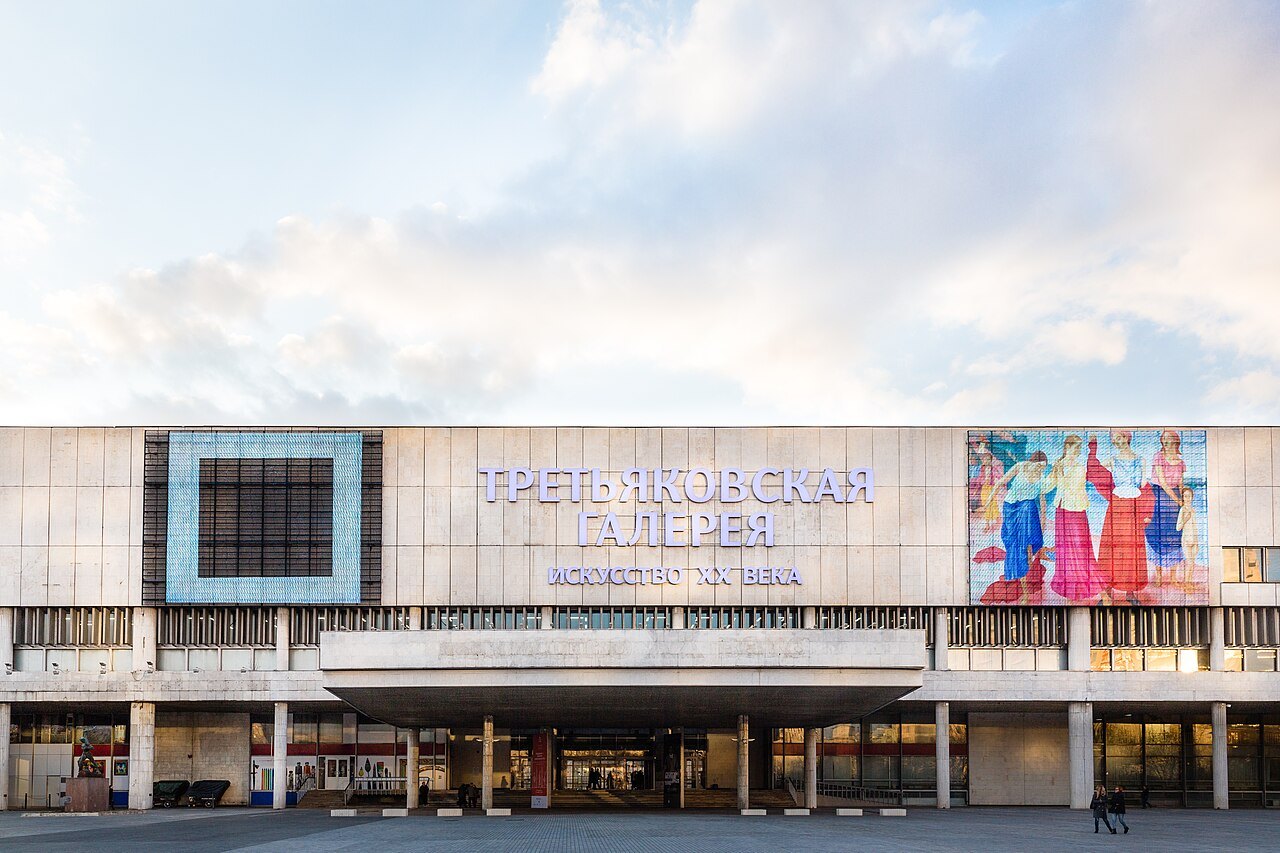
The New Tretyakov

world-class
The New Tretyakov
Tretyakovgallery, CC BY-SA 4.0 · Wikimedia Commons
The Russian avant-garde is the one Russian artistic system to enter the world canon on equal terms, and its largest collection is here. MoMA and the Pompidou show Malevich and Tatlin torn from their setting; here they hang beside what they rebelled against, which changes the reading.

Malevich’s Black Square, Petrov-Vodkin’s Bathing of a Red Horse, work by Kandinsky, Chagall, Goncharova and Larionov, the model of Tatlin’s Tower. Next door: the Muzeon park of dismantled Soviet monuments.

3.5 km from here · Krymsky Val 10 · ·
· No. 5

5 museums have no point set. They are not in this count.