Skip to content

Your browser is older than this page. The catalogue still reads here: the list, the filter and the cards all work. Your browser will mark filter choices with plain checkboxes, as best it can. Update your browser to see the page as it was built.

Museums near Experimentanium

We do not ask your browser where you are. We collect no data about people. Place the point on the city map yourself — we will find the nearest museums that suit your preferences.

Distance
Filter
How much time
We count what is left today: from now — or from opening, if the museum has not opened yet — to the last admission. The closing hour is of no use for such a count: past the last admission nobody is let in. Where the last admission is not established we allow half an hour: erring towards «you will not make it» costs less than sending someone to a locked door.
When I go
We show those open on at least one of the days chosen. Today is Friday.
Who with
One thing is asked here: whether a child will find it interesting inside. The ease of the way and of the rooms is a question of another kind, and it stands under “Access”. In the entry this shows as a mark, and the age in the note beside it.
What to see
Access
The accessibility of a museum and the accessibility of the way to it are different things, and we keep them apart. It happens that everything inside is arranged faultlessly while the door itself cannot be reached in a wheelchair; it happens the other way round too.
How valuable
What sets it apart
Showing 35 museums

Drag the pin or press the map.

open nowclosed nowhours not known

Map — OpenStreetMap

Nearest museums · 35
Military history · since 1962

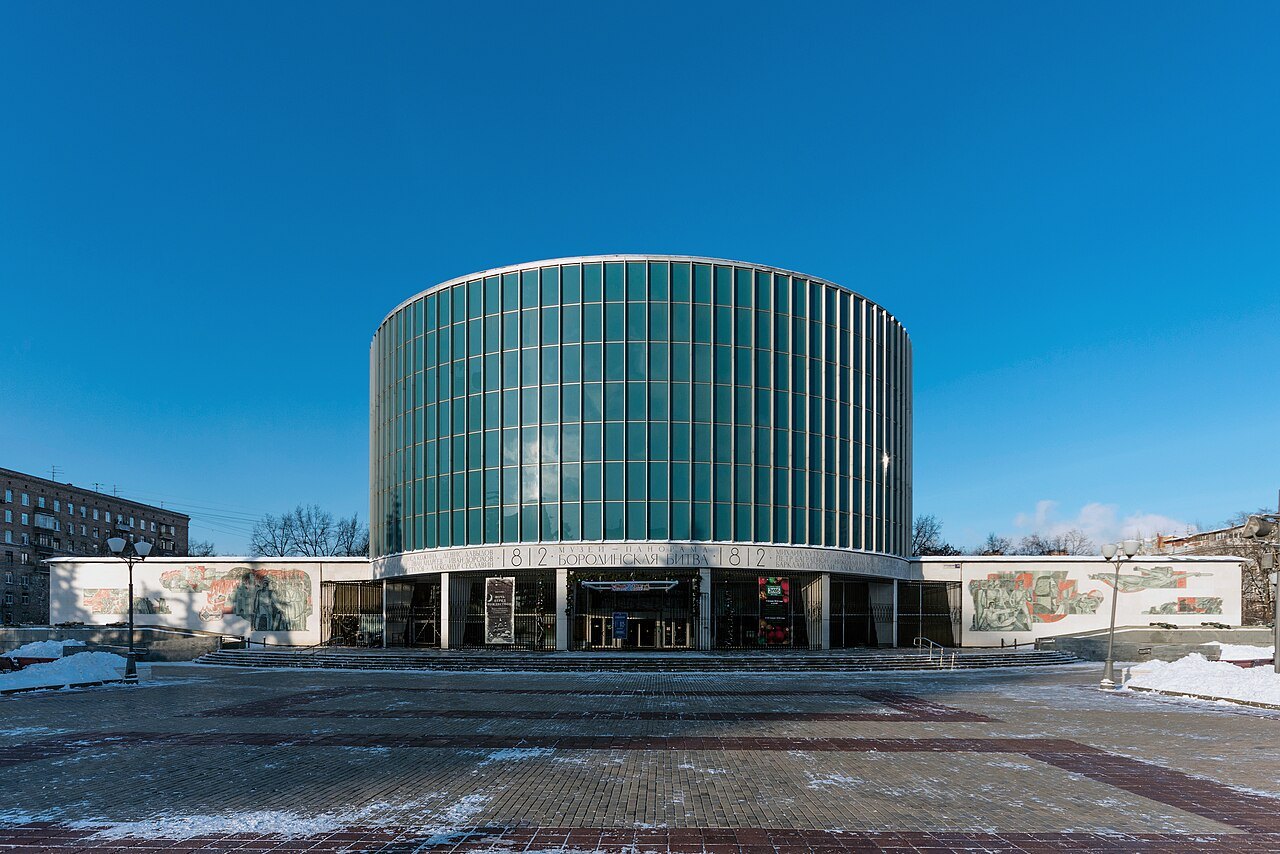
The Borodino Panorama

significant
The Borodino Panorama
Florstein (Telegram:WikiPhoto.Space), CC BY-SA 4.0 · Wikimedia Commons
Roubaud’s panorama is one of the few survivors of a genre that was the summit of 19th-century visual culture and has almost entirely vanished. The value lies in the machinery of the spectacle, not in the subject: this is how people looked before cinema.

Franz Roubaud’s Borodino panorama of 1912: 115 metres of canvas in the round, 15 metres high. Next door, the Kutuzov hut where on 1 September 1812 the council of war decided to abandon Moscow.

7.9 km from here · Kutuzovsky Prospekt 38, bldg 1 · ·
· No. 9
outstanding
The Museum of Oriental Art
Panther, CC BY-SA 3.0 · Wikimedia Commons
Western museums of the East were formed by colonial routes; this collection grew out of nationalised private collections and Soviet expeditions. Hence the Central Asian, Caucasian, Buryat and Chukchi sections that London and Paris lack: there the East begins with India and Egypt, here with what lay inside the country and next to it. That is the reason to come.

Central Asian and Caucasian carpets and metalwork transferred from the State Museum Fund; Iranian Qajar painting and tilework; Chinese bronze and porcelain, Japanese prints; a Korean section rare for Russia; Buddhist sculpture of Buryatia and Mongolia.

8.1 km from here · Nikitsky Boulevard 12a · ·
· No. 43
House museums · since 1922

The Scriabin Museum

significant
A flat from which nothing was carried out: Scriabin rented it for his last three years and died here in 1915, and it became a museum in 1922 — almost without a gap. Furniture, books, piano and the fittings of the study are the very ones. But the chief thing is another: Scriabin conceived music together with light, and the trace of that conception survives in the flat — the colour score of Prometheus and the light apparatus. No other composer’s museum in Russia shows the idea and not merely the domestic life.

The Bechstein grand at which the last works were written. The study and the library with the owner’s markings. The colour score of Prometheus and the colour-light apparatus assembled to his design. A concert hall in the same house.

8.2 km from here · Bolshoy Nikolopeskovsky Lane 11
· No. 76
Science and nature · since 1706

The Apothecary Garden

outstanding
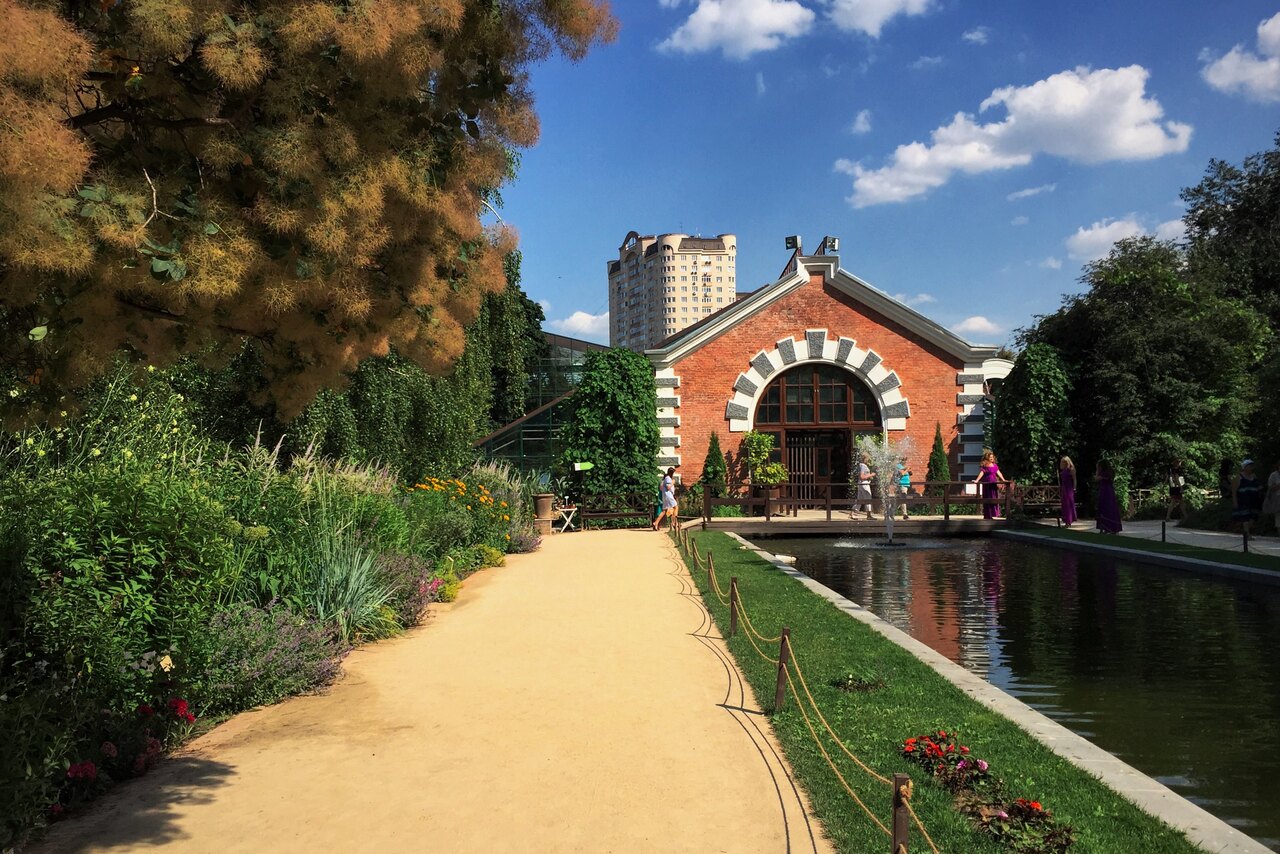
The Apothecary Garden
Gennady Grachev, CC BY 2.0 · Wikimedia Commons
A garden in the middle of the city: five hundred metres to the Garden Ring, and the ground is not large. Founded by Peter I in 1706. Moscow had several such physic gardens, and every one of them except this vanished without trace, while the larch here, planted by tradition by Peter himself (an increment borer confirms an age of only two hundred years — our note), is alive still, though since a lightning strike early in the twentieth century it has hardly grown. The Palm House of 1891 is the centre of a tropical collection gathered over more than two hundred years.

Peter's larch, as the garden has always called it, stands in the middle of the arboretum. Beside it a pedunculate oak more than two hundred years old, limes past a hundred, and a rare weeping form of the Dahurian larch. The Palm House of 1891: palms, figs and pandanus at their full height. The Succulent House on the upper floor of the glasshouse block holds cacti, euphorbias, agaves and aloes, some of them among the rarest anywhere. The old pond with its water plants, the shade garden, the heather slope where the rockery used to be; the conifer slopes took a gold diploma of the landscape architecture prize in 2013.

8.5 km from here · Prospekt Mira 26, building 1 · ·
checked 20 August 2026 · No. 102
Unusual · since 2007

The Arcade Machines Museum

for enthusiasts
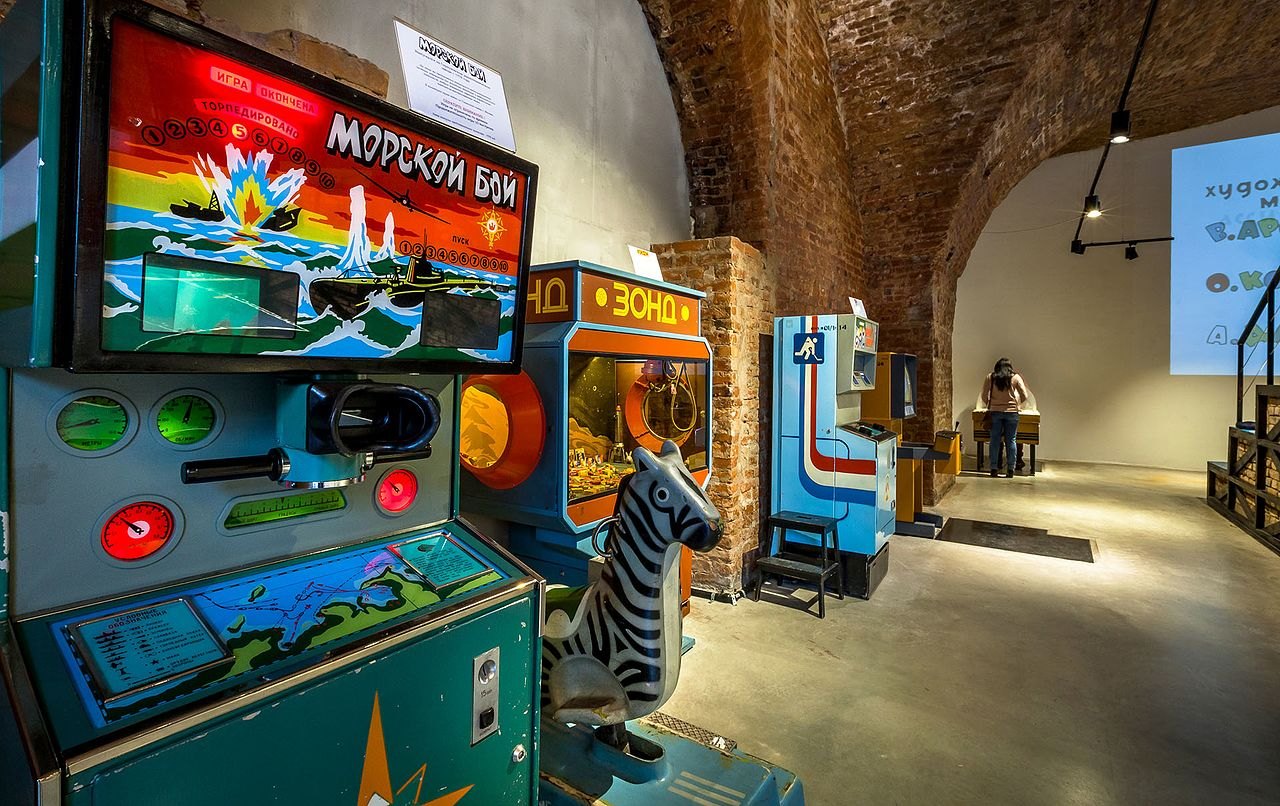
The Arcade Machines Museum
Museum of Soviet Arcade Machines, CC BY-SA 4.0 · Wikimedia Commons
The only museum where the exhibit works: the machine starts on a coin, and that changes the whole way of meeting the object. As a monument of late Soviet daily life it is precise and honest.

Sea Battle, Gorodki, Sniper, Safari — the machines work rather than stand behind glass; and the soda machine with a faceted glass.

8.6 km from here · Rozhdestvenka 12 · ·
· No. 48
outstanding
The Museum of Architecture
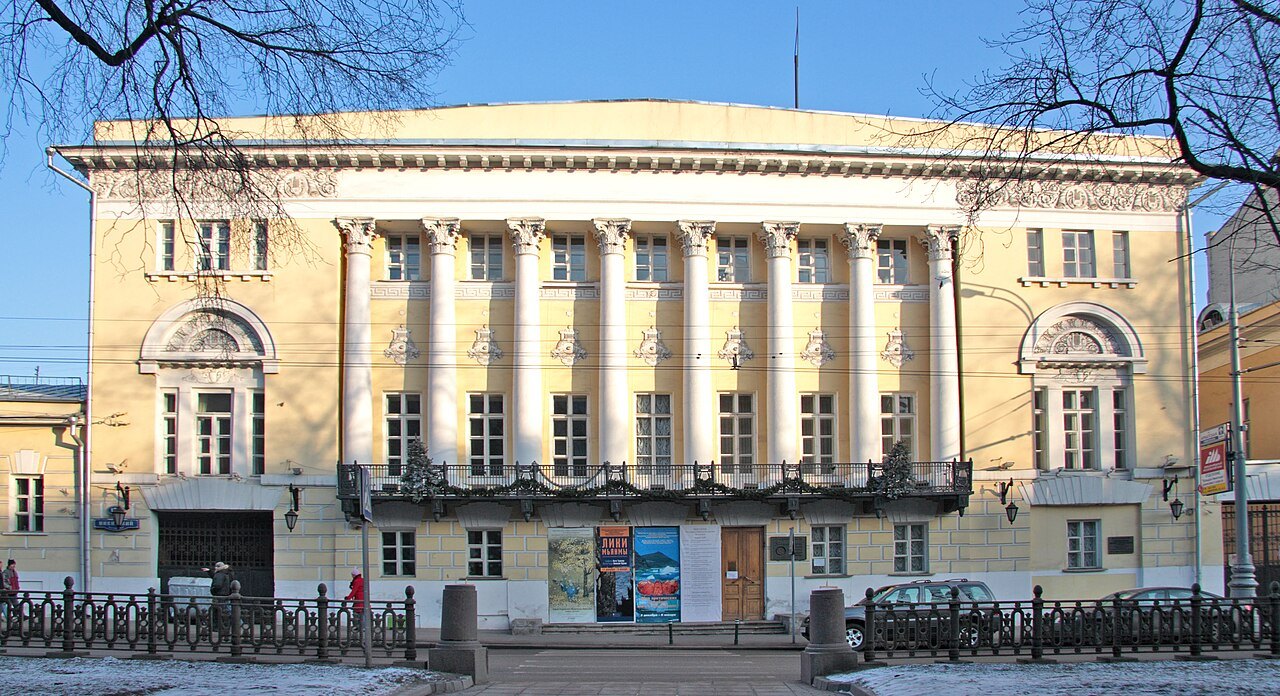
SergeyStepykin, CC BY-SA 3.0 · Wikimedia Commons
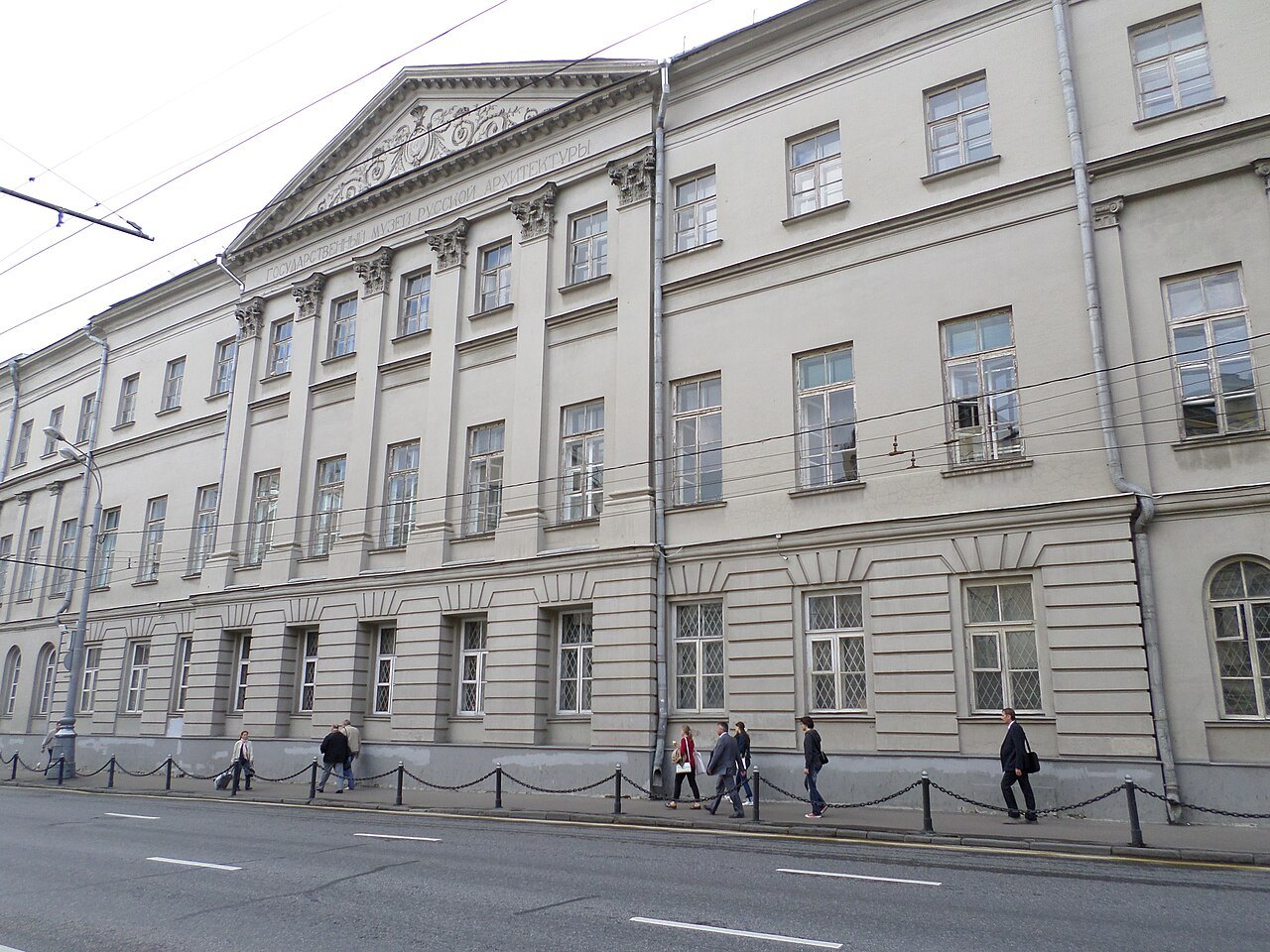
The only museum of architecture in Russia and one of the few in the world. It holds fragments of demolished buildings — reliefs from the Cathedral of Christ the Saviour, details of the Sukharev Tower: things that exist nowhere else because the buildings do not.

The enfilade of the Talyzin house with its exhibitions; the Apothecary Office, 17th-century chambers where fragments of demolished Moscow buildings are shown; models of unbuilt projects, including material on the Palace of the Soviets.

8.7 km from here · Vozdvizhenka 5/25 · ·
· No. 53
Military history · since 1995

The Victory Museum

for enthusiasts
The Victory Museum
mos.ru, CC BY 4.0 · Wikimedia Commons
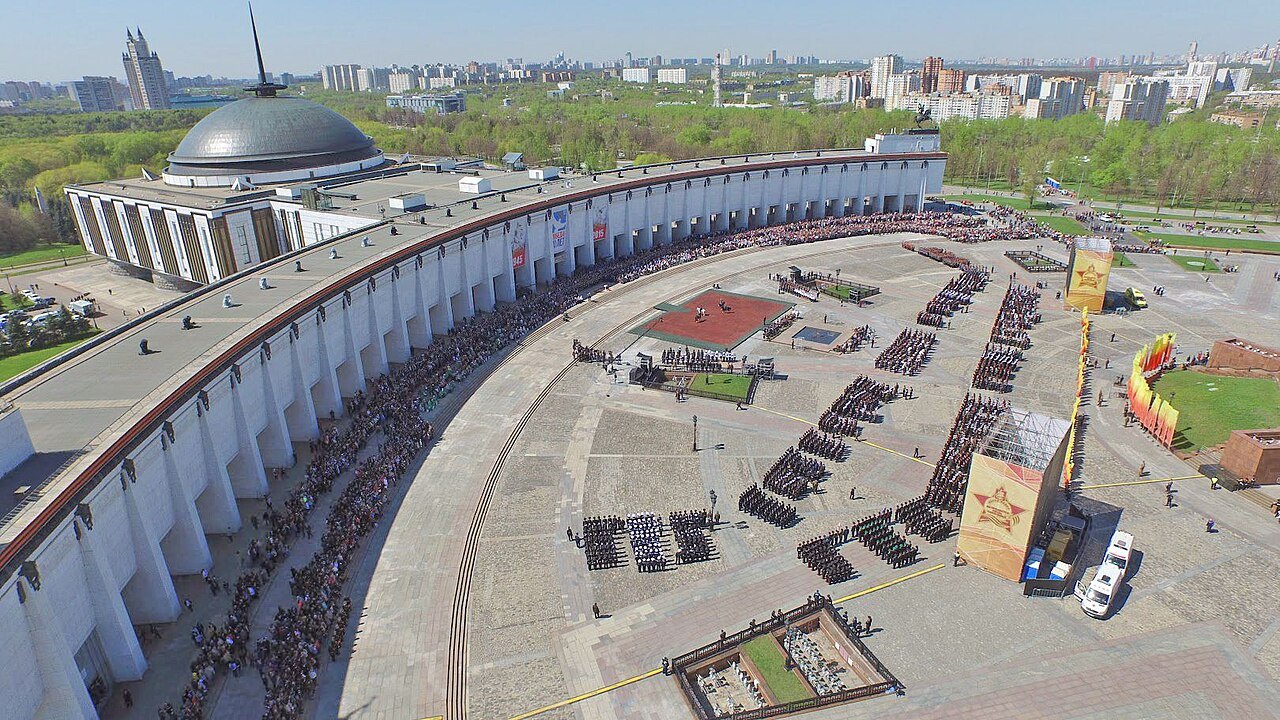
A memorial rather than a collection: its strength is the scale of the spectacle and the Hall of Remembrance, not the originals. By museum standards it is average, and you should know that before going.

The Hall of Glory and the Hall of Remembrance and Sorrow; six dioramas of the decisive battles; the open-air park of military hardware.

8.7 km from here · Pobedy Square 3 · ·
· No. 29
Unusual · since 1991

The Bookplate Museum

niche
The Bookplate Museum
The only collection of bookplates in Russia — a field between graphic art and bibliophilia shown systematically nowhere else. The circle of admirers is narrow, the subject genuine.

Bookplates by Russian and foreign artists, miniature editions and micro-books, writing on a grain of rice and miniatures on ivory.

8.8 km from here · Pushechnaya 7/5, bldg 2 (2nd floor) · ·
· No. 40
History · since 1997

Museum of Moscow Archaeology

for enthusiasts
Museum of Moscow Archaeology
Qweasdqwe, CC BY-SA 4.0 · Wikimedia Commons
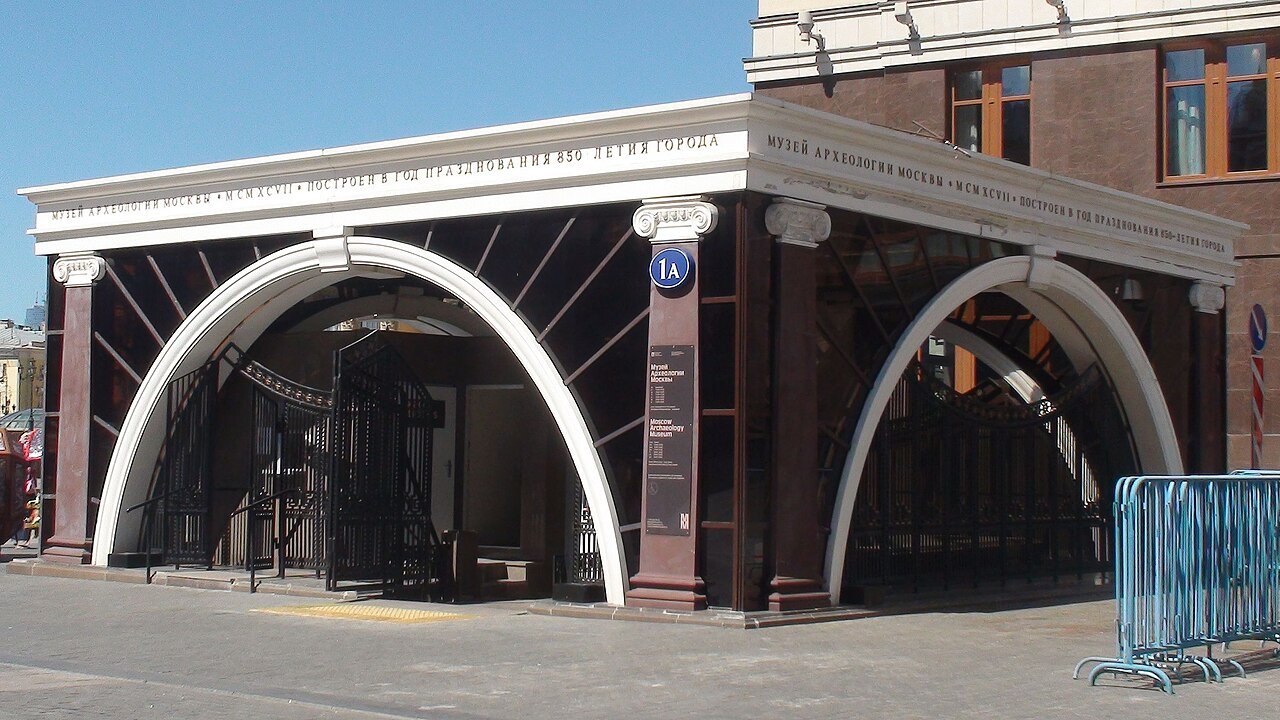
A museum built around what cannot be moved: the 16th-century bridge piers stayed where they were and the building went up over them. That method of display is rare, and it is the reason to go down.

The white-stone piers of the Voskresensky Bridge of the 16th to 18th century — the museum was built around them; coin hoards found in the city centre; the everyday things of medieval Moscow.

8.9 km from here · Manezhnaya Square 1a · ·
· No. 15
Art · since 1817

The Manege

significant
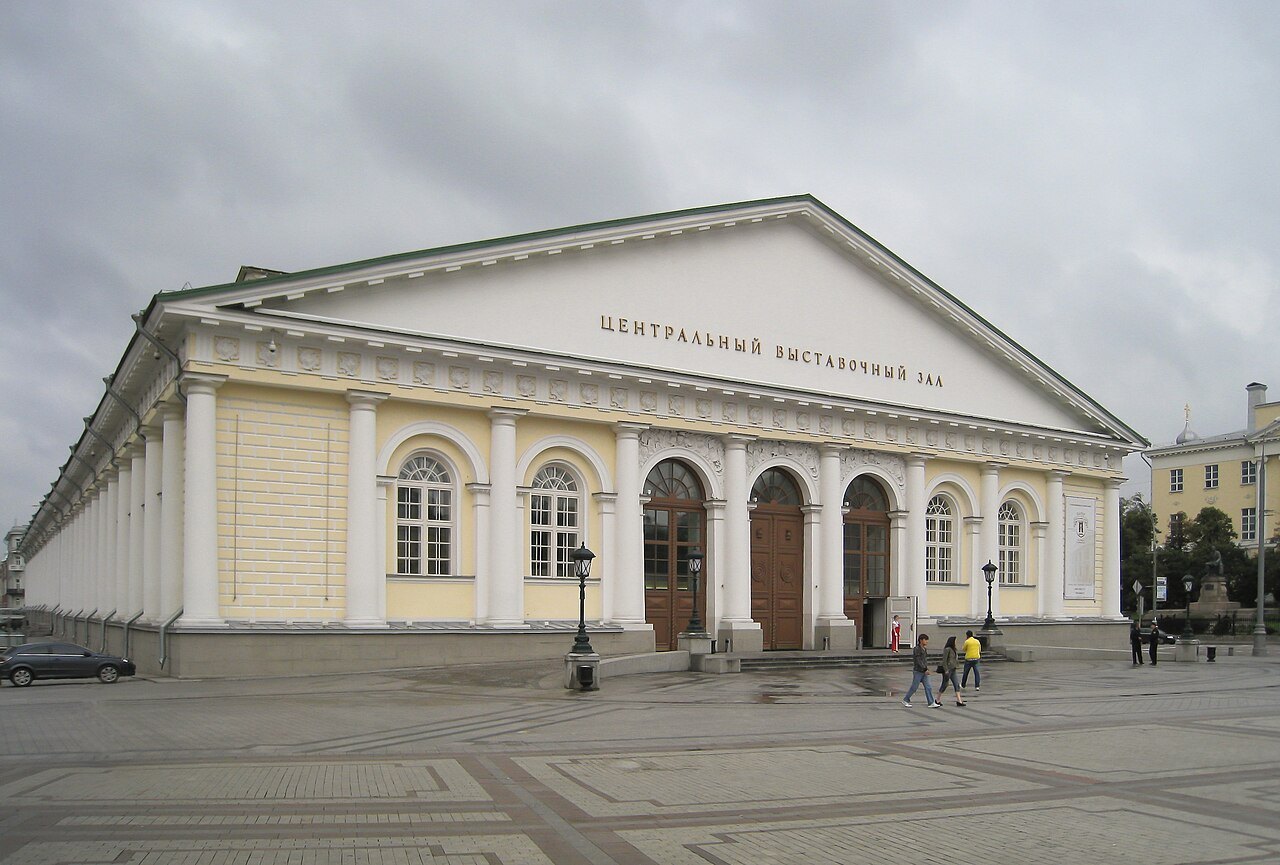
The Manege
Bernt Rostad uploaded and derivative work: MrPanyGoff, CC BY 2.0 · Wikimedia Commons
There is no collection; the value is entirely engineering — a column-free span of nearly 45 metres calculated by Betancourt, a monument of engineering thought with few equals in Europe. Everything else here is temporary.

The building itself: a column-free hall spanned by timber trusses of almost 45 metres, calculated by the engineer Agustín de Betancourt — a rare monument of engineering.

8.9 km from here · Manezhnaya Square 1 ·
· No. 19

5 museums have no point set. They are not in this count.