Skip to content

Your browser is older than this page. The catalogue still reads here: the list, the filter and the cards all work. Your browser will mark filter choices with plain checkboxes, as best it can. Update your browser to see the page as it was built.

Museums near The Mineralogical Museum

We do not ask your browser where you are. We collect no data about people. Place the point on the city map yourself — we will find the nearest museums that suit your preferences.

Distance
Filter
How much time
We count what is left today: from now — or from opening, if the museum has not opened yet — to the last admission. The closing hour is of no use for such a count: past the last admission nobody is let in. Where the last admission is not established we allow half an hour: erring towards «you will not make it» costs less than sending someone to a locked door.
When I go
We show those open on at least one of the days chosen. Today is Friday.
Who with
One thing is asked here: whether a child will find it interesting inside. The ease of the way and of the rooms is a question of another kind, and it stands under “Access”. In the entry this shows as a mark, and the age in the note beside it.
What to see
Access
The accessibility of a museum and the accessibility of the way to it are different things, and we keep them apart. It happens that everything inside is arranged faultlessly while the door itself cannot be reached in a wheelchair; it happens the other way round too.
How valuable
What sets it apart
Showing 44 museums

Drag the pin or press the map.

open nowclosed nowhours not known

Map — OpenStreetMap

Nearest museums · 44
outstanding
The Museum of Oriental Art
Panther, CC BY-SA 3.0 · Wikimedia Commons
Western museums of the East were formed by colonial routes; this collection grew out of nationalised private collections and Soviet expeditions. Hence the Central Asian, Caucasian, Buryat and Chukchi sections that London and Paris lack: there the East begins with India and Egypt, here with what lay inside the country and next to it. That is the reason to come.

Central Asian and Caucasian carpets and metalwork transferred from the State Museum Fund; Iranian Qajar painting and tilework; Chinese bronze and porcelain, Japanese prints; a Korean section rare for Russia; Buddhist sculpture of Buryatia and Mongolia.

4.3 km from here · Nikitsky Boulevard 12a · ·
· No. 43
History · since 1994

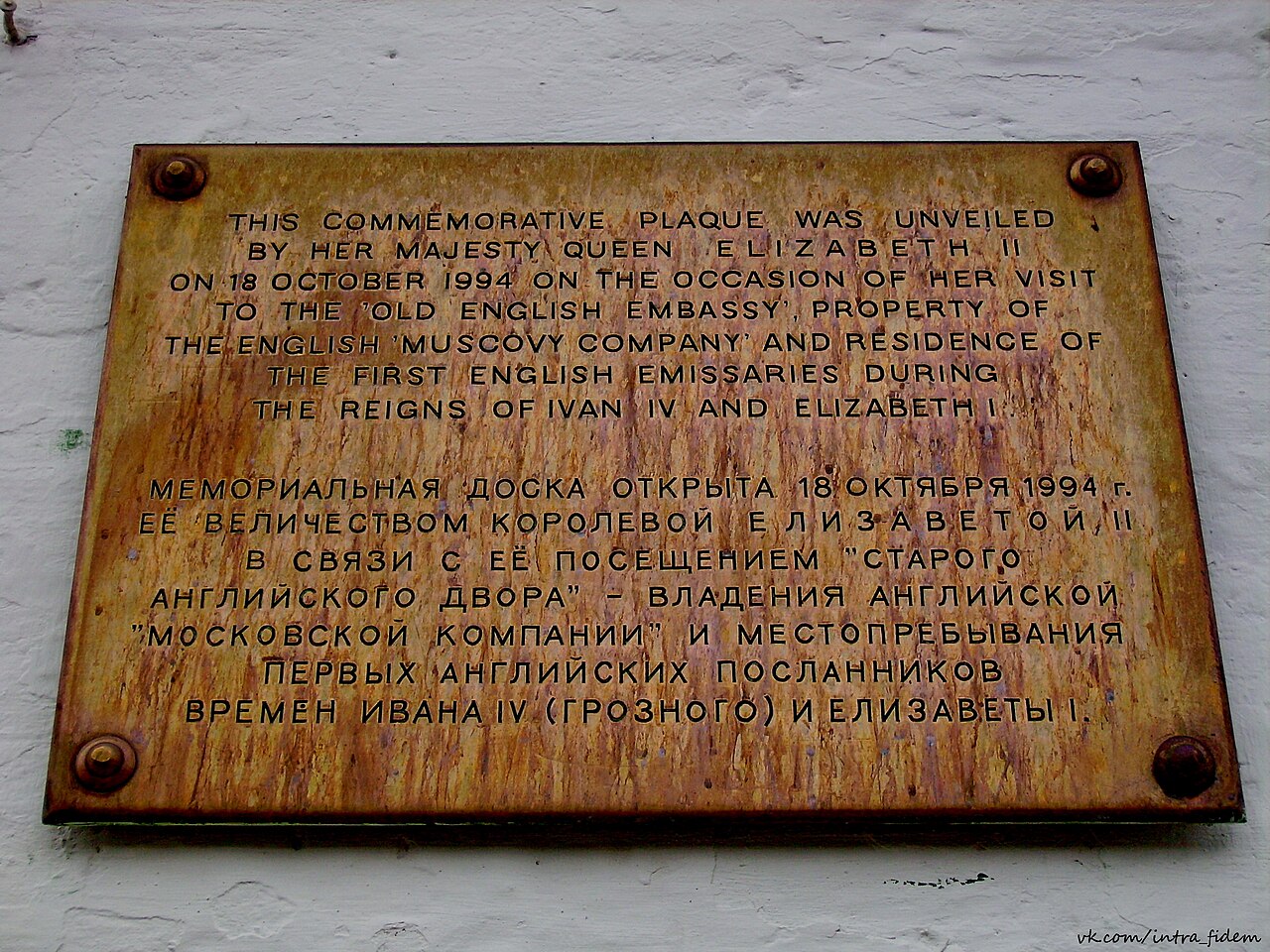
The Old English Court

significant
The Old English Court
O.Bragina, CC BY-SA 3.0 · Wikimedia Commons
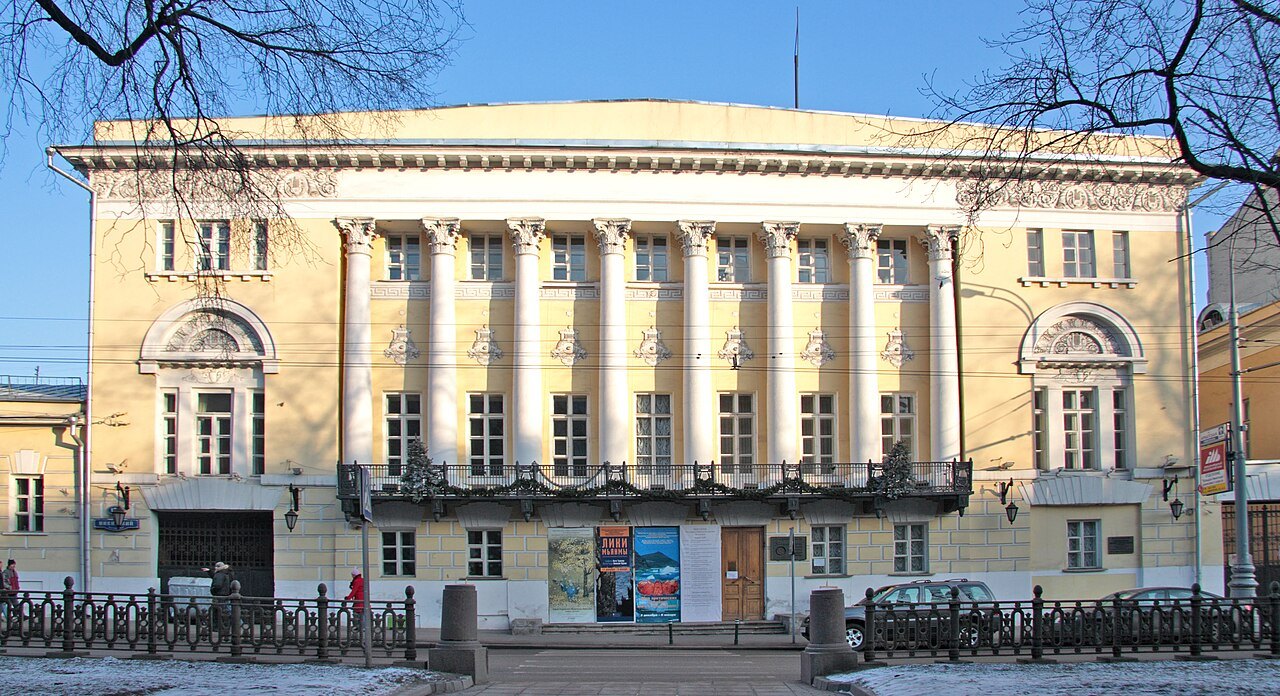
The oldest surviving secular building in Moscow. The value is in the vaults themselves: almost no 16th-century interiors are left in the city, and these were recovered by Baranovsky, the restorer who saved half of it.

The Treasury Chamber with its 16th–17th-century interior and the original vaults; the display on Russian–English trade and finds from the Zaryadye digs.

And we came to the Mosco the 4. day of October, and were lodged that night in a simple house: but the next day we were sent for to the Emperour his secretarie…
George Killingworth, 1589 in full
4.3 km from here · Varvarka 4a (Zaryadye Park) · ·
· No. 18
History · since 1872

The Historical Museum

world-class
The Historical Museum
Diego Delso, CC BY-SA 4.0 · Wikimedia Commons
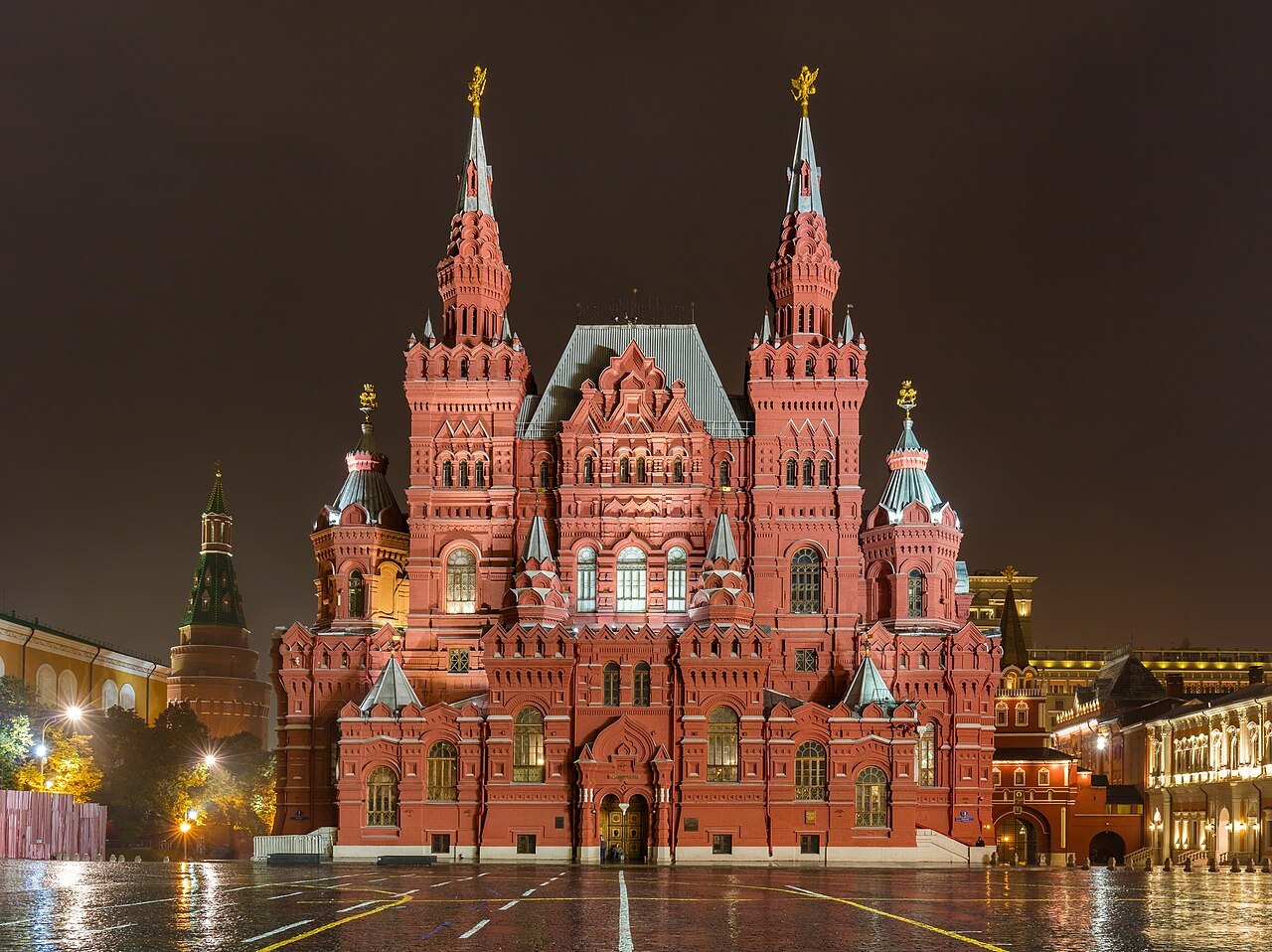
A collection of material sources on Russian history unmatched for completeness: archaeology, numismatics, arms and manuscripts in one sequence, five million objects. And a rarity of another kind — Sherwood’s fully preserved Russian Revival interior, a monument in itself.

A dugout boat some 3,500 years old; the Mstislav Gospel of the early 12th century; the helmet of Prince Yaroslav Vsevolodovich; a Blaeu globe; personal belongings of Peter the Great. Look up: the halls themselves are painted after Old Russian models and count as an exhibit.

4.4 km from here · Red Square 1 · ·
· No. 6
History · since 1859

The Romanov Chambers

significant
The Romanov Chambers
Ludvig14, CC BY-SA 3.0 · Wikimedia Commons
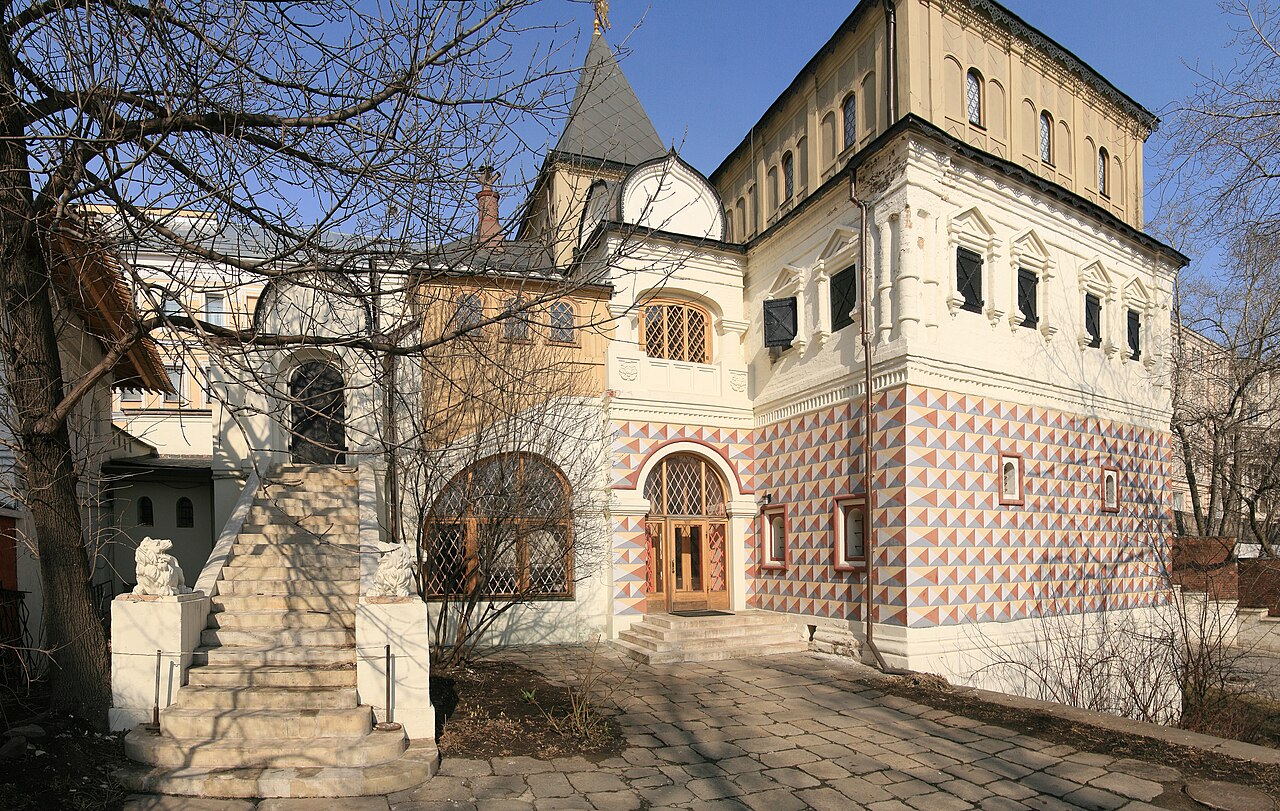
One of the first museums in Russia: it opened in 1859, thirteen years before the Historical Museum, and opened already as a reconstruction of boyar life — an idea unheard of at the time. What is to be looked at is not authenticity down to the nail but the conception itself: how the middle of the nineteenth century pictured the seventeenth, and what came of it. Barry and Pugin were building Westminster in those same decades, and the case is the same — a century imagining an earlier one and building it in earnest. The collection meanwhile is real: furniture, vessels, textiles, tiles. Together with the Old English Court two steps away, this is the best pair in Moscow about the city before Peter.

The sixteenth-century undercroft, the one genuine part of the building. The interiors recreated by Richter in the 1850s: the dining chamber, the boyarynya’s room, the light room. Tiled stoves, chests, vessels and textiles of the seventeenth century.

4.4 km from here · Varvarka Street 10 ·
· No. 77
Architecture and estates · since 2020

The Narkomfin Building

significant
The Narkomfin Building
Retired electrician, CC0 · Wikimedia Commons
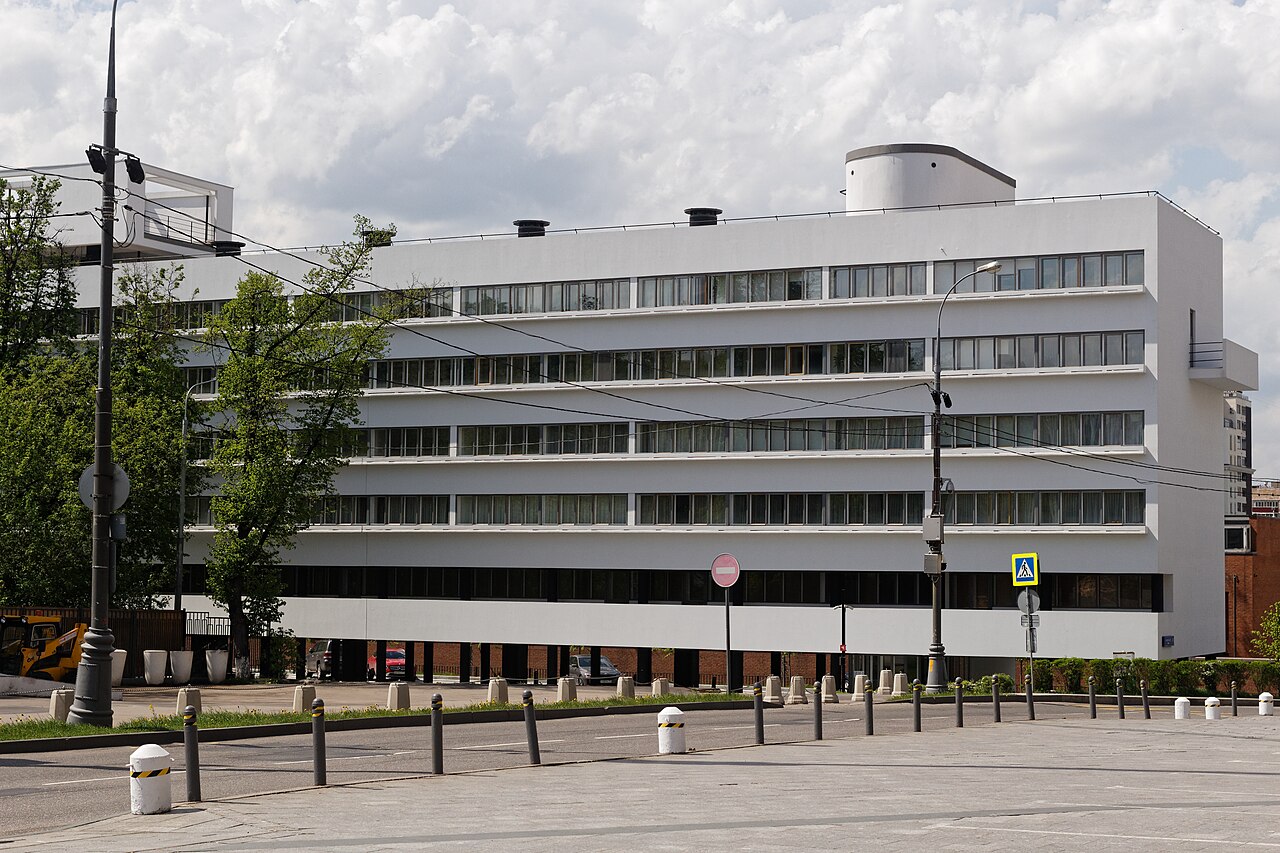
The 1930 house by Ginzburg and Milinis is the transitional commune-house with which any conversation about twentieth-century housing begins: two-level units, a corridor every second floor, kitchen and laundry taken out of the flat. Le Corbusier knew this building and leaned on it in the Unité d’habitation at Marseille — the ribbon window, the pilotis and the interlocking sections are all here first. But expectations must be squared honestly: the restoration of 2017–2020 gave the house back to its residents, and the museum here is one restored unit, not a building. Looking is done from outside and in a single flat, by appointment.

A restored type F unit, furnished to Ginzburg’s drawings. The building itself: the residential block on columns, the communal block, the bridge between them.

4.4 km from here · Novinsky Boulevard 25, block 1 · ·
· No. 74
Architecture and estates · since 1965

The Ryabushinsky Mansion

outstanding
The Ryabushinsky Mansion
Ekaterina Borisova, CC BY-SA 4.0 · Wikimedia Commons
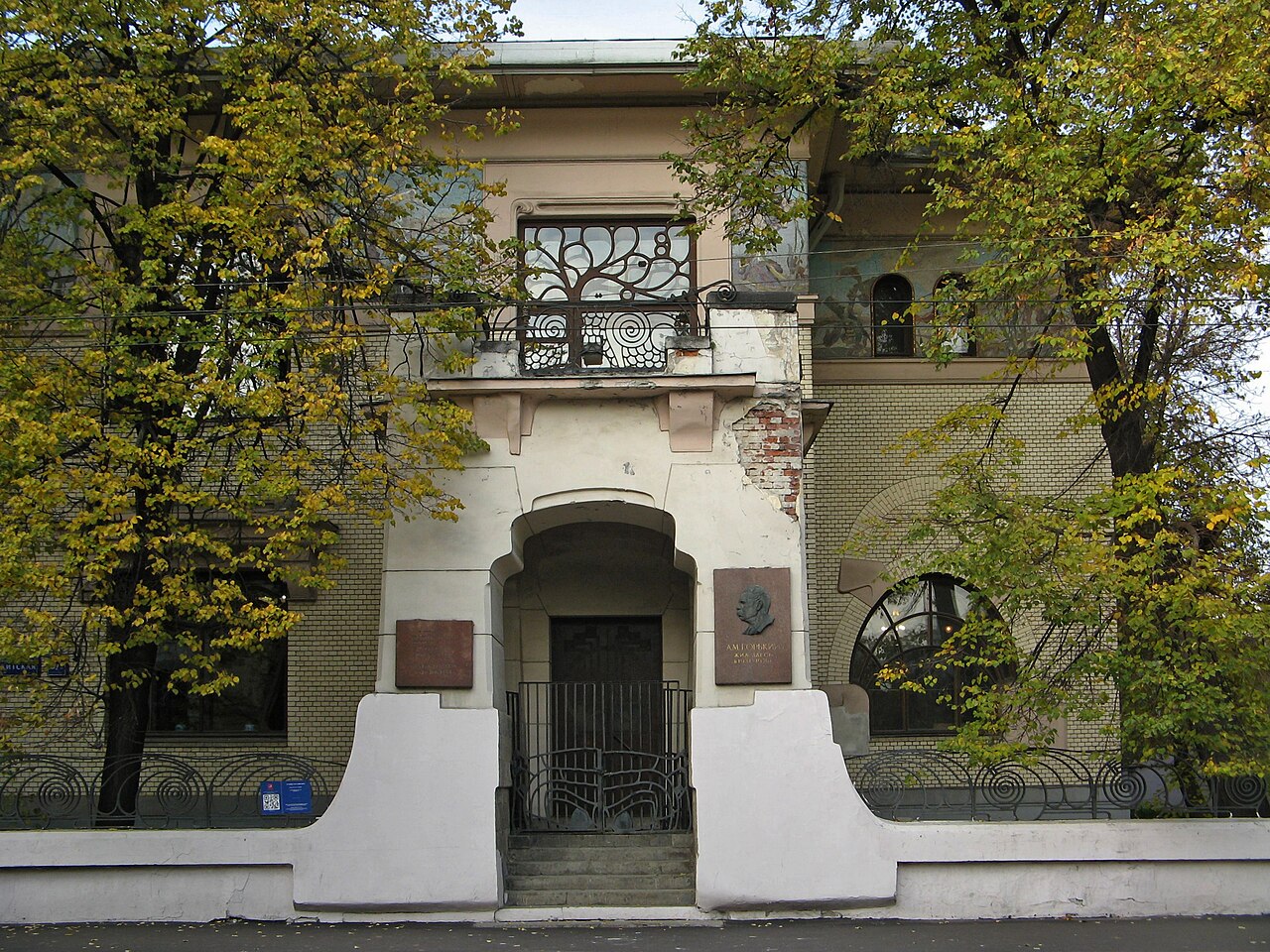
The best surviving interior of Moscow Art Nouveau: Shekhtel built the mansion in 1900–1903 and thought it out down to the door handle, and the wave staircase with its jellyfish lamp is the thing for which one comes here instead of any museum of decorative art. What Horta did at the Hôtel Tassel and Mackintosh at the Glasgow School of Art — one hand over the whole building, from plan to fittings — Shekhtel did here, and here it survives with the fittings in place. Upstairs is hidden an Old Believers’ chapel that could not be shown openly, and it has come through. The memorial part — Gorky lived here from 1931 — is markedly weaker than the architecture, and that should be known in advance: one comes for Shekhtel, not for Gorky.

The wave staircase with its jellyfish light. Stained glass and the mosaic frieze of orchids along the façade. The Old Believers’ chapel on the top floor. Gorky’s study and library.

4.5 km from here · Malaya Nikitskaya Street 6/2 ·
· No. 71
History · since 1997

Museum of Moscow Archaeology

for enthusiasts
Museum of Moscow Archaeology
Qweasdqwe, CC BY-SA 4.0 · Wikimedia Commons
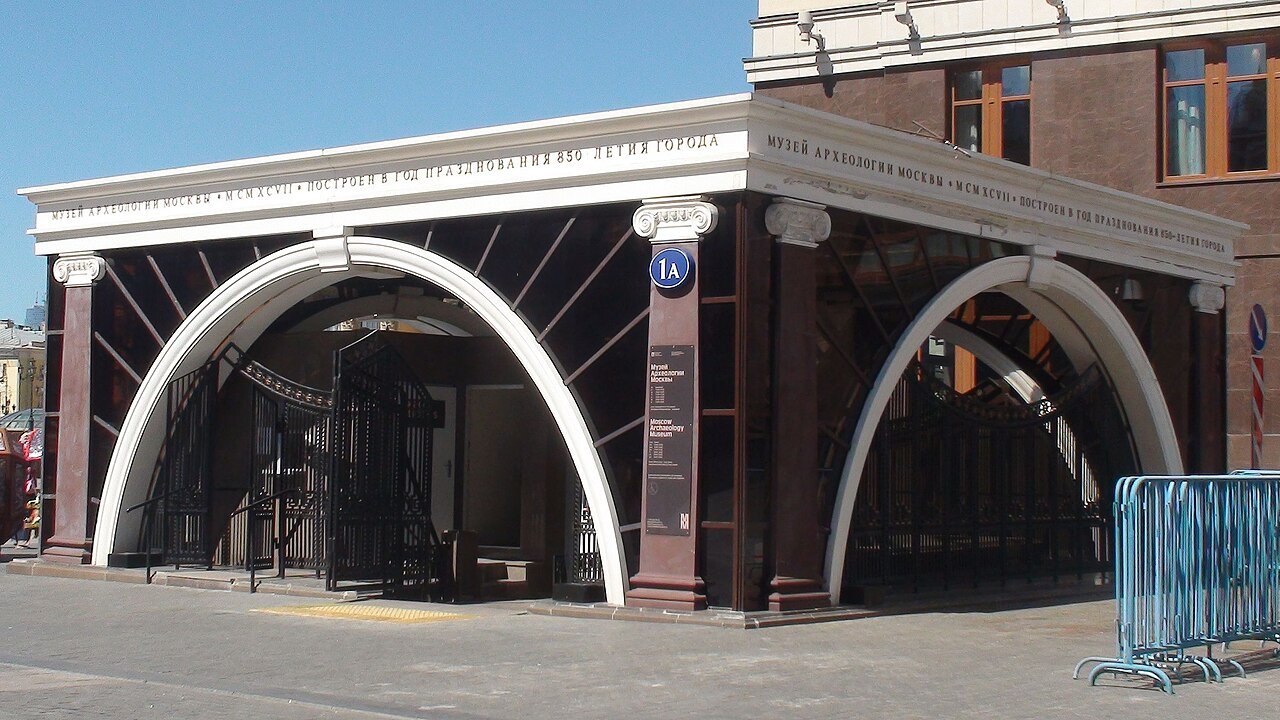
A museum built around what cannot be moved: the 16th-century bridge piers stayed where they were and the building went up over them. That method of display is rare, and it is the reason to go down.

The white-stone piers of the Voskresensky Bridge of the 16th to 18th century — the museum was built around them; coin hoards found in the city centre; the everyday things of medieval Moscow.

4.5 km from here · Manezhnaya Square 1a · ·
· No. 15
outstanding
The Museum of the Russian Icon
Museum of the Russian icon, CC BY-SA 3.0 · Wikimedia Commons
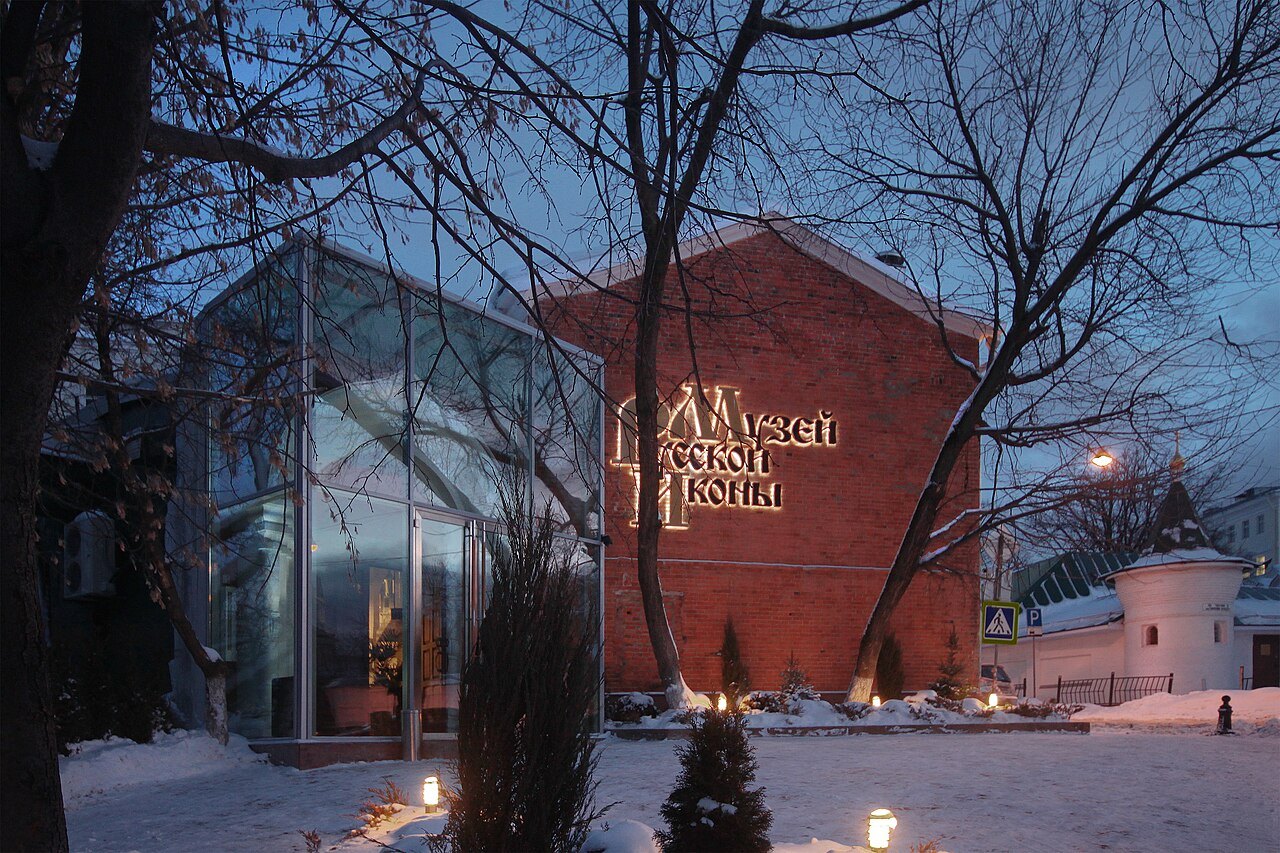
For Ethiopian Christian art it is the only collection in Russia; for the Russian icon it competes with state museums. Add a circumstance almost unheard of anywhere in the world for a collection of this level: admission is free.

The Russian icon of the 14th to 20th century, from Novgorod panels to Old Believer painting; Ethiopian Christian art, the only such collection in Russia; a reconstructed iconostasis and post-Byzantine Greek icons.

4.5 km from here · Goncharnaya 3, bldg 1 · ·
· No. 54
Science and nature · since 1951

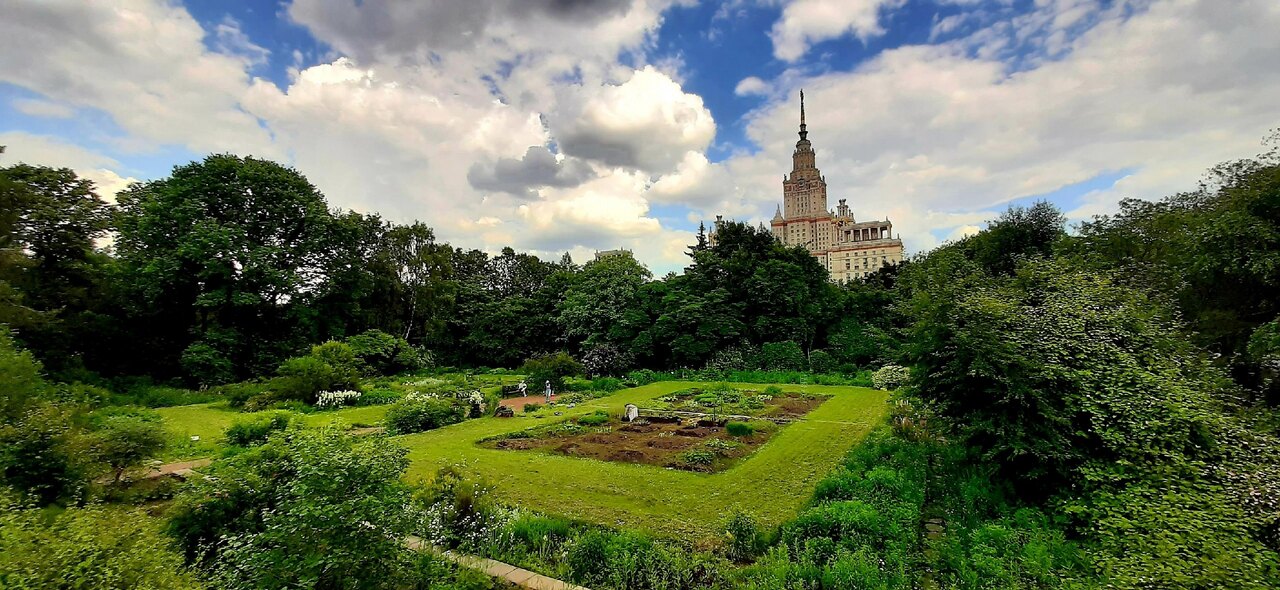
MSU Botanical Garden

for enthusiasts
MSU Botanical Garden
TanyaChu, CC BY-SA 4.0 · Wikimedia Commons
The garden was laid out in 1951 together with the new university buildings on the Lenin Hills, and it is kept as a collection: every holding has its name, its count of varieties and its year. The flowering part by the gate is open to walk through on your own — lilacs, irises, roses, peonies, perennials. There are more than two hundred and fifty varieties of lilac here and about seven hundred irises; the tree peonies were bred in the university itself. Every plant here has its own name and its own provenance.

Lilacs: more than two hundred and fifty varieties, Russian and foreign; the display plot was laid out in 1974. Irises — about seven hundred, from bearded to bulbous. Roses, more than two hundred varieties. Peonies, more than three hundred, among them tree peonies bred in the university itself. Daylilies, about two hundred varieties, from the old ones to the present.

4.6 km from here · Leninskie Gory 1, bldg 12 · ·
· No. 99
Military history · since 1962

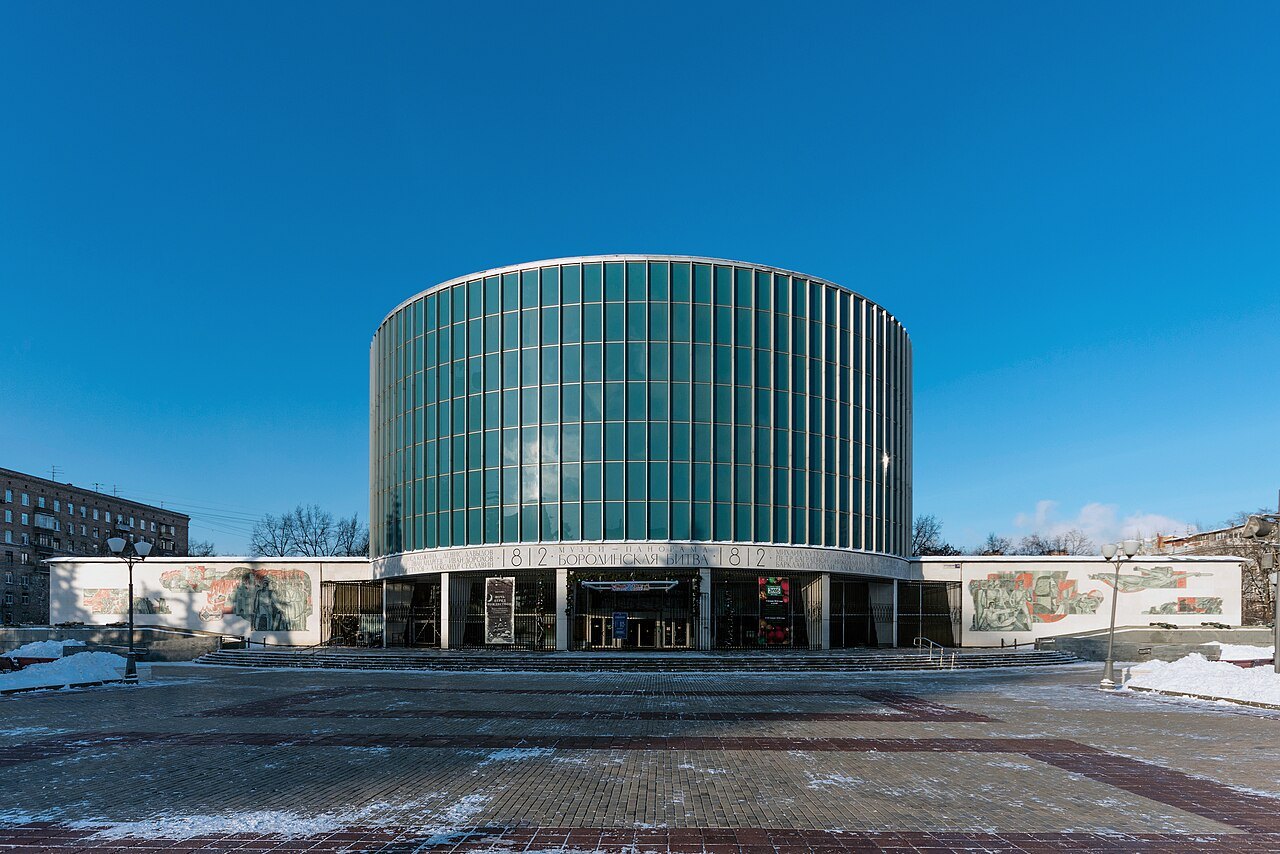
The Borodino Panorama

significant
The Borodino Panorama
Florstein (Telegram:WikiPhoto.Space), CC BY-SA 4.0 · Wikimedia Commons
Roubaud’s panorama is one of the few survivors of a genre that was the summit of 19th-century visual culture and has almost entirely vanished. The value lies in the machinery of the spectacle, not in the subject: this is how people looked before cinema.

Franz Roubaud’s Borodino panorama of 1912: 115 metres of canvas in the round, 15 metres high. Next door, the Kutuzov hut where on 1 September 1812 the council of war decided to abandon Moscow.

5.0 km from here · Kutuzovsky Prospekt 38, bldg 1 · ·
· No. 9

5 museums have no point set. They are not in this count.