Skip to content

Your browser is older than this page. The catalogue still reads here: the list, the filter and the cards all work. Your browser will mark filter choices with plain checkboxes, as best it can. Update your browser to see the page as it was built.

Museums near Museum of Russian Impressionism

We do not ask your browser where you are. We collect no data about people. Place the point on the city map yourself — we will find the nearest museums that suit your preferences.

Distance
Filter
How much time
We count what is left today: from now — or from opening, if the museum has not opened yet — to the last admission. The closing hour is of no use for such a count: past the last admission nobody is let in. Where the last admission is not established we allow half an hour: erring towards «you will not make it» costs less than sending someone to a locked door.
When I go
We show those open on at least one of the days chosen. Today is Friday.
Who with
One thing is asked here: whether a child will find it interesting inside. The ease of the way and of the rooms is a question of another kind, and it stands under “Access”. In the entry this shows as a mark, and the age in the note beside it.
What to see
Access
The accessibility of a museum and the accessibility of the way to it are different things, and we keep them apart. It happens that everything inside is arranged faultlessly while the door itself cannot be reached in a wheelchair; it happens the other way round too.
How valuable
What sets it apart
Showing 46 museums

Drag the pin or press the map.

open nowclosed nowhours not known

Map — OpenStreetMap

Nearest museums · 46
House museums · since 1911

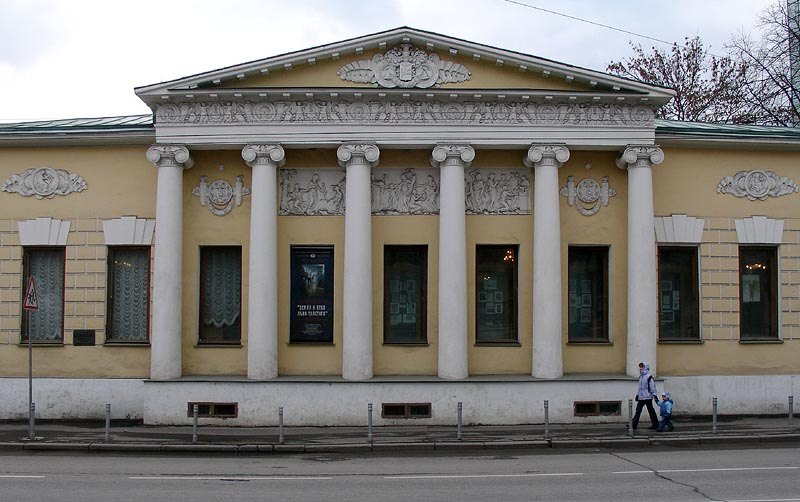
The Tolstoy Museum on Prechistenka

significant
The Tolstoy Museum on Prechistenka
NVO, CC BY-SA 2.5 · Wikimedia Commons
The largest manuscript fund of any single writer in the world. The value is scholarly: you see how the text was made — Tolstoy rewrote a sentence ten times, and you can watch it happen. For the house he lived in, go to Khamovniki.

Manuscripts in Tolstoy’s hand, first editions, portraits and photographs of the writer and his family. The display follows the books, from Childhood to Resurrection.

4.5 km from here · Prechistenka 11/8 · ·
· No. 7
History · since 1994

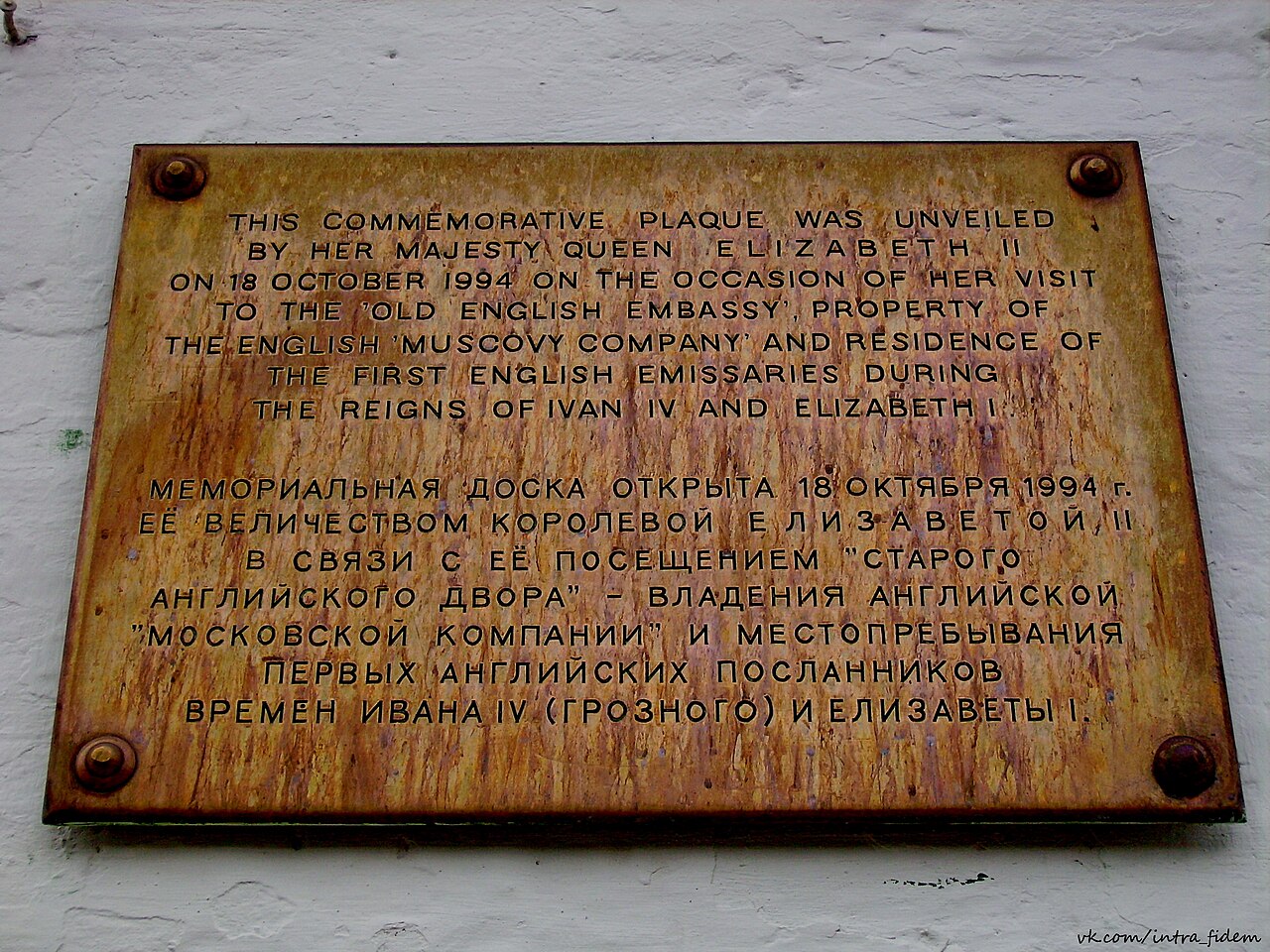
The Old English Court

significant
The Old English Court
O.Bragina, CC BY-SA 3.0 · Wikimedia Commons
The oldest surviving secular building in Moscow. The value is in the vaults themselves: almost no 16th-century interiors are left in the city, and these were recovered by Baranovsky, the restorer who saved half of it.

The Treasury Chamber with its 16th–17th-century interior and the original vaults; the display on Russian–English trade and finds from the Zaryadye digs.

And we came to the Mosco the 4. day of October, and were lodged that night in a simple house: but the next day we were sent for to the Emperour his secretarie…
George Killingworth, 1589 in full
4.7 km from here · Varvarka 4a (Zaryadye Park) · ·
· No. 18
History · since 1859

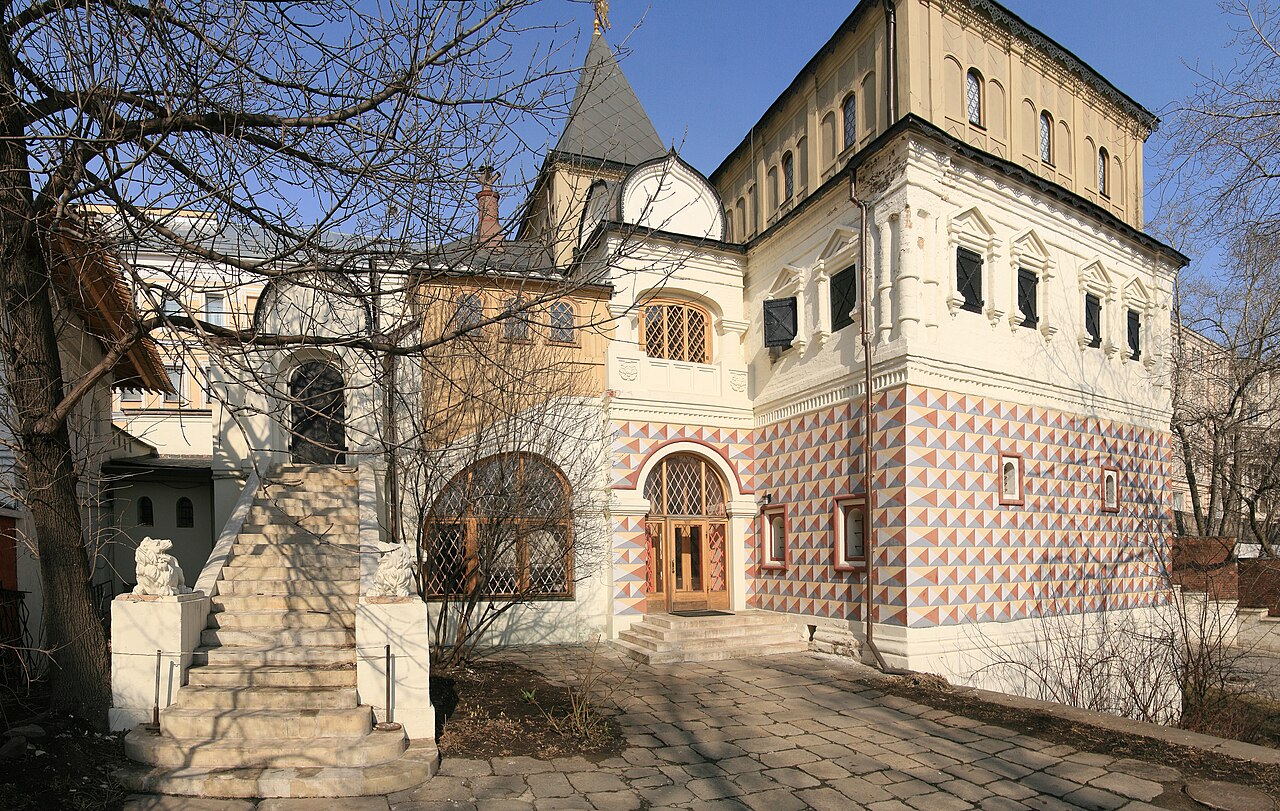
The Romanov Chambers

significant
The Romanov Chambers
Ludvig14, CC BY-SA 3.0 · Wikimedia Commons
One of the first museums in Russia: it opened in 1859, thirteen years before the Historical Museum, and opened already as a reconstruction of boyar life — an idea unheard of at the time. What is to be looked at is not authenticity down to the nail but the conception itself: how the middle of the nineteenth century pictured the seventeenth, and what came of it. Barry and Pugin were building Westminster in those same decades, and the case is the same — a century imagining an earlier one and building it in earnest. The collection meanwhile is real: furniture, vessels, textiles, tiles. Together with the Old English Court two steps away, this is the best pair in Moscow about the city before Peter.

The sixteenth-century undercroft, the one genuine part of the building. The interiors recreated by Richter in the 1850s: the dining chamber, the boyarynya’s room, the light room. Tiled stoves, chests, vessels and textiles of the seventeenth century.

4.8 km from here · Varvarka Street 10 ·
· No. 77
Science and nature · since 2011

Experimentanium

for enthusiasts
Experimentanium
Barvenkovskiy, CC BY-SA 4.0 · Wikimedia Commons
A Western-style science centre, not a museum: no originals, only apparatus. Excellent for a first acquaintance with physics; it gives nothing at all for the history of science.

Halls of mechanics, optics, acoustics and electricity; a mirror maze; science shows to a timetable.

4.9 km from here · Leningradsky Prospekt 80, bldg 11 · ·
· No. 49
History · since 1896

Museum of Moscow

significant
Museum of Moscow
shakko, CC BY-SA 3.0 · Wikimedia Commons
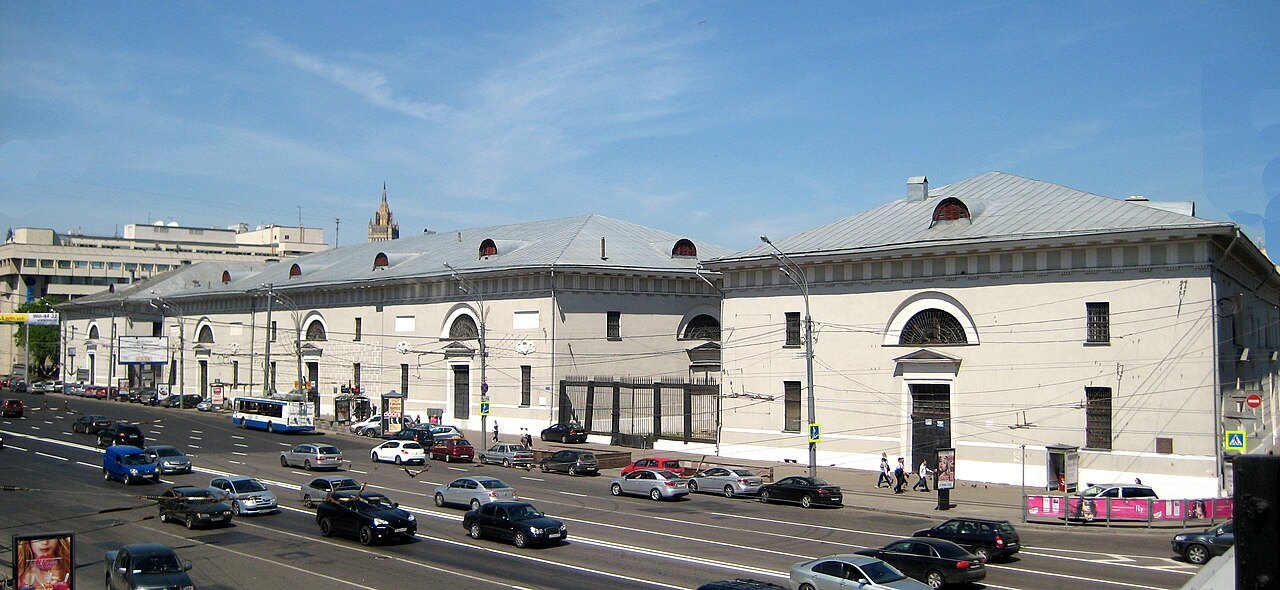
A city museum — an ordinary genre in Europe — but the material is unique in scale: a million objects about one city. The value is also the Provision Warehouses by Stasov, a model Empire building rarely accessible from inside.

The permanent display History of Moscow: the archaeology of Moscow soil, town life, plans and views of the city by century. And the Provision Warehouses themselves, an Empire monument after Vasily Stasov.

5.0 km from here · Zubovsky Boulevard 2, bldg 7 · ·
· No. 56
Literature · since 1934

The Dahl Literary Museum

significant
The Dahl Literary Museum
Levnevskiy, CC BY-SA 4.0 · Wikimedia Commons
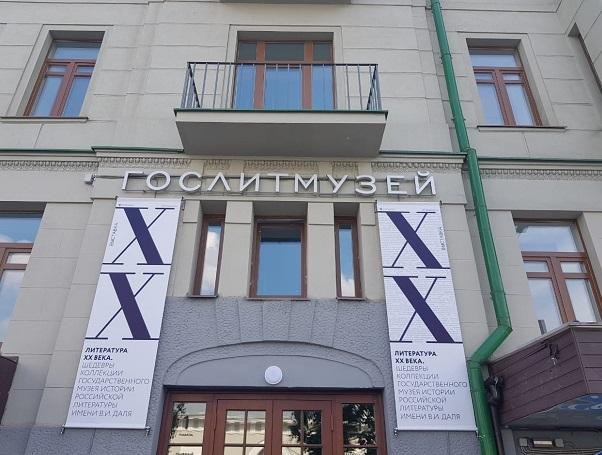
The only museum built not around a single name but around literature as a process. Hence its strength — comparisons impossible in a house museum, and a fund of 700,000 items that makes such comparisons possible.

The permanent display Zubovsky 15: a house of science, literature and art, and the exhibitions on 20th-century Russian letters.

5.1 km from here · Zubovsky Boulevard 15, bldg 1 · ·
· No. 8
significant
The Tretyakov on Kadashevskaya
Ludvig14, CC BY-SA 4.0 · Wikimedia Commons
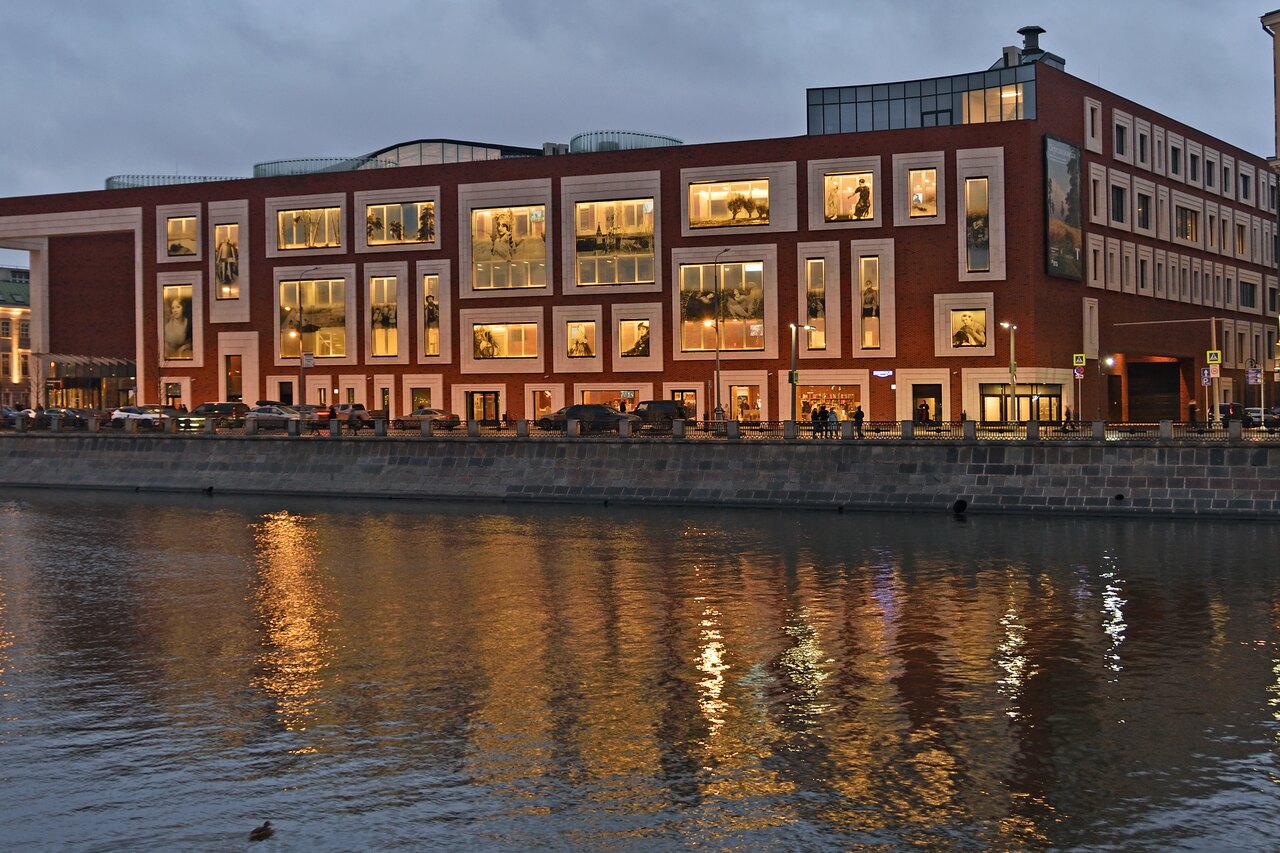
Not yet a collection but an instrument: the first exhibition building in Moscow built to 21st-century museum standards — climate, light, spans. Its value is that things can now be brought here that could not be brought before.

There is no permanent collection — this is an exhibition wing. See the atrium, open without a ticket, and the façades: they carry reproductions of 34 works by Russian artists.

5.1 km from here · Kadashevskaya Embankment 12 · ·
· No. 55
House museums · since 1921

Tolstoy in Khamovniki

outstanding
Tolstoy in Khamovniki
Shuvaev, CC BY-SA 3.0 · Wikimedia Commons
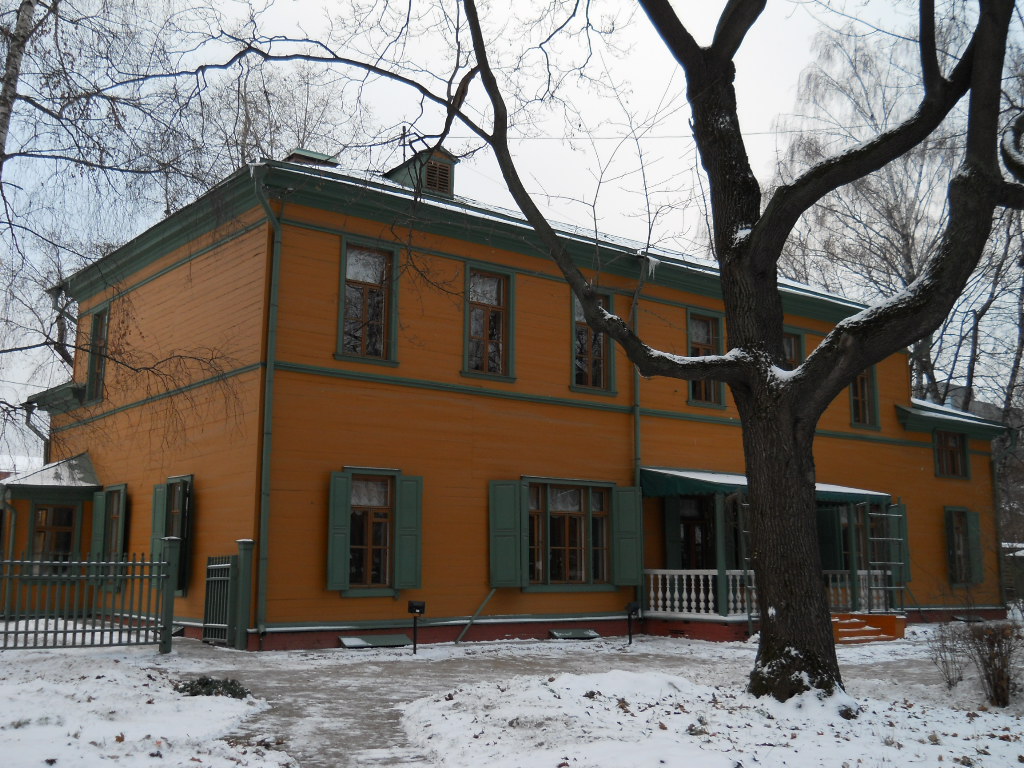
A house in which nothing was reconstructed: the furnishings are its own, the objects are the family’s, and their placing follows an inventory taken while the owners were alive. There is no electric light here and never was — Tolstoy refused it on principle, so the rooms are lit as they were in his time, which for a house museum is almost unheard of. Anyone who has been to Carlyle’s House in Chelsea knows the effect and will find it carried further here: there the gas fittings survive, here there is nothing but daylight and a lamp. The literary display on Prechistenka answers the question of what he wrote; here the question answered is how he lived — and in his case that is the subject.

The study with its low chair, cut down to the short sight of its owner, and the writing table. Sofya Andreyevna’s room. The hall with the piano at which Taneyev and Rachmaninoff played. The cobbler’s bench — Tolstoy made his own boots. The garden, which has outlived the century along with the house.

5.2 km from here · Lva Tolstogo Street 21 ·
· No. 62
for enthusiasts
Apollinary Vasnetsov Museum
Apollinary Vasnetsov’s reconstructions of old Moscow are not painting but scholarship: the artist made archaeological observations, and his views still serve as textbook illustrations. Here they hang in the flat where they were made.

The studio with its original furnishings, and the views of old Moscow — historical reconstructions by which the medieval city is still imagined.

5.2 km from here · Furmanny Lane 6, flats 21–22 (3rd floor) ·
· No. 13
Art · since 1856

The Tretyakov Gallery

world-class
The Tretyakov Gallery
A.Savin, CC BY-SA 3.0 · Wikimedia Commons
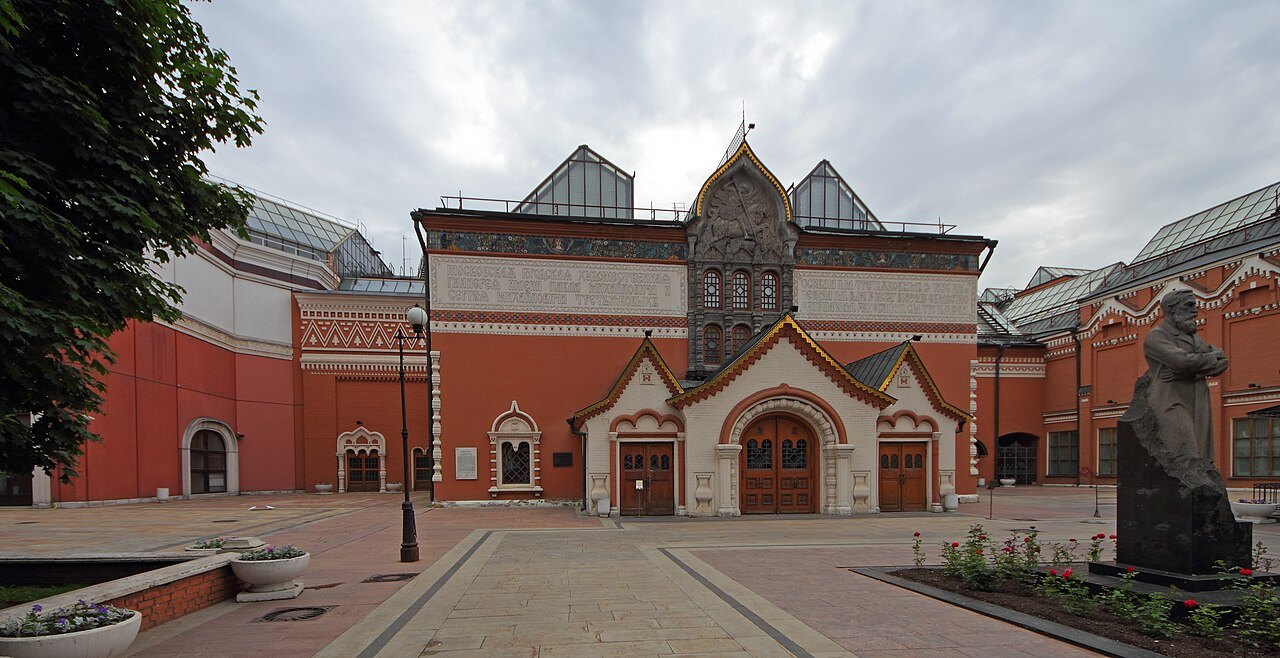
Russian art of the 11th to early 20th century is nowhere else assembled so fully — only the Russian Museum compares. But the canon was formed here: Tretyakov bought from living artists what he himself thought mattered, and one man’s private judgement became what we now call the Russian school. Seeing the 19th century elsewhere means seeing fragments.

Ivanov’s The Appearance of Christ Before the People in its own hall; Surikov’s Boyarynya Morozova and Morning of the Streltsy Execution; Repin’s Ivan the Terrible and His Son; Serov’s Girl with Peaches; Vasnetsov’s Bogatyrs; the icon halls. Rublev’s Trinity is no longer here: it was handed to the Church in 2023.

5.3 km from here · Lavrushinsky Lane 10 · ·
· No. 1

5 museums have no point set. They are not in this count.