Museums near The Dostoevsky Museum
We do not ask your browser where you are. We collect no data about people. Place the point on the city map yourself — we will find the nearest museums that suit your preferences.
The Jewish Museum
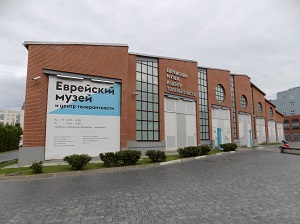
The building itself — the Bakhmetevsky garage of 1926–1927, one of Konstantin Melnikov’s principal works with steel structures by Vladimir Shukhov; the Café on Basseynaya, a reconstruction of shtetl life.
The Museum of Decorative Art
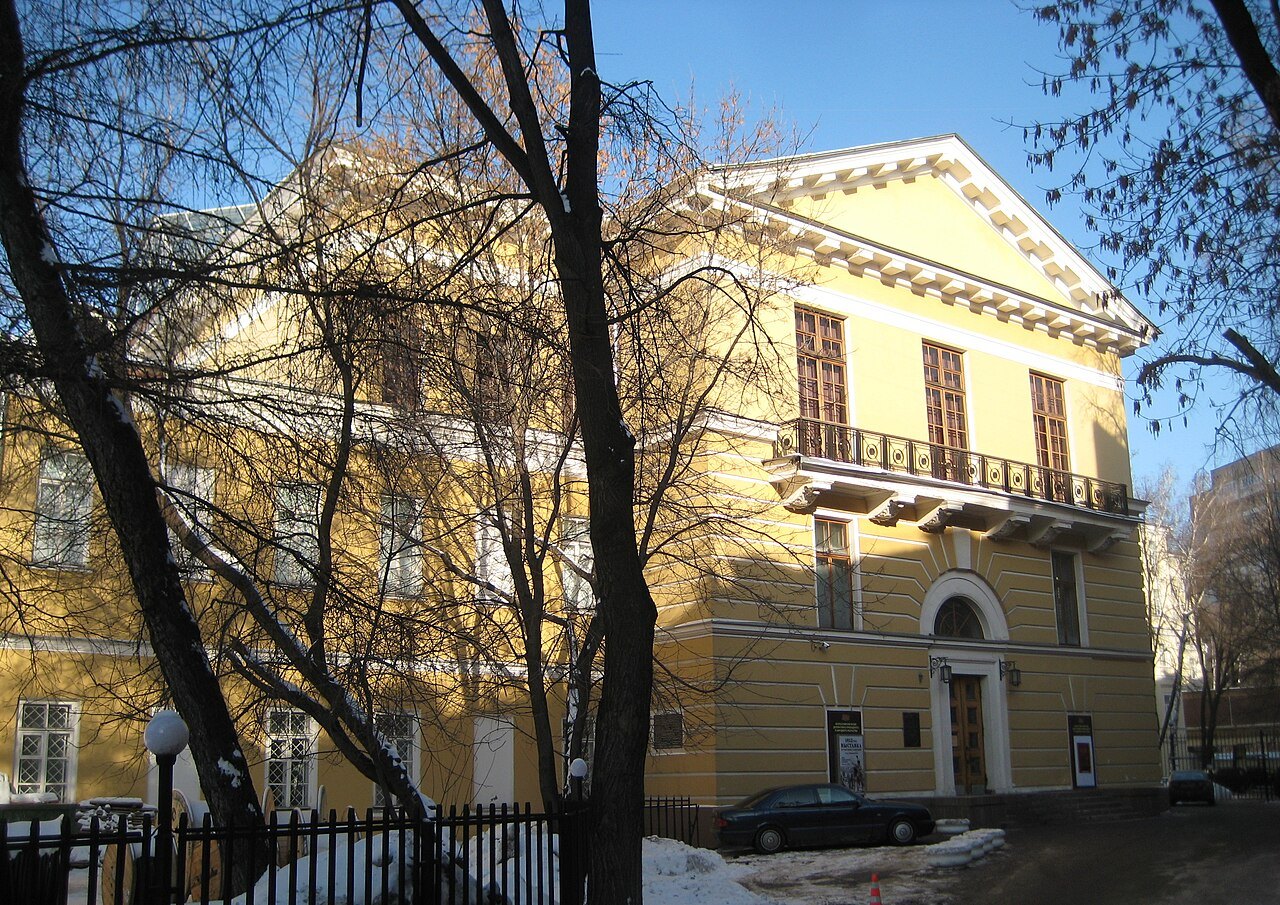
Lacquer miniature — Palekh, Fedoskino, Mstyora, Kholuy; Soviet propaganda porcelain; toys of the peoples of the world; embroidery and samovars.
The Museum of Music
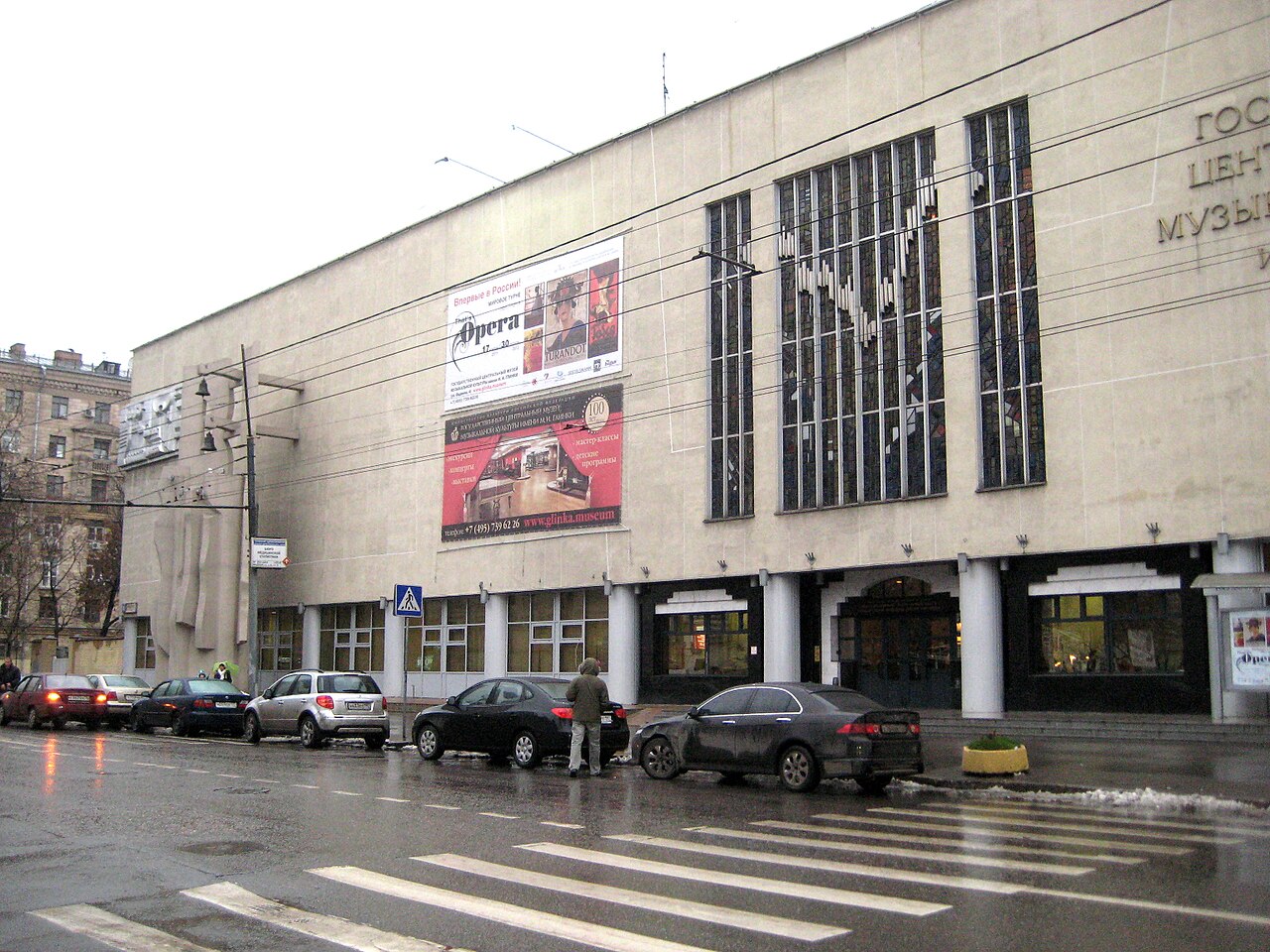
Instruments of the peoples of the world, from Russian gusli to the Japanese koto. The ANS synthesiser of Yevgeny Murzin, named with Scriabin’s initials. Autographs and manuscripts of Russian composers. The State Collection of stringed instruments, when it is in the museum.
The Vasnetsov House
The upper floor is the studio the house was built for: high ceilings, wide windows onto the yard and the garden. Viktor Vasnetsov painted the Bogatyrs and Sirin and Alkonost here. Both went long ago to Lavrushinsky Lane. What stayed is The Poem of Seven Fairy Tales — seven canvases of 1901–1926, from The Sleeping Princess to The Frog Princess. Beside them are icons and peasant costumes from his own collection. His brushes lie in a birchbark box on the work table. Downstairs, two rooms survive almost intact. The dining room and the drawing room keep their furnishing of the late nineteenth and early twentieth century: furniture to drawings by Vasnetsov and Yelena Polenova, family portraits by his own hand. In the yard, on the brick fire wall, is the mosaic Christ Enthroned after his design. It was set early in the twentieth century in Frolov’s St Petersburg workshop and moved here in the 1970s.
The AZ Museum
Painting and drawing by Anatoly Zverev from Natalia Opaleva’s collection. Exhibitions setting Zverev beside other artists of his circle. Work by Vladimir Nemukhin and other nonconformists.
The Apothecary Garden
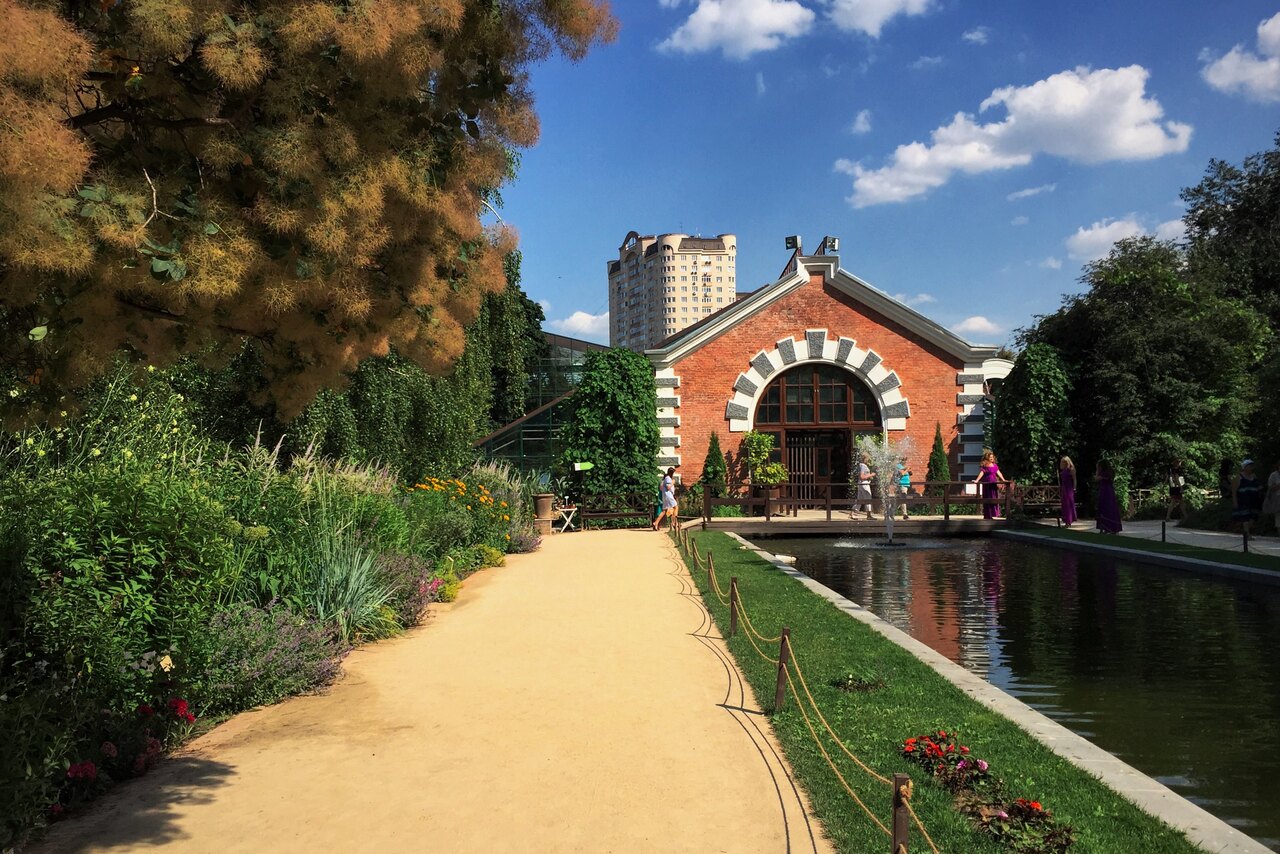
Peter's larch, as the garden has always called it, stands in the middle of the arboretum. Beside it a pedunculate oak more than two hundred years old, limes past a hundred, and a rare weeping form of the Dahurian larch. The Palm House of 1891: palms, figs and pandanus at their full height. The Succulent House on the upper floor of the glasshouse block holds cacti, euphorbias, agaves and aloes, some of them among the rarest anywhere. The old pond with its water plants, the shade garden, the heather slope where the rockery used to be; the conifer slopes took a gold diploma of the landscape architecture prize in 2013.
The Museum of Contemporary History
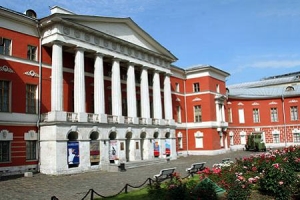
The building of the Moscow English Club — the club of Eugene Onegin and War and Peace, with the lions on its gate; Soviet propaganda porcelain; the collection of gifts to Stalin.
The Arcade Machines Museum
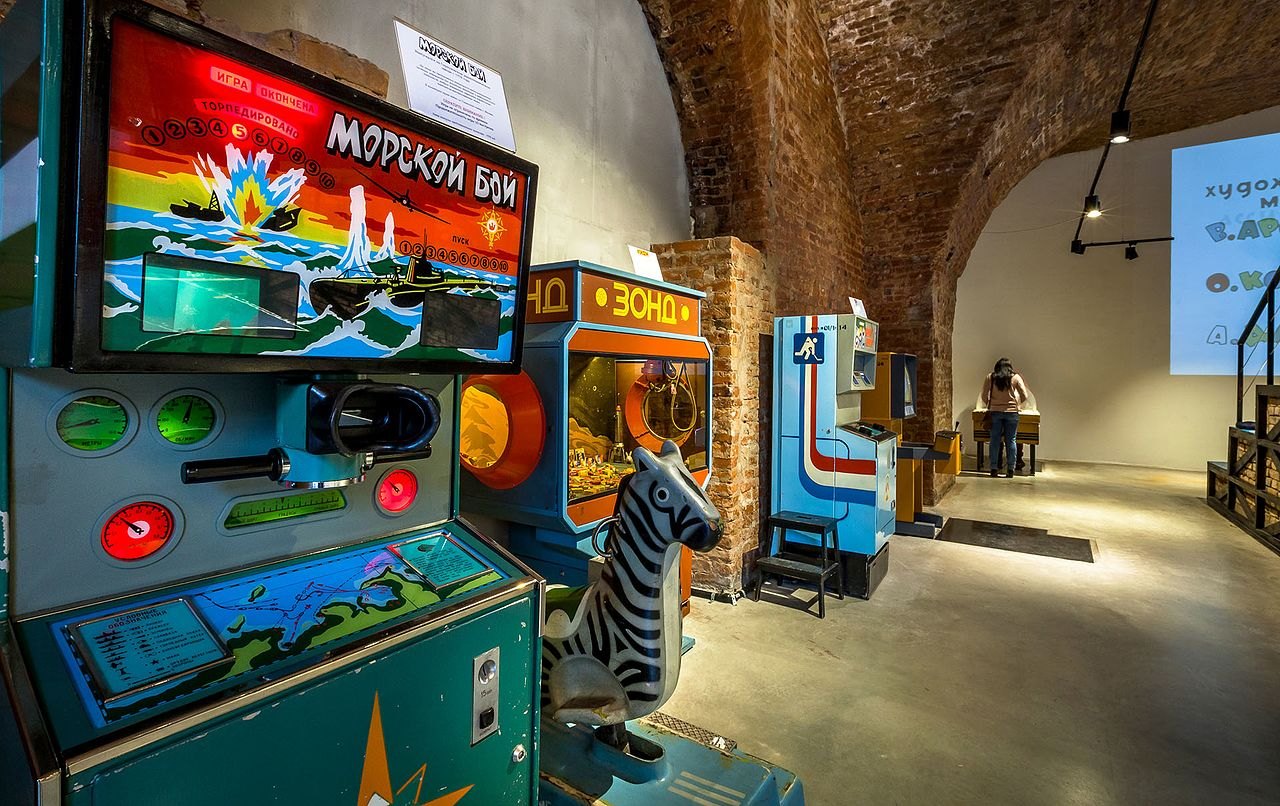
Sea Battle, Gorodki, Sniper, Safari — the machines work rather than stand behind glass; and the soda machine with a faceted glass.
Museum of Russian Impressionism
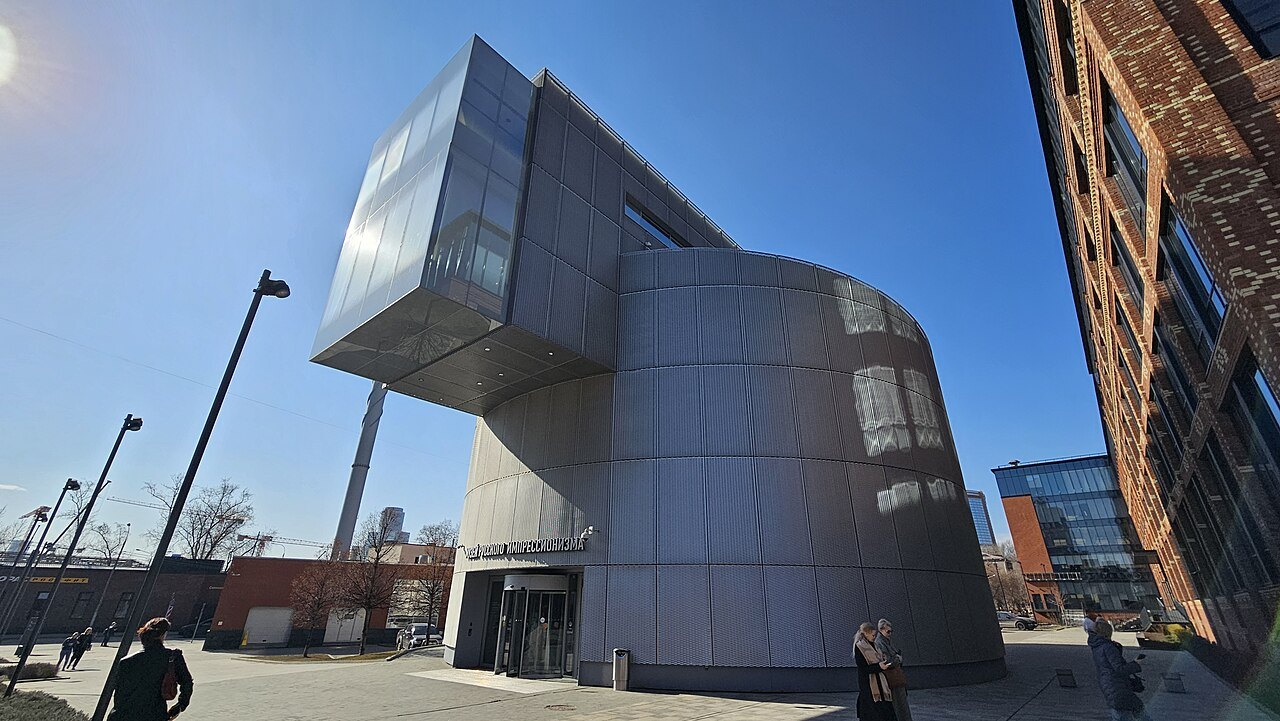
Konstantin Korovin, Valentin Serov, Igor Grabar, Nikolai Bogdanov-Belsky. The building is a converted cylindrical flour store of the Bolshevik factory — a rare case of industry turned into a museum.
The Bookplate Museum
Bookplates by Russian and foreign artists, miniature editions and micro-books, writing on a grain of rice and miniatures on ivory.
3 museums have no point set. They are not in this count.