Skip to content

Your browser is older than this page. The catalogue still reads here: the list, the filter and the cards all work. Your browser will mark filter choices with plain checkboxes, as best it can. Update your browser to see the page as it was built.

Museums near The Esterházy Palace

We do not ask your browser where you are. We collect no data about people. Place the point on the city map yourself — we will find the nearest museums that suit your preferences.

Distance
Filter
How much time
We count what is left today: from now — or from opening, if the museum has not opened yet — to the last admission. The closing hour is of no use for such a count: past the last admission nobody is let in. Where the last admission is not established we allow half an hour: erring towards «you will not make it» costs less than sending someone to a locked door.
When I go
We show those open on at least one of the days chosen. Today is Friday.
Who with
One thing is asked here: whether a child will find it interesting inside. The ease of the way and of the rooms is a question of another kind, and it stands under “Access”. In the entry this shows as a mark, and the age in the note beside it.
What to see
Access
The accessibility of a museum and the accessibility of the way to it are different things, and we keep them apart. It happens that everything inside is arranged faultlessly while the door itself cannot be reached in a wheelchair; it happens the other way round too.
How valuable
What sets it apart
Showing 6 museums

Drag the pin or press the map.

open nowclosed nowhours not known

Map — OpenStreetMap

Nearest museums · 6
Architecture and estates · since 1861

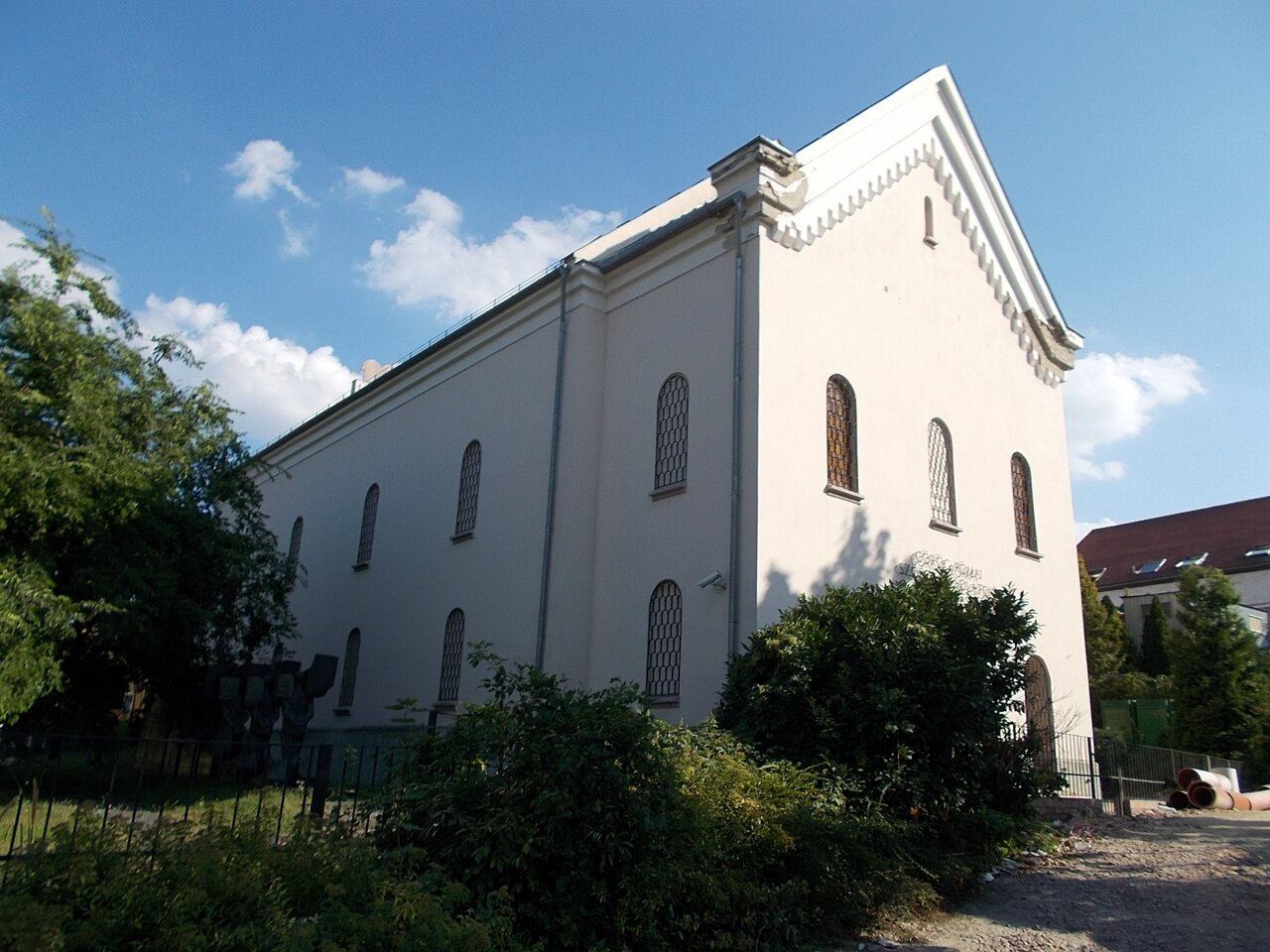
The former synagogue, exhibition hall

niche
The former synagogue, exhibition hall
Globetrotter19, CC BY-SA 3.0 · Wikimedia Commons
A synagogue rebuilt in 1861 in the romantic manner to the design of Ignác Wechselmann. There is no standing display in the house at all. What remains is the building itself and the memory of a community the town no longer has; in the garden stands a monument to the victims of the Holocaust by Mária Lugossy, unveiled on 18 November 2004.

The building itself — the rebuilding of 1861 to the design of Ignác Wechselmann (1828–1903). In the garden, the memorial place of Komárom-Esztergom county and the sculptural group by Mária Lugossy, In Memory of the Martyrs of All Times, of 2004. There is no standing display; the hall is given to temporary ones.

150 m from here · Hősök tere 7 · ·
· No. 97
significant
The Kuny Domokos Museum in Tata Castle
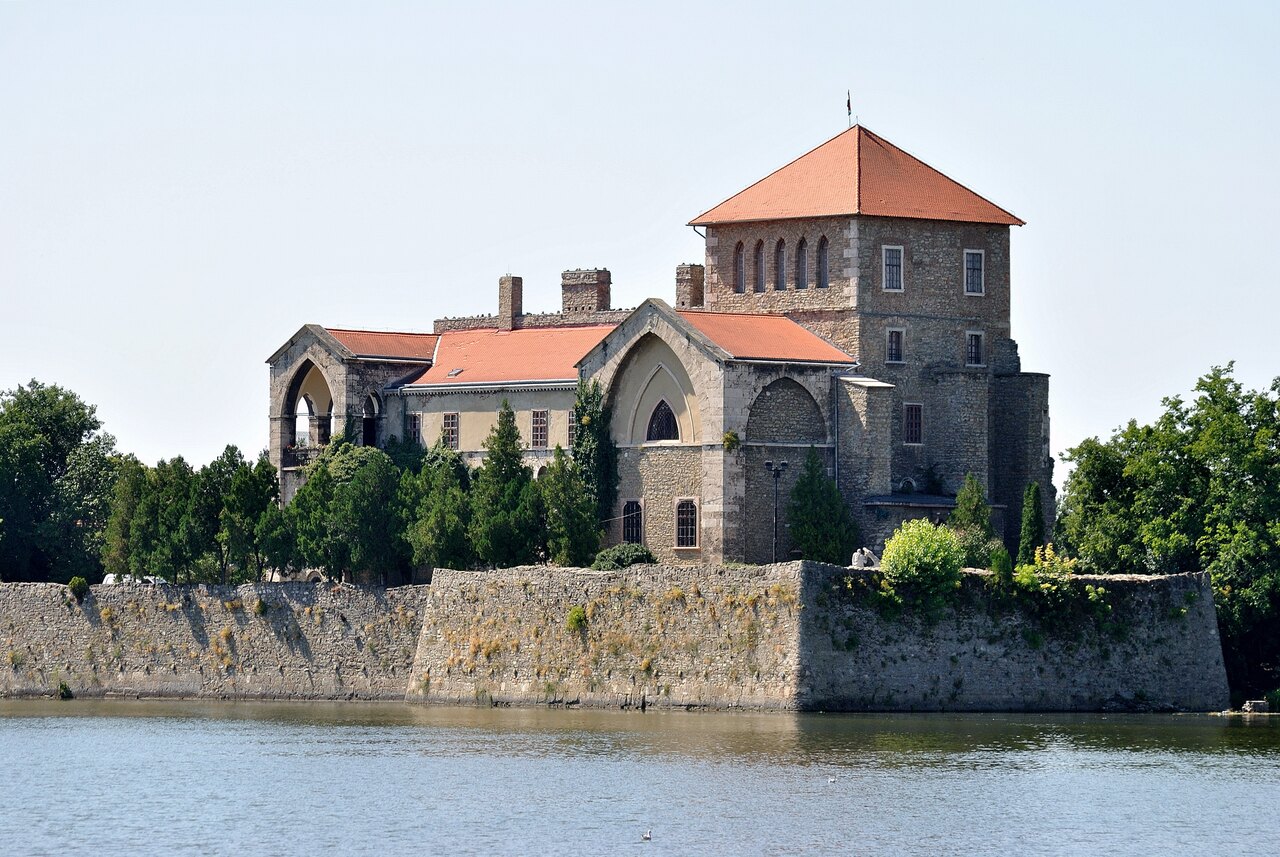
EtelkaCsilla, CC BY-SA 3.0 · Wikimedia Commons
A castle standing in water, where Sigismund of Luxembourg held his court and received embassies and where Matthias Corvinus rebuilt the palace in the renaissance manner; the county museum has been in it since 1954. The collection grew out of the Piarists’ cabinet, begun in 1765 by Count Miklós Esterházy, and after Trianon it was left as the only scholarly collection on the stump of Komárom county: the county society had gone abroad together with Komárom. Hence the Roman material from Brigetio and Almásfüzitő, the carved stone of the Benedictine abbey of Vértesszentkereszt, and the faience for which the museum bears the name of Domokos Kuny. A sound provincial collection.

The green-glazed stove with knight figures — put back together from fragments out of a cellar filled in during the sixteenth century, and it carries the furnishing of the palace in the time of Matthias Corvinus. The Roman lapidary, opened in 1955 — stones from Brigetio and Almásfüzitő. The medieval lapidary — carving from the abbey of Vértesszentkereszt. The faience of Domokos Kuny (1754–1822). The Knights’ Hall of 1815, with the neo-Romanesque windows put in for the imperial manoeuvres of 1897. The standing displays A City Is Born and Everyday Life in the Middle Ages.

350 m from here · Váralja utca 1–3 · ·
· No. 92
niche
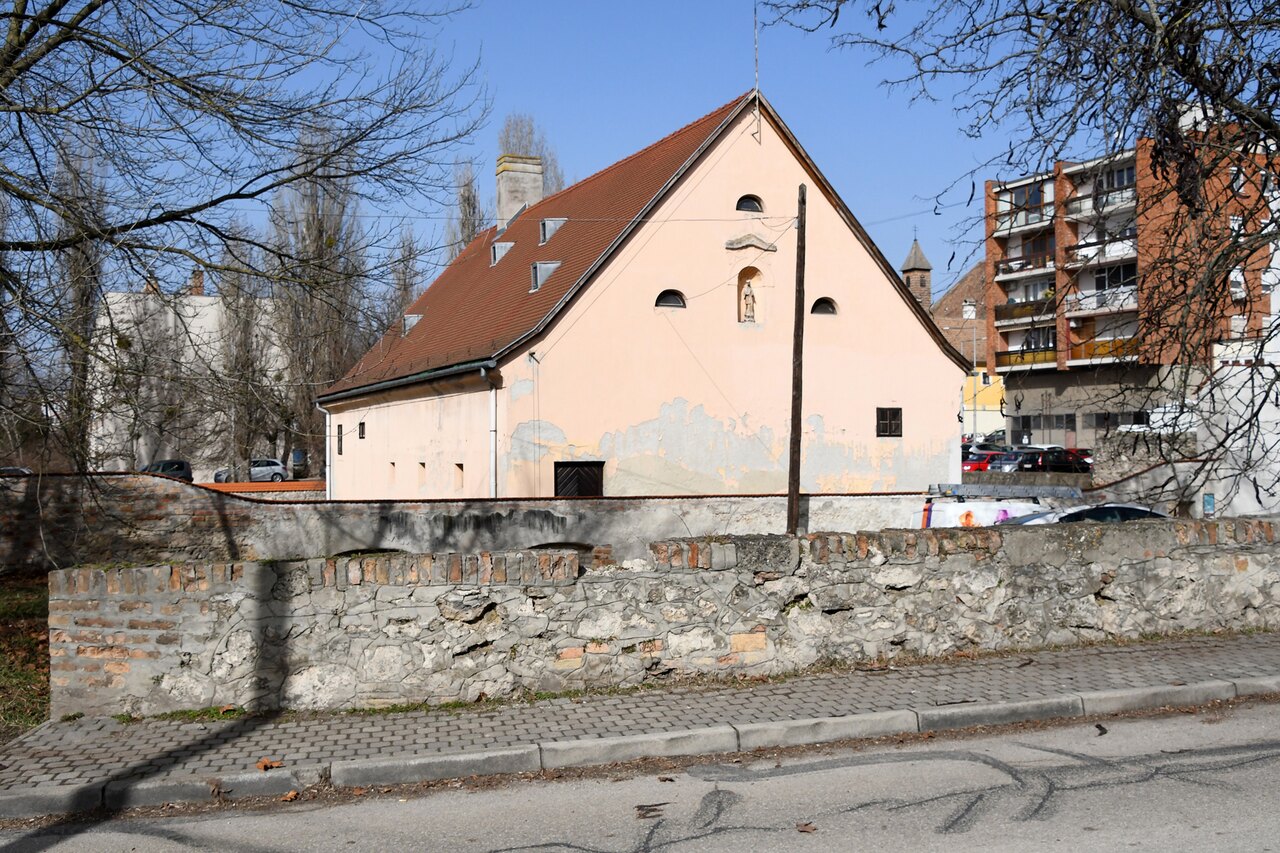
The Museum of the Hungarian Germans
Pasztilla aka Attila Terbócs, CC BY-SA 4.0 · Wikimedia Commons
Germans have lived in these parts since the early Middle Ages, settled here in great waves in the eighteenth century, and in 1946 were carried off by train; there is no second museum of that community in the country. The main thing here is not ethnography: the standing display of 2015, We and the Others, works out how a majority forms its notion of a minority — a rare case of a minority museum taking on the mechanism itself. ICOM Hungary gave it its award for that in 2023.

The standing display We and the Others (Mi és a többiek, 2015): the Histories section — a thousand years of the state’s dealings with its minorities, laid out as a river with its shoals and dams — and facing it the personal keepsakes given to the museum by people and communities; the Objects section — what has counted at various times as a typically German thing. The Nepomuk mill of 1758 by Jakab Fellner: how the mill was built and how it worked is shown on the ground floor. The wooden statue of John of Nepomuk on the front. An open store in the former granary. Of the costume and household gear one expects from a local museum there is less here than there is talk.

700 m from here · Alkotmány utca 1 · ·
· No. 93
Science and nature · since 1976

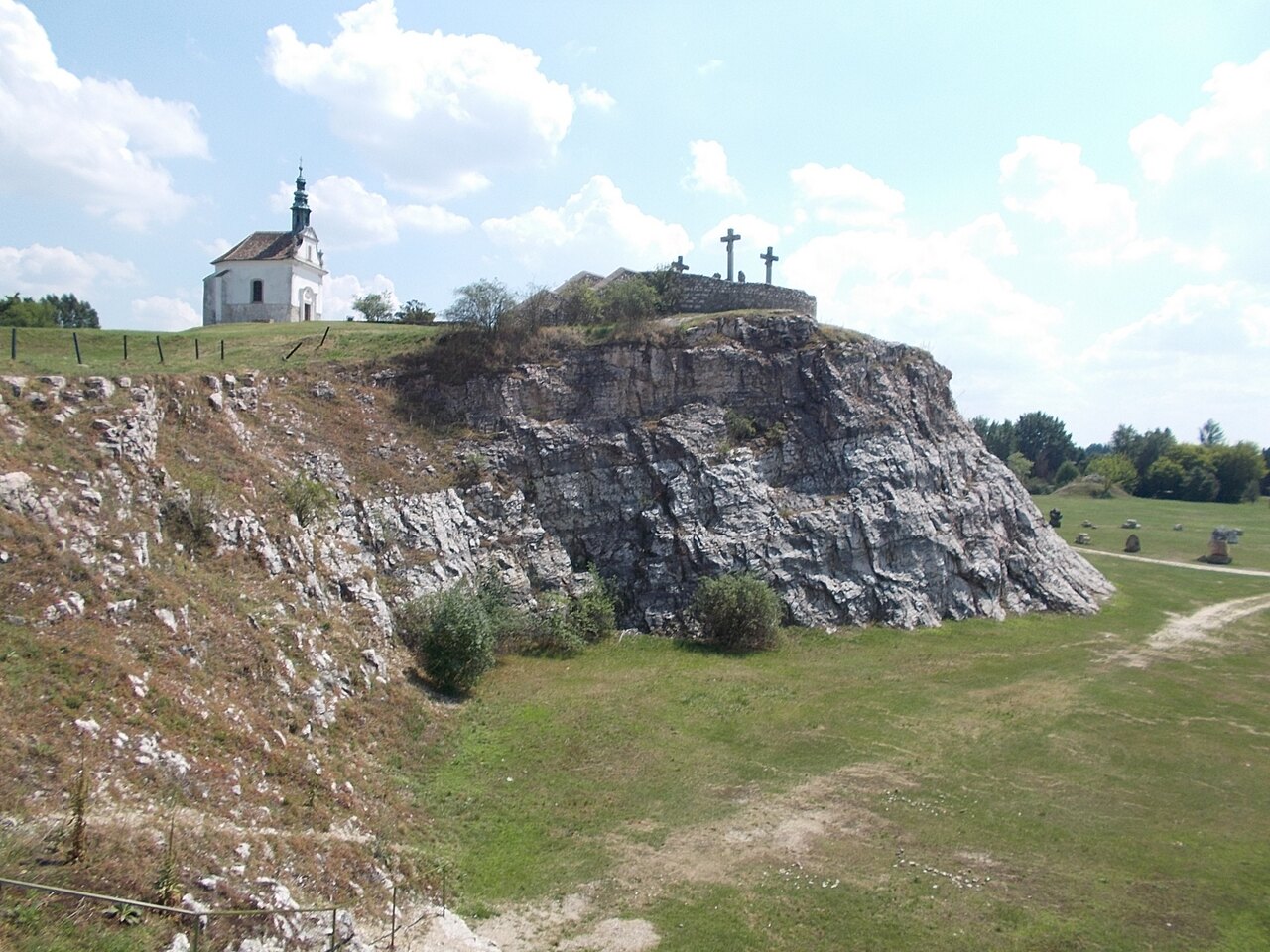
The Geologists’ Garden on Kálvária Hill
niche
The Geologists’ Garden on Kálvária Hill
Globetrotter19, CC BY-SA 3.0 · Wikimedia Commons
Kálvária Hill, cut away by quarries, reads like an open book: the rock faces have been cleared on purpose, for science, so that tens of millions of years of the earth’s history run along them. The place has been protected since 1953 and since 1958 has counted as a nature monument of national standing. One may only go round with a guide: without explanation a rock face stays a rock. Stone has been taken from this hill for five thousand years — the traces of Copper Age flint working are still on it.

The cleared rock faces — stones of a kind no longer formed today, and phenomena that a textbook can only draw as a diagram. The stone park — the commonest rock-forming stones of Hungary, gathered into one walk. The traces of Copper Age flint working. On the top of the hill a baroque chapel and a calvary, and beside them a lookout tower, the Söréttorony.

750 m from here · Kálvária-domb · ·
· No. 94
Architecture and estates · since 1784

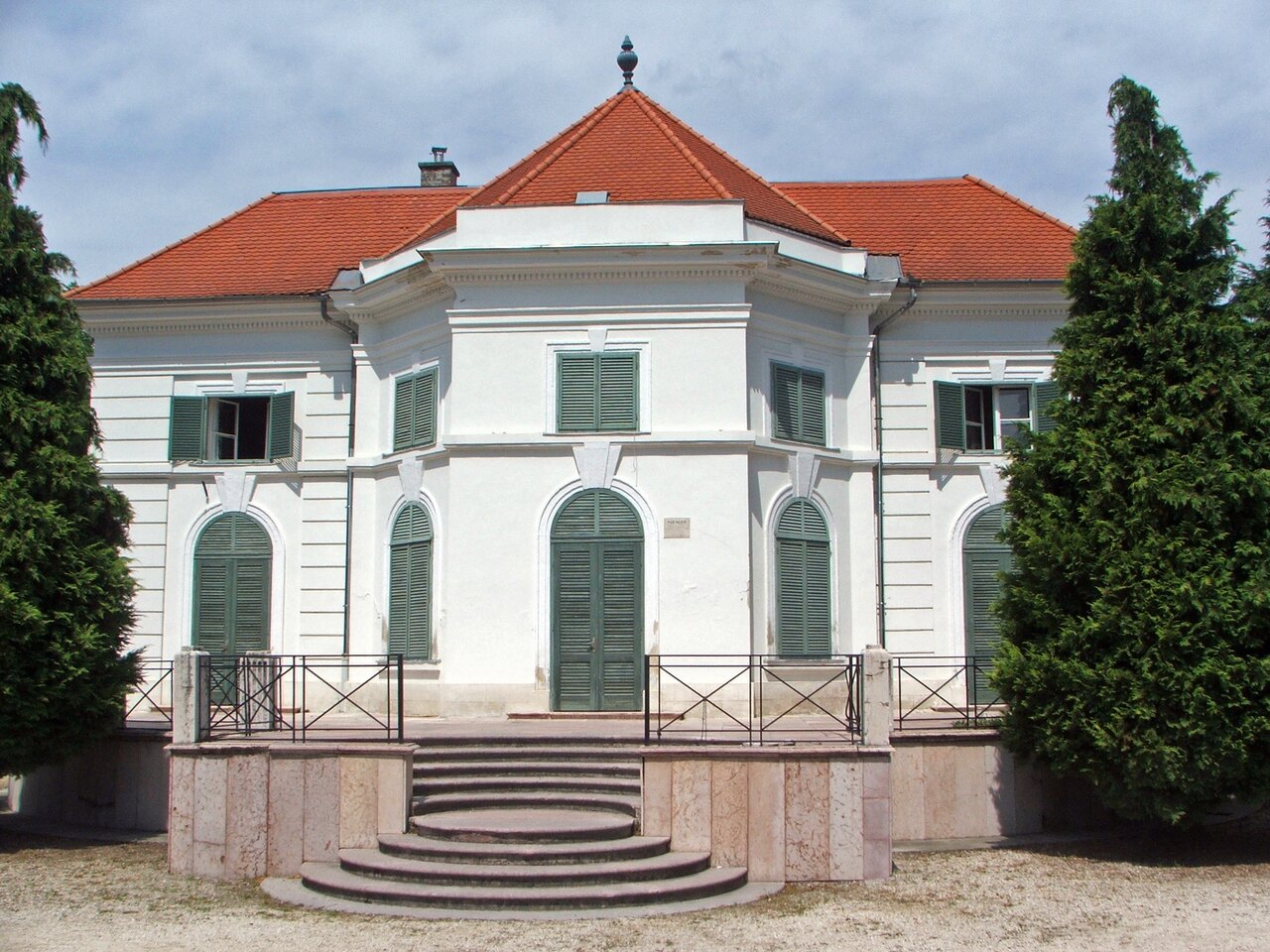
The Esterházy Summer House

niche
The Esterházy Summer House
József Süveg, CC BY-SA 3.0 · Wikimedia Commons
The small Esterházy house in the English Garden — the oldest building in the park, put up by József Grossmann in 1784 in the Zopf manner; it was made for seclusion, with nothing of display about it. On the ground floor the original decorative painting has been brought back — a reception room with a landscape over the walls, and linear painting in the other rooms. Upstairs an exhibition, The Garden, has opened, in which the English Garden is shown from four sides: as a stage and as a landscape, as a people’s park and as a collection.

The original decorative painting of the ground floor: the reception room with a landscape over its walls and the linear painting of the other rooms — the thing for which the house was restored at all. The exhibition The Garden (A kert, 2026) on the upper floor — the garden as a stage, as a landscape, as a people’s park and as a collection; curated by Máté Stegmayer, Mónika Kövesdi, Zsófia Szegleti and József Szűcs. The ground-floor rooms: the reception room, the ladies’ salon, the master’s study. The building itself, of 1784, by József Grossmann.

950 m from here · Angolkert, Patak köz · ·
· No. 96
Architecture and estates · since 1783

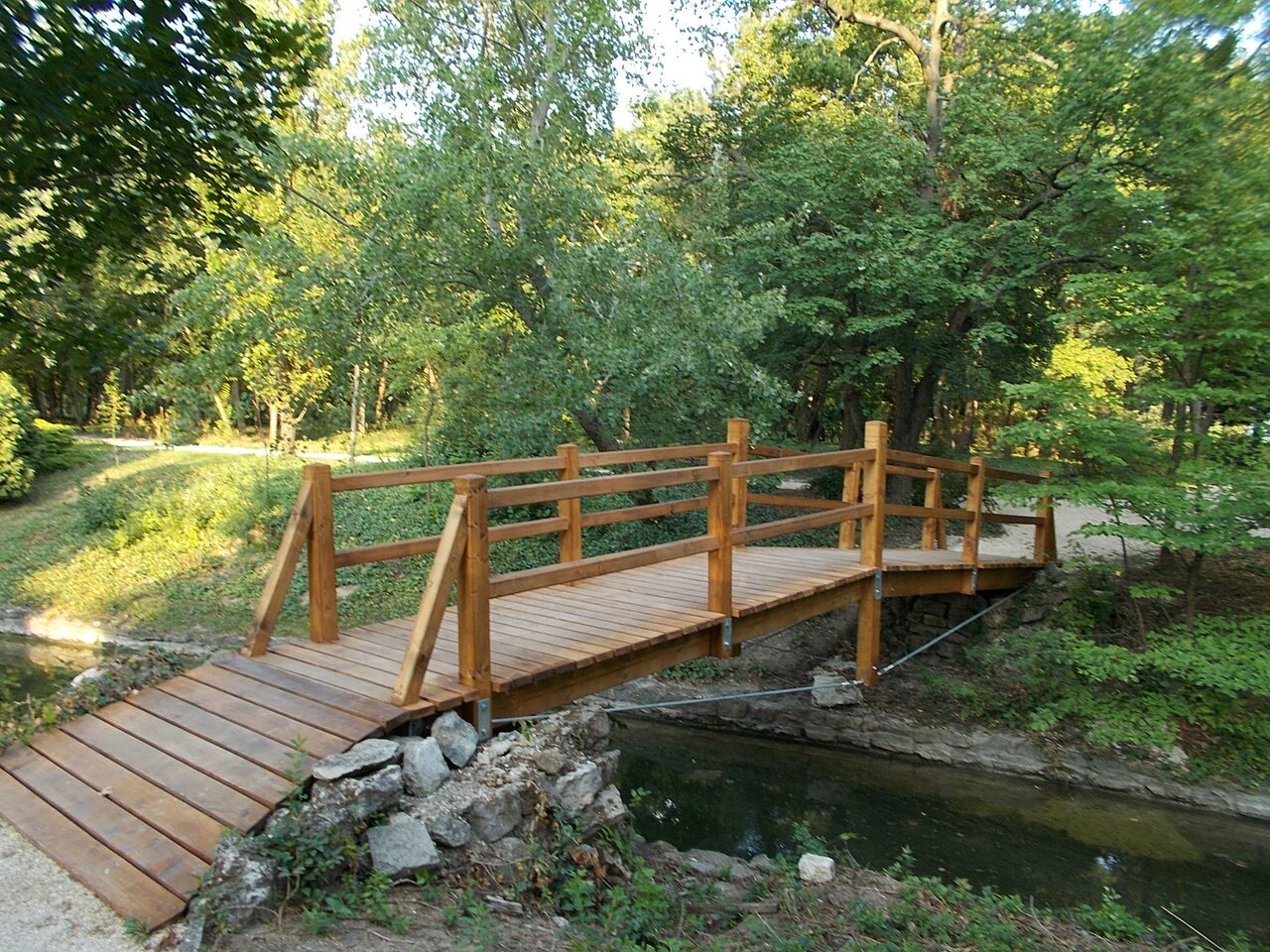
The English Garden and its artificial ruins
for enthusiasts
The English Garden and its artificial ruins
Globetrotter19, CC BY-SA 3.0 · Wikimedia Commons
The garden was laid out in 1783 for the Esterházys by their engineer Ferenc Bőhm around the Cseke lake and counts as one of the oldest landscape parks in Hungary. In its northern part, in 1801, artificial ruins were built to a scheme by Charles de Moreau, and built of genuine stone: clustered columns and twenty-four carved capitals were carried off from the Romanesque Benedictine abbey of Vértesszentkereszt, and a Roman tombstone of the third century was set into a niche. A question follows, and it is worth putting to the reader plainly: a monument put together by taking other monuments apart — is that saving or plundering? There are other contrivances in the garden — a Turkish Mosque, two stone griffins at the entrance — and all of it is now being restored under the Esterházy Heritage project shared with Galanta.

The artificial ruins of 1801 to a scheme by Charles de Moreau: clustered columns and twenty-four carved capitals from the abbey of Vértesszentkereszt, a Roman tombstone of the third century from Látó Hill set in a niche, gravestones from Szőny. The Turkish Mosque and the stone griffins at the entrance. The garden of 1783 around the Cseke lake, laid out by Ferenc Bőhm. The Esterházy summer house stands in the same garden.

1.1 km from here · Angolkert ·
checked 19 August 2026 · No. 98

5 museums have no point set. They are not in this count.