Your browser is older than this page. The catalogue still reads here: the list, the filter and the cards all work. Your browser will mark filter choices with plain checkboxes, as best it can. Update your browser to see the page as it was built.
We do not ask your browser where you are. We collect no data about people. Place the point on the city map yourself — we will find the nearest museums that suit your preferences.
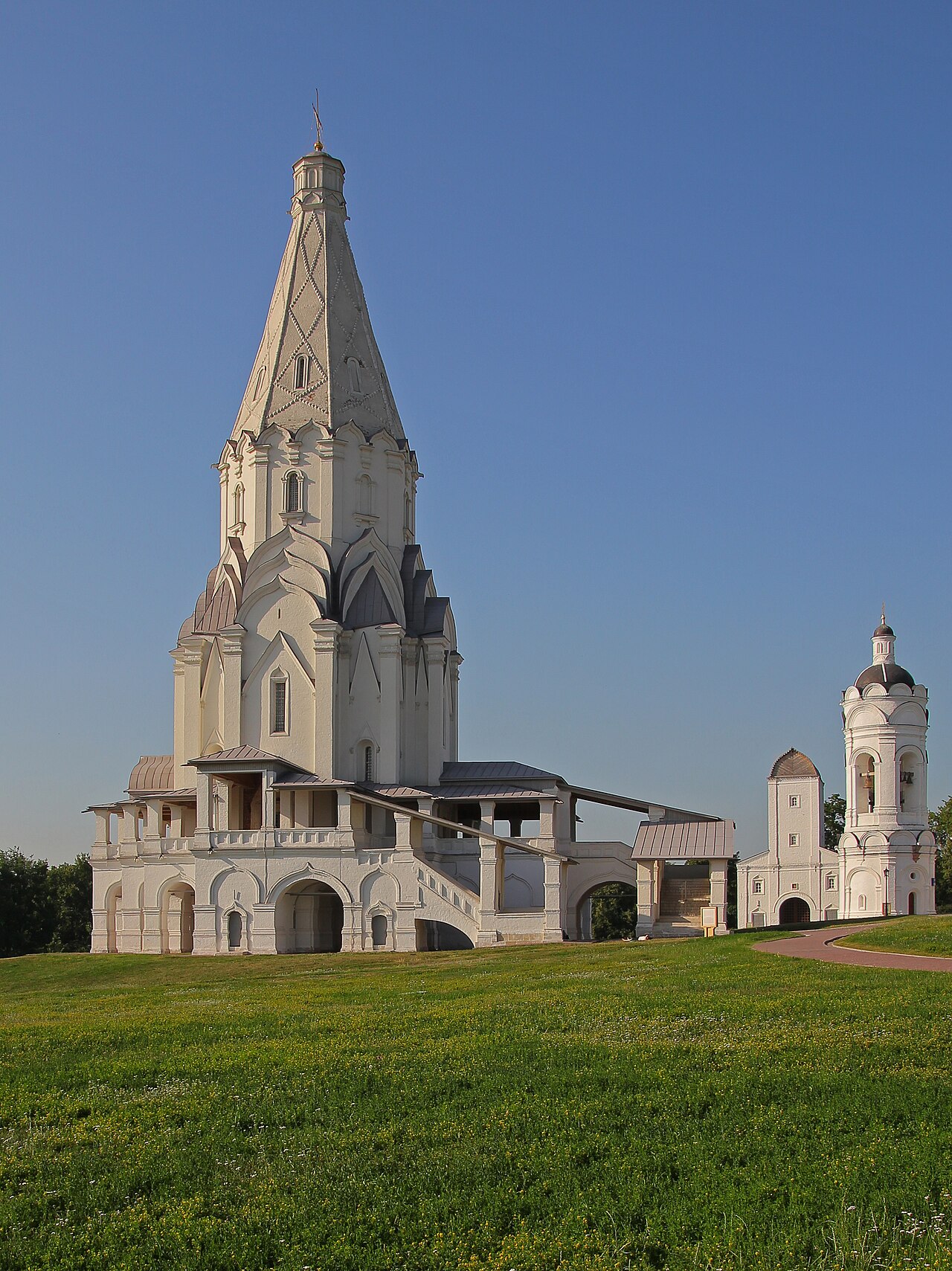
The Church of the Ascension of 1532 is the first stone tented church in Russia and the only building in Moscow on the World Heritage list. The tent here is structure and not ornament, and sixteenth-century Russian architecture cannot be understood without having stood under it. The rest is a museum reserve with a middling collection: icons, tiles, manuscripts, wooden buildings brought from the North. And one warning: the palace of Alexei Mikhailovich shown in every photograph is a 2010 replica put up elsewhere in the park; it should not be confused with the real Kolomenskoye.
The Church of the Ascension, 1532. The Church of the Beheading of St John the Baptist at Dyakovo, sixteenth century, usually empty. The Front Gate with its display. Peter the Great’s cabin, brought from Arkhangelsk. Tiles and icons in the reserve’s exhibitions.
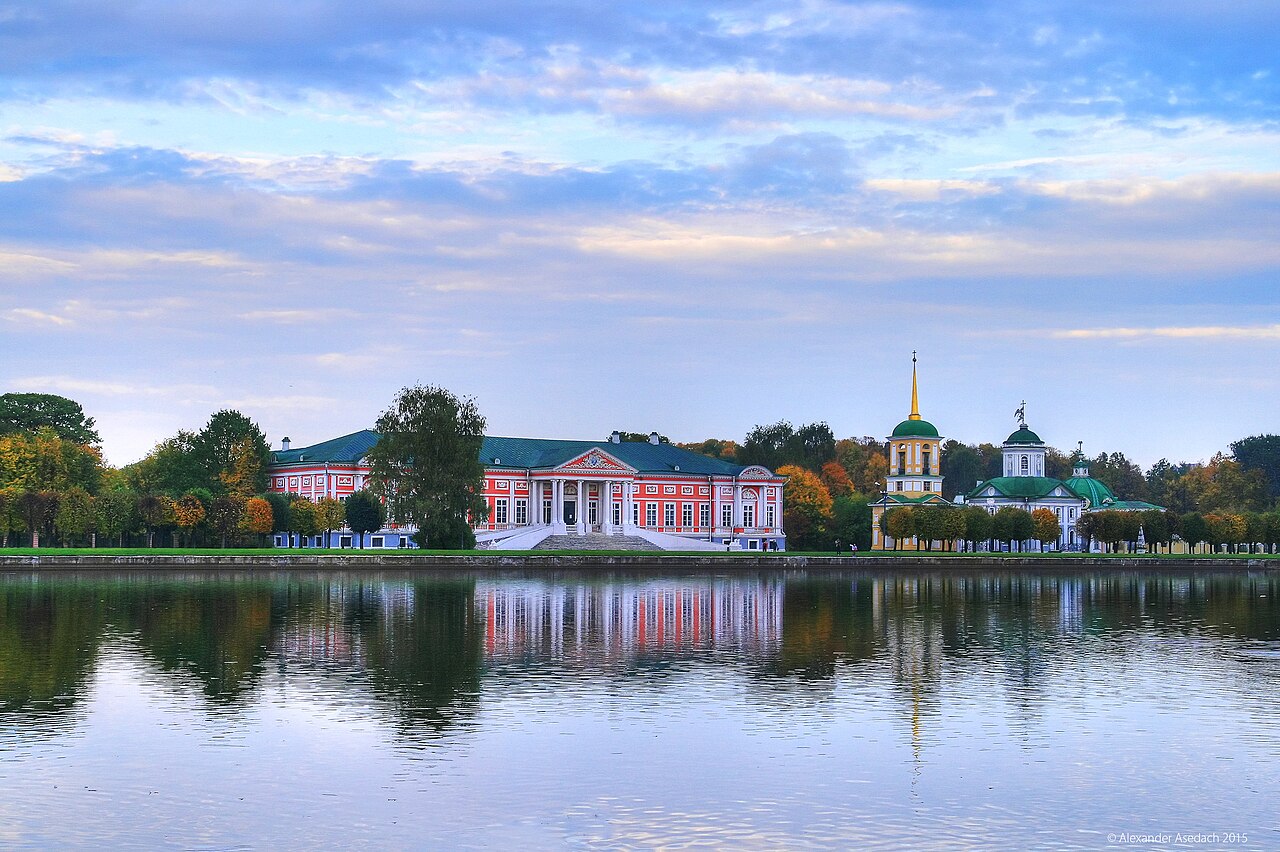
The one Moscow estate to come down almost entire: wooden palace, pavilions, formal park and pond stand as the Sheremetevs meant them in the 1750s–1770s, with almost none of the nineteenth-century alteration. Neither Ostankino nor Tsaritsyno has kept so much. Anyone who knows Ham House by the Thames will recognise the case — a great house left alone rather than improved — and will find here what Ham has not: the whole French parterre, unbuilt over. Attached to the palace is the Museum of Ceramics, one of the largest holdings of porcelain and glass in the world, which arrived in the 1930s and has nothing to do with the estate. Two different museums within one fence, and both are worth entering, knowing that they are about different things.
The wooden palace of 1769–1775 with its interiors and inlaid parquet intact. The Grotto with its shell-work — a thing that exists nowhere else in Russia. The Dutch and Italian houses, the Hermitage, the orangery. A collection of porcelain from Meissen to Soviet agitprop.
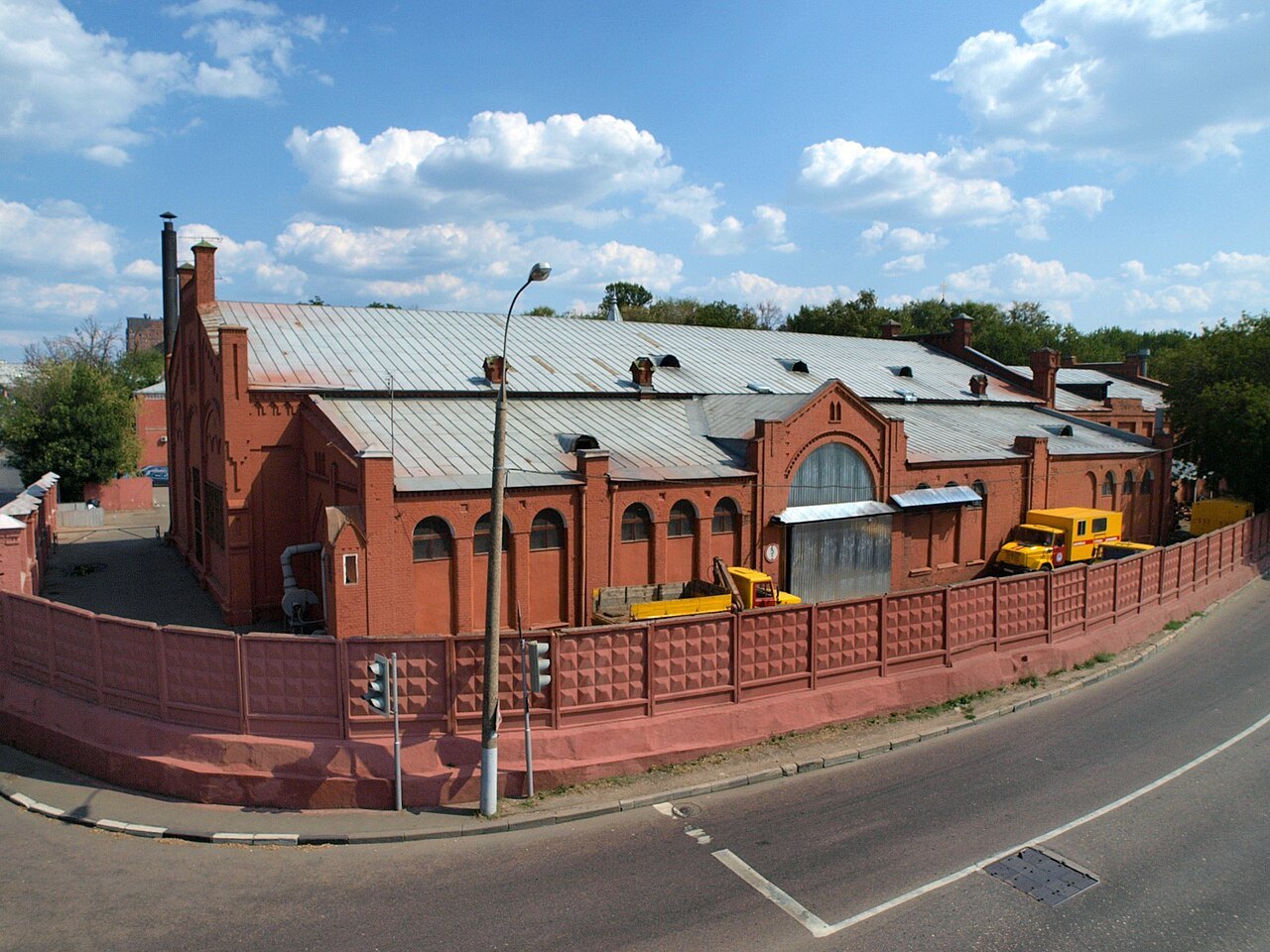
A departmental museum with working models of city infrastructure — an almost extinct genre. Worth seeing for anyone curious about how the city works underground; there is nowhere else in Moscow for that.
Working models of waterworks, from the Rostokino aqueduct to the present treatment plants; the history of the Moscow sewer in drawings and photographs.
9.4 km from here· Sarinsky Proyezd 13 ··
· No. 39
5 museums have no point set. They are not in this count.