Museums near The sailing ship Mercator
We do not ask your browser where you are. We collect no data about people. Place the point on the city map yourself — we will find the nearest museums that suit your preferences.
The Ostend City Museum
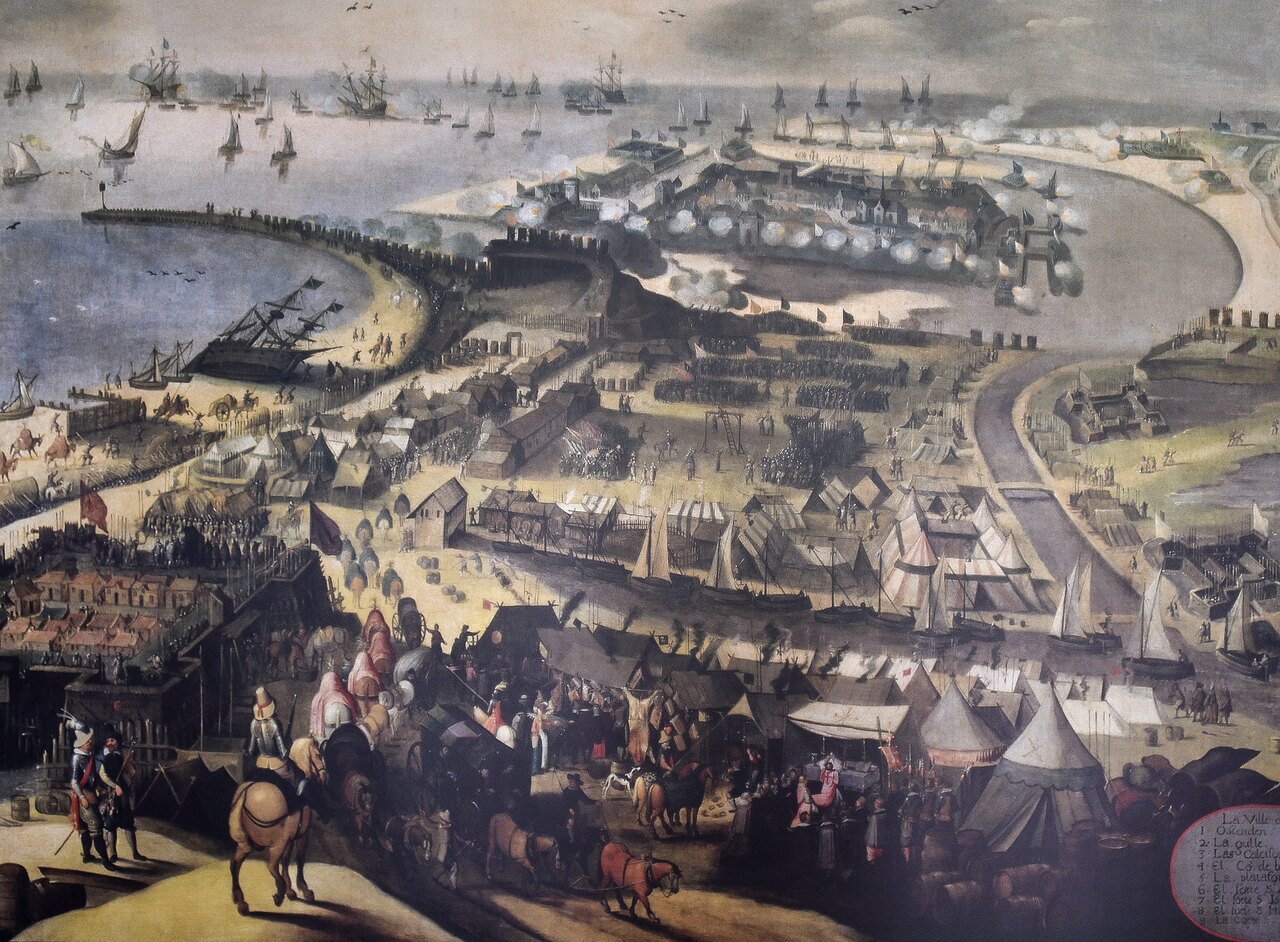
The room where Queen Louise-Marie died on 11 October 1850: furnished as it was then, and the bed in it is in all likelihood her deathbed. The house at Langestraat 69, built between 1770 and 1780 and rented by the royal couple from 1834. The halls of the fishery, the port and shipping; posters, papers and photographs of the resort. The temporary exhibitions are made by the De Plate local-history society, which works in the same house.
The James Ensor House
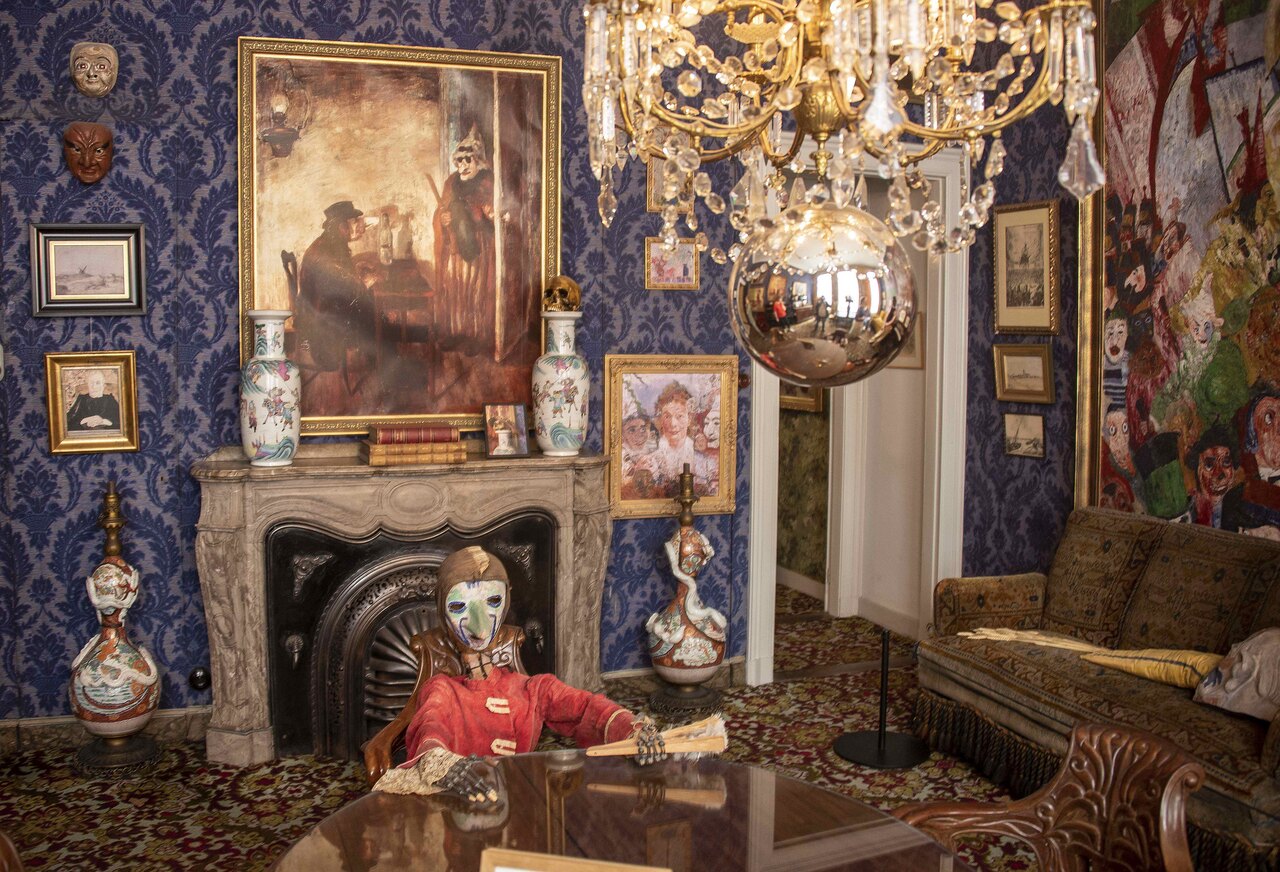
The Blue Salon with a full-scale copy of The Entry of Christ into Brussels in 1889, hung where the original hung; the original itself has been at the Getty since 1987. The shell-and-souvenir shop on the ground floor — the trade of the artist’s aunt and uncle, which he closed but did not clear out. The studio and the living rooms with what furniture survived. Five experience rooms, each on its own theme: Ensor’s world, interiors, his public life, the criticism, masks and strange figures. An exhibition space in the annexed house, where the shows are made with Xavier Tricot.
Mu.ZEE
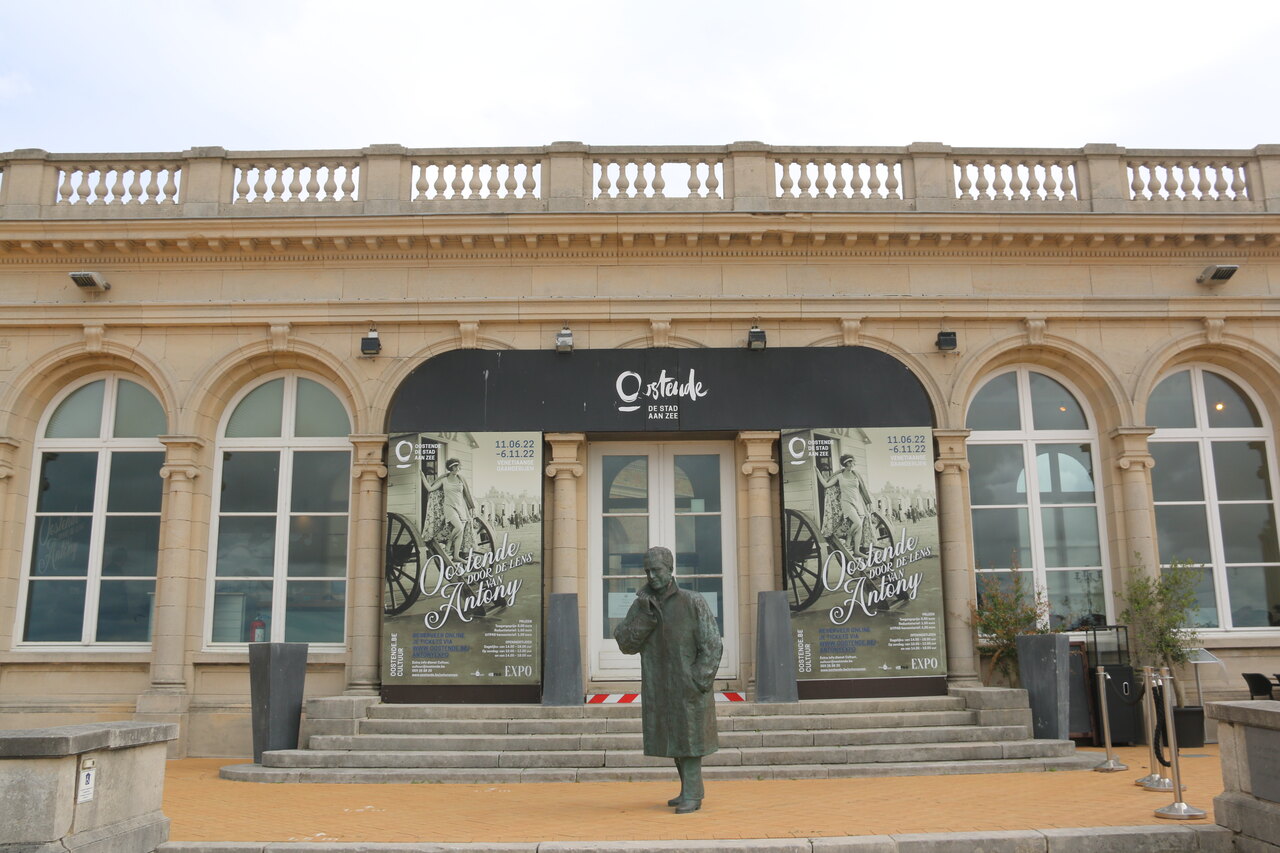
The museum’s own building on Romestraat has been closed for rebuilding since January 2025 and reopens in 2028; the collection is shown in parts in the Venetian Galleries, so the whole of it cannot be seen at present. The Léon Spilliaert holding — the Ostend seafront and dyke, the night self-portraits; nothing matches it anywhere, and at its core stands Self-portrait with Red Pencil of 1908, Indian ink, gouache and pastel on paper, 85 × 69 cm, inv. SM000005. James Ensor and the circle of Les XX (Willy Finch). Constant Permeke, Jean Brusselmans, Frits Van den Berghe — Flemish expressionism. Paul Delvaux, Georges Vantongerloo, Roger Raveel, Luc Tuymans. The oldest work is François Bossuet’s The Sawmills at Slijkens near Ostend, 1821.
Fort Napoleon
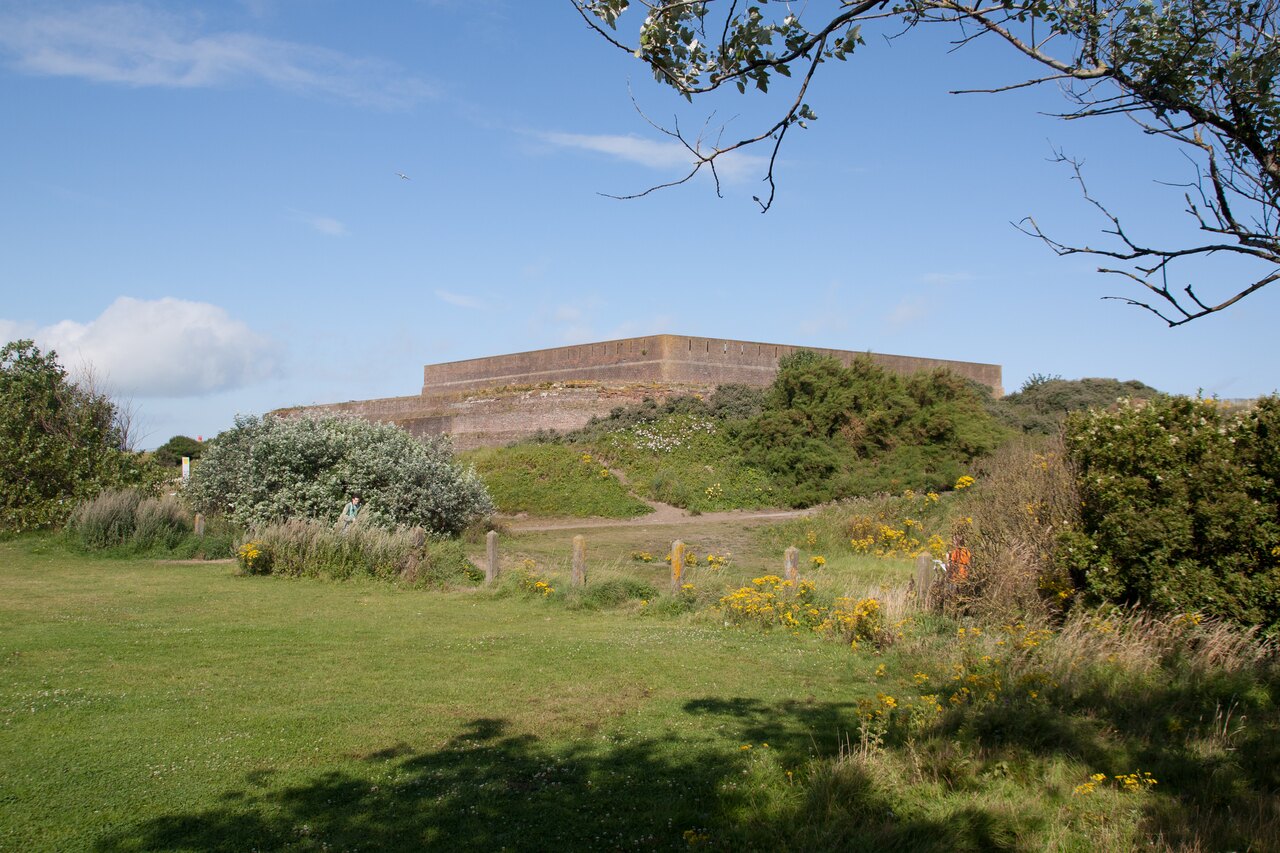
The mural Der Barbar of 1915 by the soldier-artist Heinrich-Otto Pieper (1881–1968), over the chimneypiece: a German knight in armour with his broadsword at a Scot’s throat, and beside him the severed heads of an Italian, a Frenchman, a Japanese, a Senegalese and a Russian — German war propaganda without a fig leaf; next to it an allegorical version of the Bremen Town Musicians. Restored in 1932. The building itself: a pentagon with its north corner to the sea, two tiers of casemates, a dormitory for five hundred soldiers with 96 loopholes, a dry moat ten metres wide and five caponiers.
Astropolis, Space Science Center
The planetarium dome and the sky shows. The space-flight section. There are no objects of a museum kind.
The Atlantic Wall at Raversyde
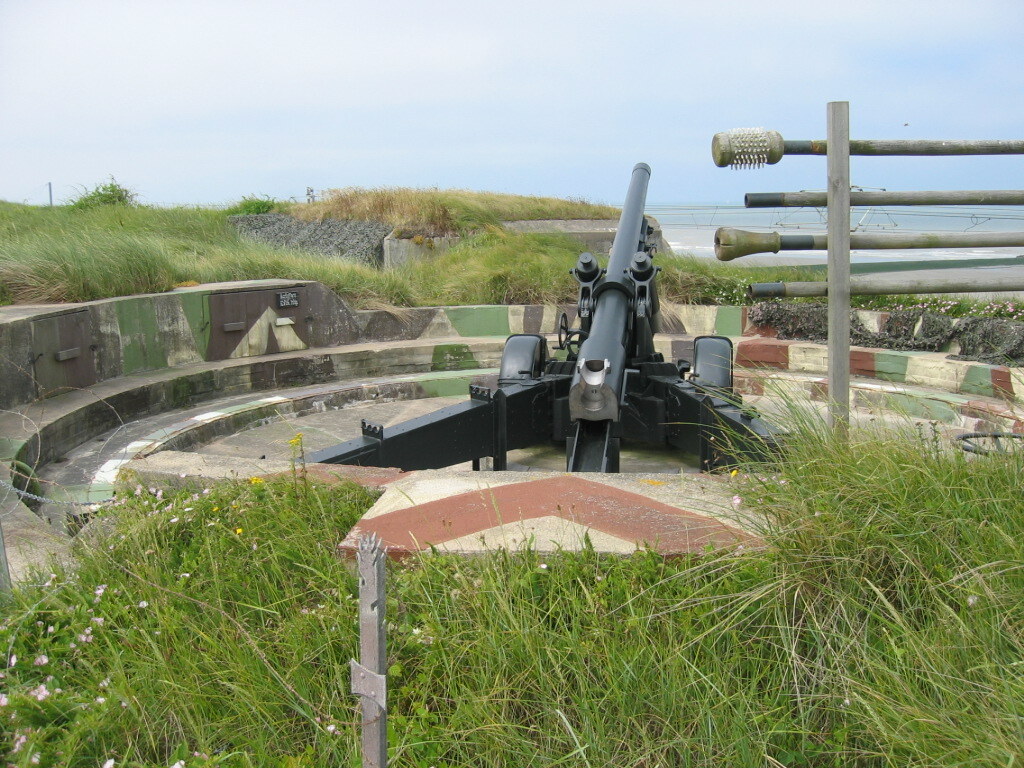
The Aachen battery — begun on 8 January 1915 and in service by the end of that April: the observation post, the gun positions, the communication trenches. The Saltzwedel-neu battery of the Second World War — more than sixty bunkers and underground galleries. Everything has been kept where it stands: nothing was carted in.
5 museums have no point set. They are not in this count.