Skip to content

Your browser is older than this page. The catalogue still reads here: the list, the filter and the cards all work. Your browser will mark filter choices with plain checkboxes, as best it can. Update your browser to see the page as it was built.

Museums near Museum of Moscow Archaeology

We do not ask your browser where you are. We collect no data about people. Place the point on the city map yourself — we will find the nearest museums that suit your preferences.

Distance
Filter
How much time
We count what is left today: from now — or from opening, if the museum has not opened yet — to the last admission. The closing hour is of no use for such a count: past the last admission nobody is let in. Where the last admission is not established we allow half an hour: erring towards «you will not make it» costs less than sending someone to a locked door.
When I go
We show those open on at least one of the days chosen. Today is Friday.
Who with
One thing is asked here: whether a child will find it interesting inside. The ease of the way and of the rooms is a question of another kind, and it stands under “Access”. In the entry this shows as a mark, and the age in the note beside it.
What to see
Access
The accessibility of a museum and the accessibility of the way to it are different things, and we keep them apart. It happens that everything inside is arranged faultlessly while the door itself cannot be reached in a wheelchair; it happens the other way round too.
How valuable
What sets it apart
Showing 46 museums

Drag the pin or press the map.

open nowclosed nowhours not known

Map — OpenStreetMap

Nearest museums · 46
for enthusiasts
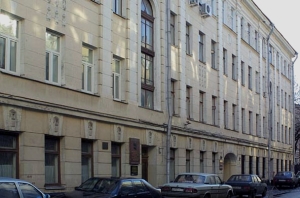
Apollinary Vasnetsov Museum
Apollinary Vasnetsov’s reconstructions of old Moscow are not painting but scholarship: the artist made archaeological observations, and his views still serve as textbook illustrations. Here they hang in the flat where they were made.

The studio with its original furnishings, and the views of old Moscow — historical reconstructions by which the medieval city is still imagined.

2.2 km from here · Furmanny Lane 6, flats 21–22 (3rd floor) ·
· No. 13
Architecture and estates · since 2020

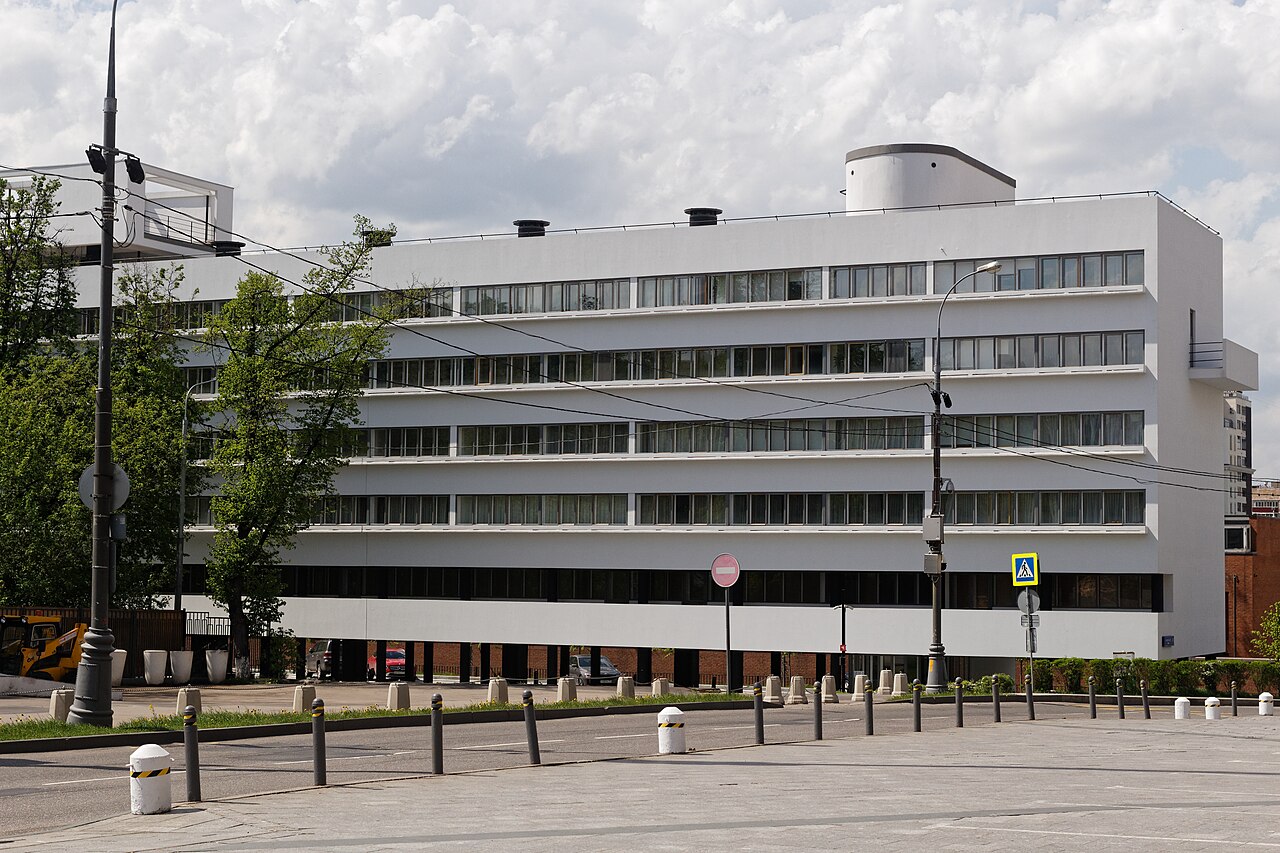
The Narkomfin Building

significant
The Narkomfin Building
Retired electrician, CC0 · Wikimedia Commons
The 1930 house by Ginzburg and Milinis is the transitional commune-house with which any conversation about twentieth-century housing begins: two-level units, a corridor every second floor, kitchen and laundry taken out of the flat. Le Corbusier knew this building and leaned on it in the Unité d’habitation at Marseille — the ribbon window, the pilotis and the interlocking sections are all here first. But expectations must be squared honestly: the restoration of 2017–2020 gave the house back to its residents, and the museum here is one restored unit, not a building. Looking is done from outside and in a single flat, by appointment.

A restored type F unit, furnished to Ginzburg’s drawings. The building itself: the residential block on columns, the communal block, the bridge between them.

2.2 km from here · Novinsky Boulevard 25, block 1 · ·
· No. 74
Art · since 2015

The AZ Museum

significant
A one-artist museum, Anatoly Zverev, grown out of a private collection. Its value is not scale — the rooms are few and the works small — but the way of showing: an exhibition here is built as a statement, with sequence and light, rather than hung along the walls, and in Moscow that is rare. About Zverev himself an honest word is owed: an uneven artist, part of whose legacy rests on the speed of the hand rather than on depth, and his best things have to be picked out. The museum does not conceal this, which is why it is believed.

Painting and drawing by Anatoly Zverev from Natalia Opaleva’s collection. Exhibitions setting Zverev beside other artists of his circle. Work by Vladimir Nemukhin and other nonconformists.

2.3 km from here · 2nd Tverskaya-Yamskaya Street 20–22 · ·
· No. 73
Unusual · since 1912

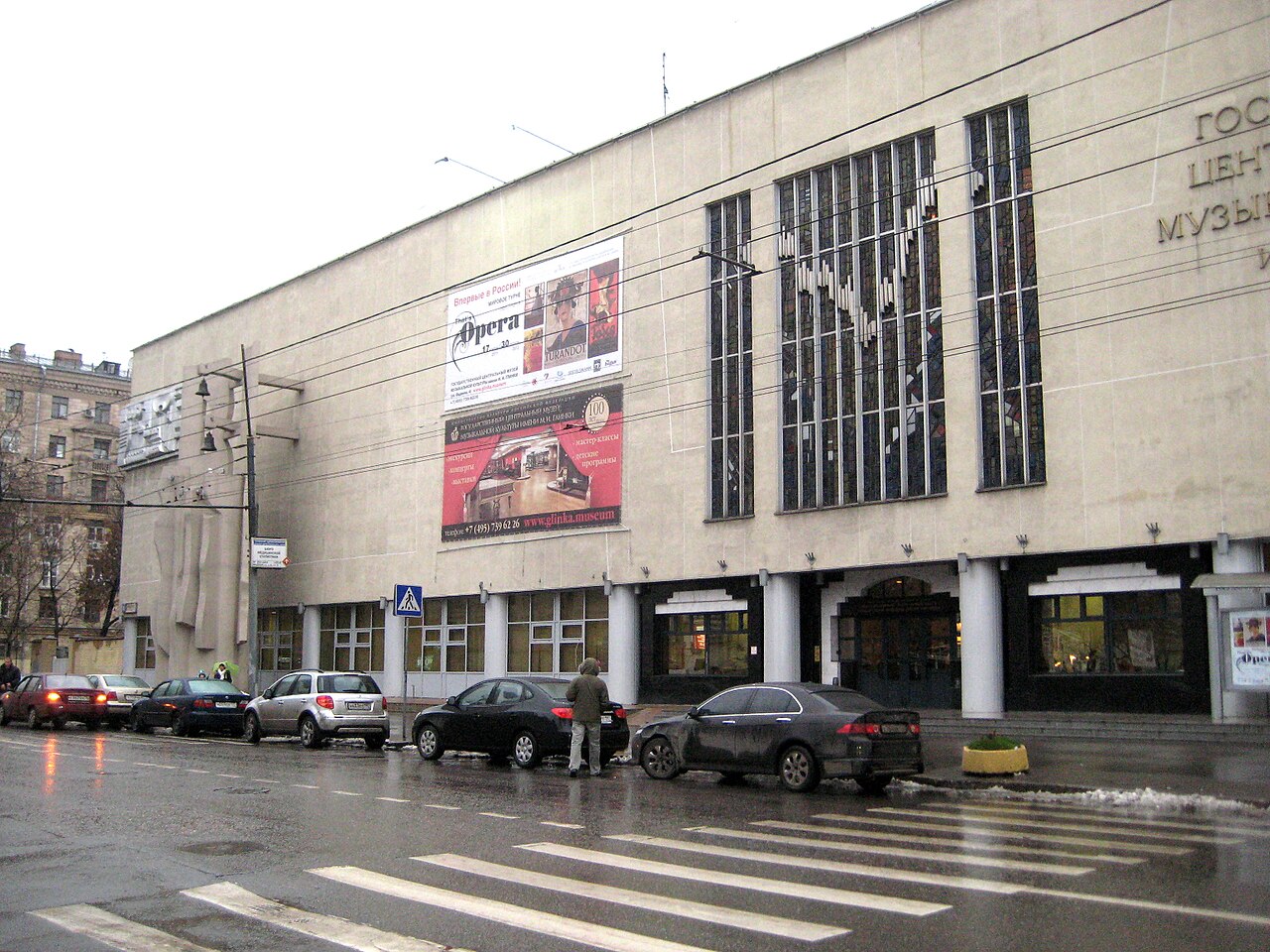
The Museum of Music

outstanding
The Museum of Music
shakko, CC BY-SA 3.0 · Wikimedia Commons
One of the largest collections of musical instruments in the world and the only place in Russia where the instrument is shown as an object of history. One can go from horn and gusli to Murzin’s synthesiser, named with Scriabin’s initials — the machine on which the music for Solaris was written. Here too is kept the State Collection of unique instruments: Stradivari, Guarneri, Amati. The Horniman shows the instrument as ethnography and the Royal College of Music shows it as performance history; here both lines run in one room, and the electronic one continues them. One thing must be known: the collection is a working one, instruments are lent to musicians, and they are not always to be found in the case.

Instruments of the peoples of the world, from Russian gusli to the Japanese koto. The ANS synthesiser of Yevgeny Murzin, named with Scriabin’s initials. Autographs and manuscripts of Russian composers. The State Collection of stringed instruments, when it is in the museum.

2.3 km from here · Fadeyeva Street 4
· No. 65
Art · since 1969

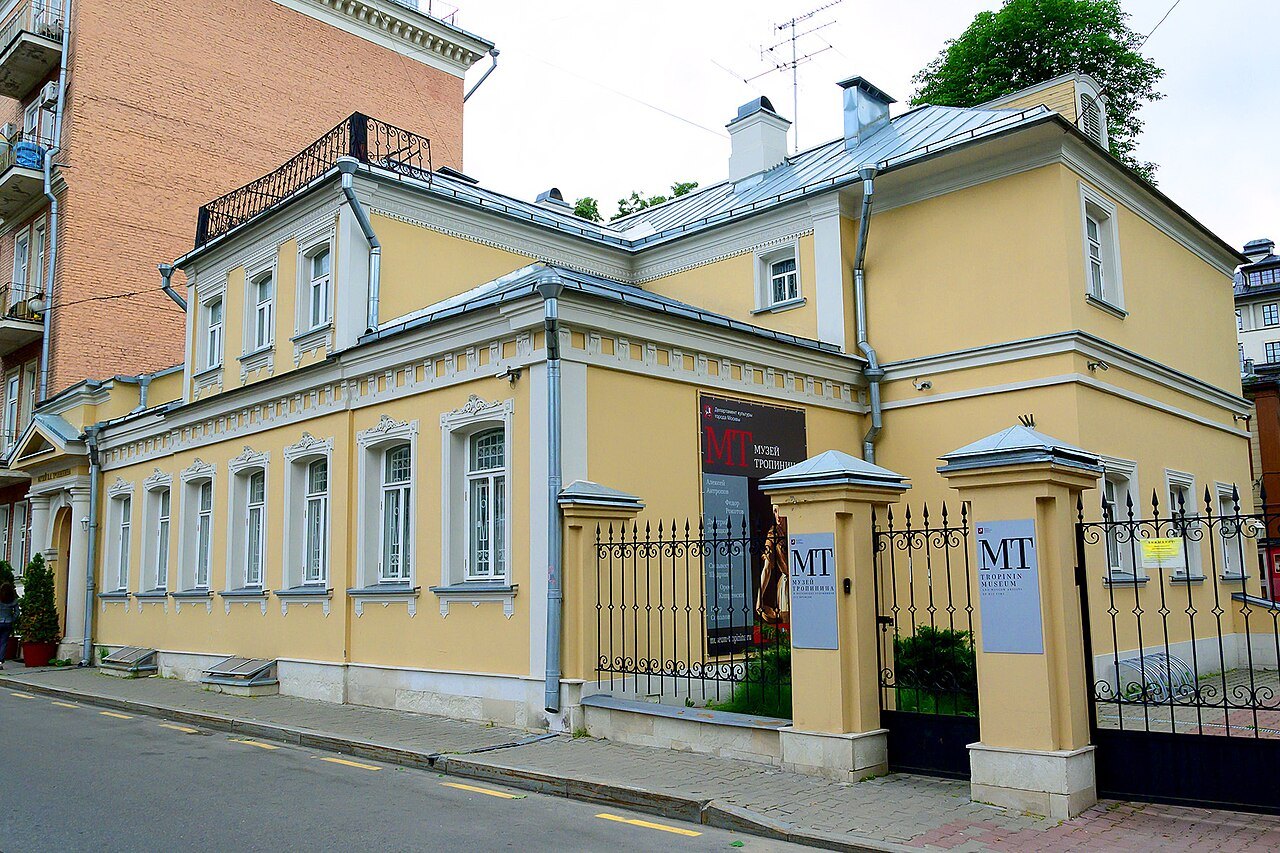
The Tropinin Museum

significant
The Tropinin Museum
Andrei Raikin, Alexei Sidelnikov, Andrei Lobanov, CC BY 3.0 · Wikimedia Commons
The Moscow portrait of the first half of the 19th century is nowhere else so densely gathered. The value is also in the origin: Vishnevsky’s private collection given to the city, a model of how Russian museums came to be.

Portraits by Vasily Tropinin and his Moscow contemporaries, work by serf artists, Russian Biedermeier. The quiet Zamoskvorechye lane and the house itself are half the pleasure.

2.5 km from here · Shchetininsky Lane 10, bldg 1 · ·
· No. 31
Art · since 1986

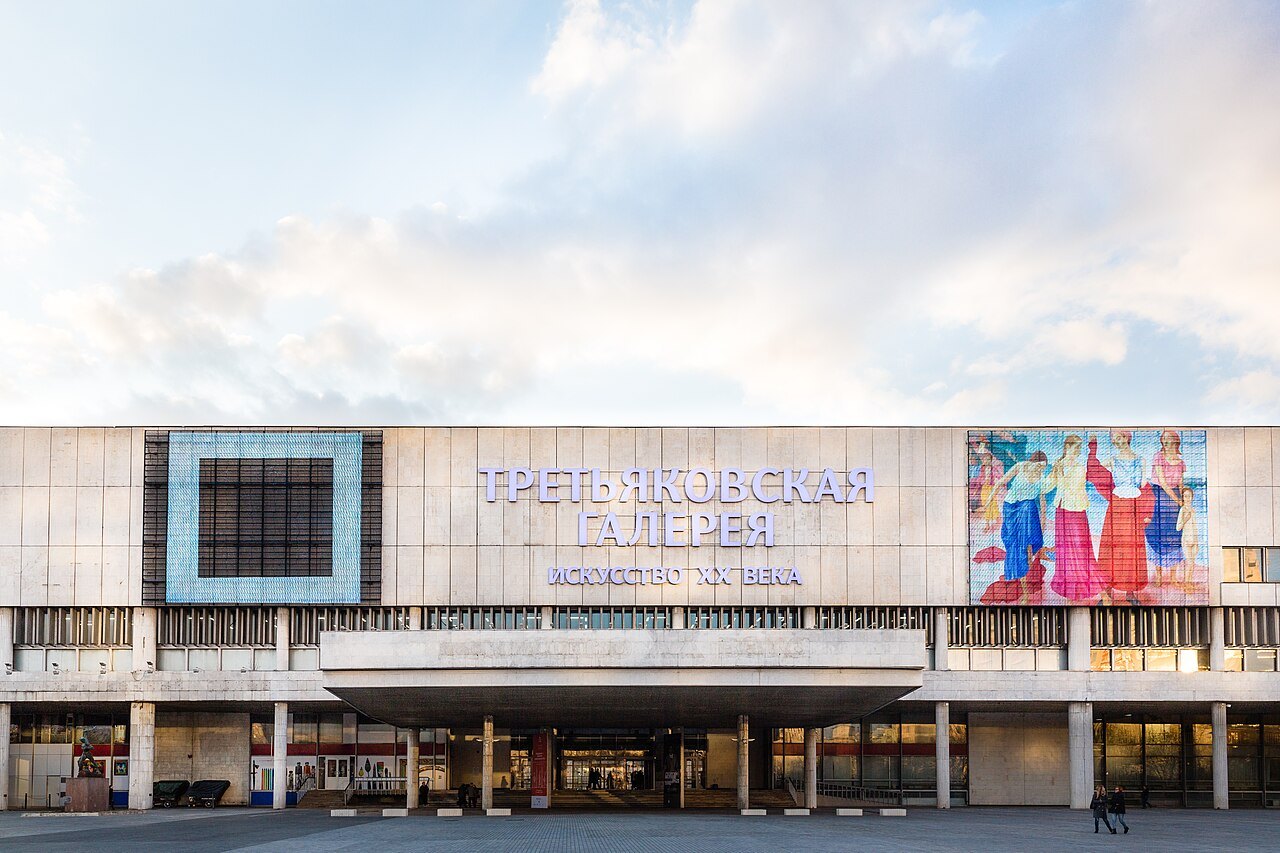
The New Tretyakov

world-class
The New Tretyakov
Tretyakovgallery, CC BY-SA 4.0 · Wikimedia Commons
The Russian avant-garde is the one Russian artistic system to enter the world canon on equal terms, and its largest collection is here. MoMA and the Pompidou show Malevich and Tatlin torn from their setting; here they hang beside what they rebelled against, which changes the reading.

Malevich’s Black Square, Petrov-Vodkin’s Bathing of a Red Horse, work by Kandinsky, Chagall, Goncharova and Larionov, the model of Tatlin’s Tower. Next door: the Muzeon park of dismantled Soviet monuments.

2.5 km from here · Krymsky Val 10 · ·
· No. 5
History · since 1896

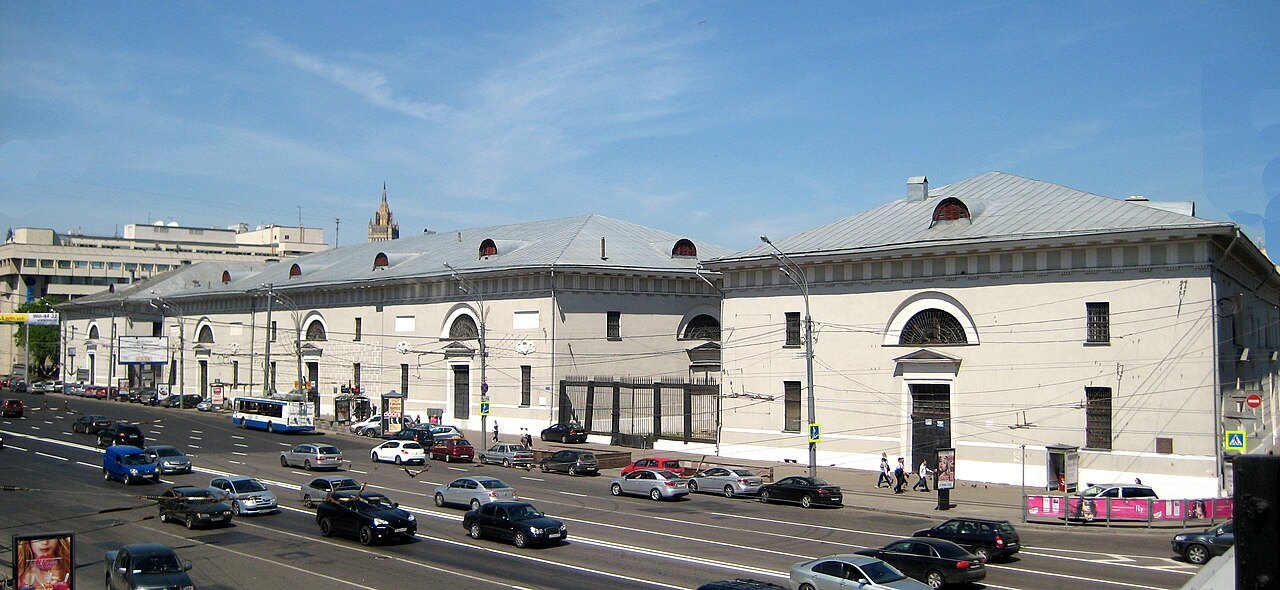
Museum of Moscow

significant
Museum of Moscow
shakko, CC BY-SA 3.0 · Wikimedia Commons
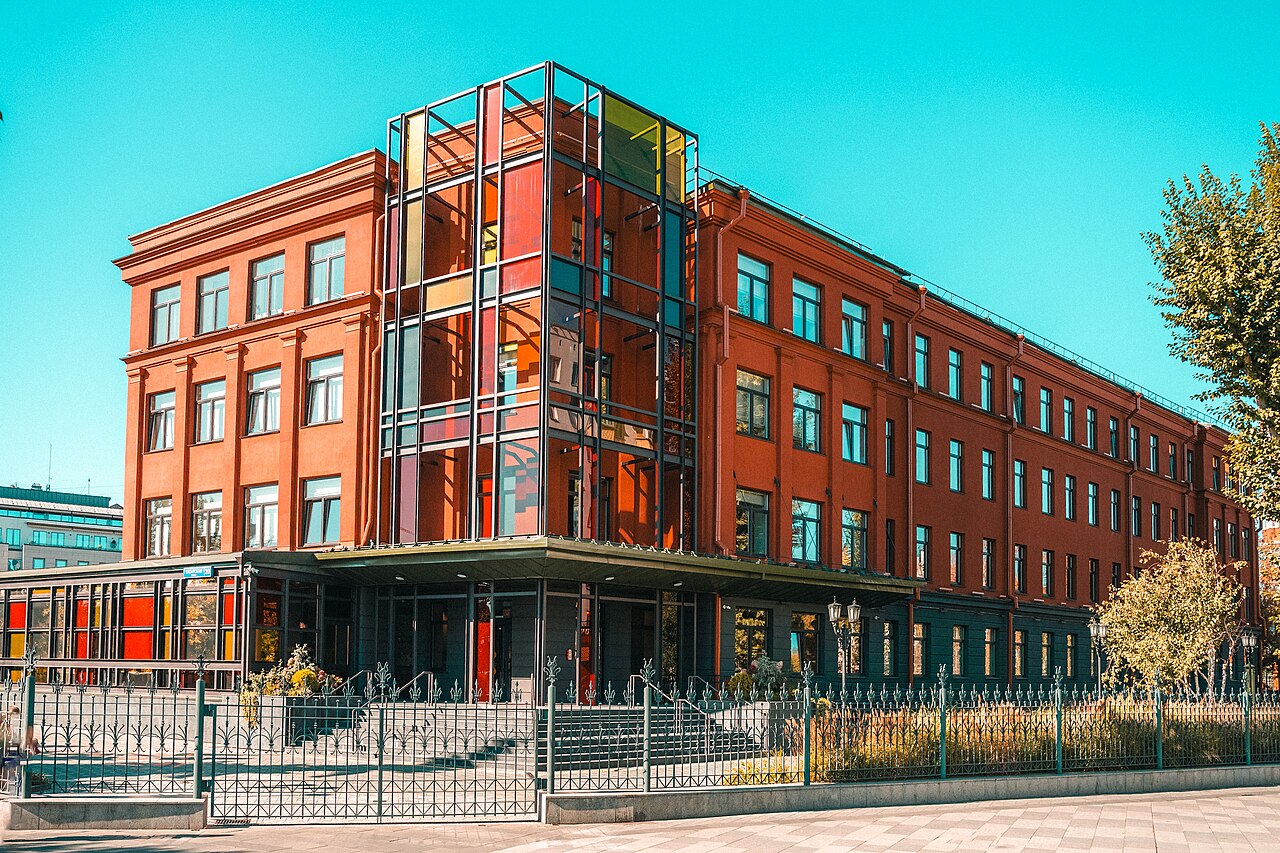
A city museum — an ordinary genre in Europe — but the material is unique in scale: a million objects about one city. The value is also the Provision Warehouses by Stasov, a model Empire building rarely accessible from inside.

The permanent display History of Moscow: the archaeology of Moscow soil, town life, plans and views of the city by century. And the Provision Warehouses themselves, an Empire monument after Vasily Stasov.

2.7 km from here · Zubovsky Boulevard 2, bldg 7 · ·
· No. 56
Literature · since 1934

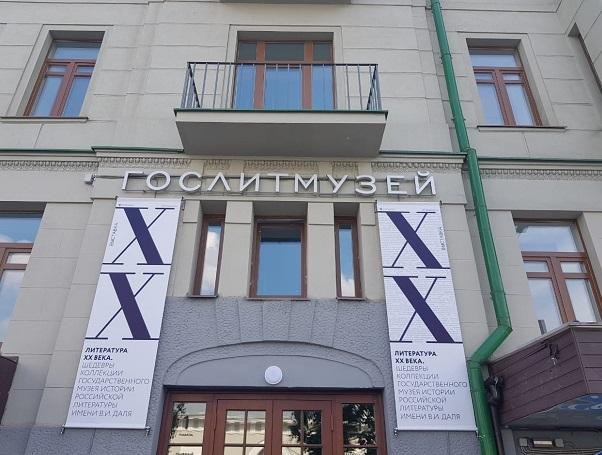
The Dahl Literary Museum

significant
The Dahl Literary Museum
Levnevskiy, CC BY-SA 4.0 · Wikimedia Commons
The only museum built not around a single name but around literature as a process. Hence its strength — comparisons impossible in a house museum, and a fund of 700,000 items that makes such comparisons possible.

The permanent display Zubovsky 15: a house of science, literature and art, and the exhibitions on 20th-century Russian letters.

2.7 km from here · Zubovsky Boulevard 15, bldg 1 · ·
· No. 8
Science and nature · since 1706

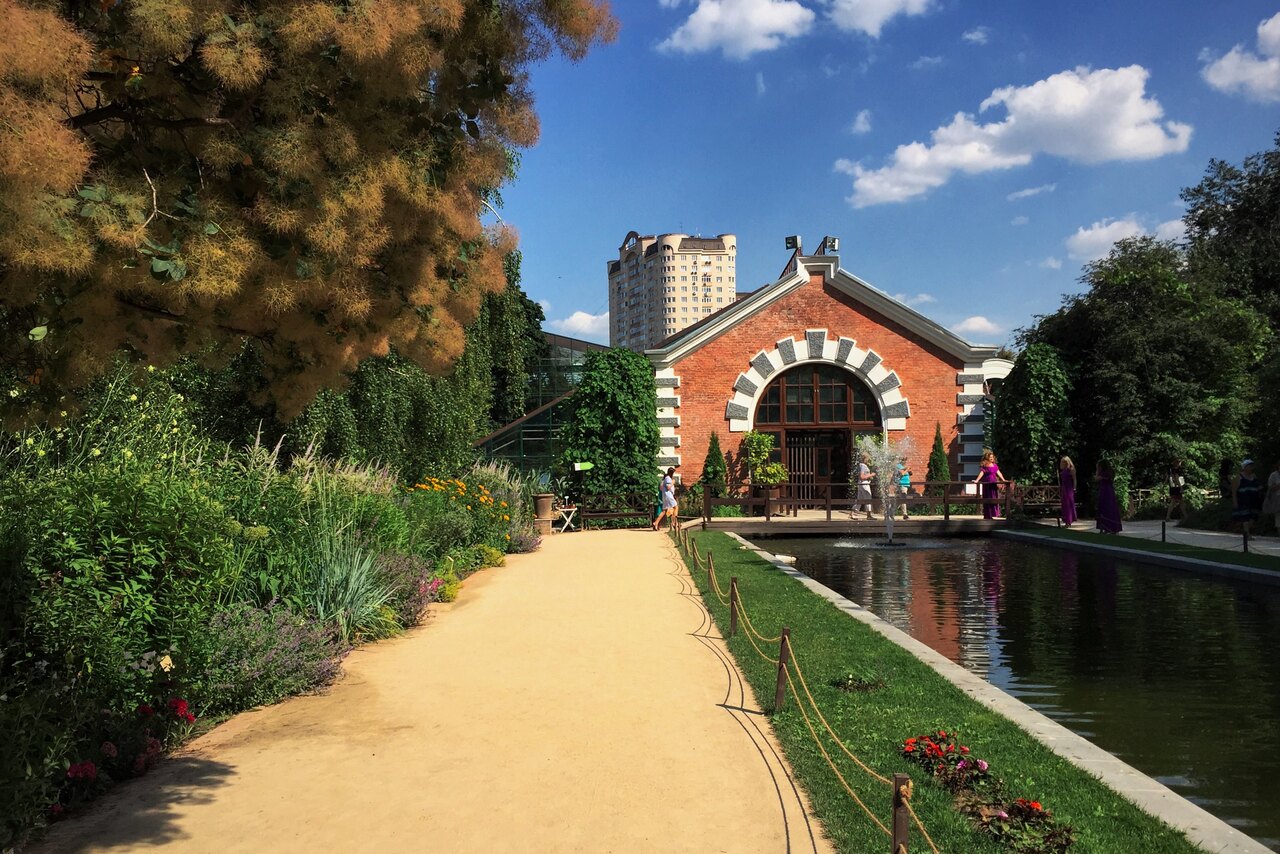
The Apothecary Garden

outstanding
The Apothecary Garden
Gennady Grachev, CC BY 2.0 · Wikimedia Commons
A garden in the middle of the city: five hundred metres to the Garden Ring, and the ground is not large. Founded by Peter I in 1706. Moscow had several such physic gardens, and every one of them except this vanished without trace, while the larch here, planted by tradition by Peter himself (an increment borer confirms an age of only two hundred years — our note), is alive still, though since a lightning strike early in the twentieth century it has hardly grown. The Palm House of 1891 is the centre of a tropical collection gathered over more than two hundred years.

Peter's larch, as the garden has always called it, stands in the middle of the arboretum. Beside it a pedunculate oak more than two hundred years old, limes past a hundred, and a rare weeping form of the Dahurian larch. The Palm House of 1891: palms, figs and pandanus at their full height. The Succulent House on the upper floor of the glasshouse block holds cacti, euphorbias, agaves and aloes, some of them among the rarest anywhere. The old pond with its water plants, the shade garden, the heather slope where the rockery used to be; the conifer slopes took a gold diploma of the landscape architecture prize in 2013.

2.7 km from here · Prospekt Mira 26, building 1 · ·
checked 20 August 2026 · No. 102
Unusual · since 1894

The Bakhrushin Museum

outstanding
The Bakhrushin Museum
Alxklg1, CC0 · Wikimedia Commons
A collection begun in 1894 by one private man and grown into the largest theatre collection in the world — so the museum reckons it, and it is hard to dispute: a million and a half items. Its value is completeness: Russian theatre can be followed here in sequence, from the serf stage to the present, rather than by isolated stars. The V&A holds the national theatre archive of Britain and shows it magnificently; the difference is that there the Russian line is a guest and here it is the whole subject. The designs by Golovin, Bakst, Korovin and Exter are, incidentally, first-rate painting — they merely happen to be filed under theatre. The main building reopened after a long restoration in 2024, and the make-up of the permanent display is worth checking before setting out.

Designs for sets and costumes by Golovin, Bakst, Korovin, Exter and Tatlin. Costumes and possessions of the great actors. Stage models. The archives of theatres and directors. Bakhrushin’s own house, built for the collection.

3.0 km from here · Bakhrushina Street 31/12
· No. 66

5 museums have no point set. They are not in this count.