Skip to content

Your browser is older than this page. The catalogue still reads here: the list, the filter and the cards all work. Your browser will mark filter choices with plain checkboxes, as best it can. Update your browser to see the page as it was built.

Museums near Museum of Russian Impressionism

We do not ask your browser where you are. We collect no data about people. Place the point on the city map yourself — we will find the nearest museums that suit your preferences.

Distance
Filter
How much time
We count what is left today: from now — or from opening, if the museum has not opened yet — to the last admission. The closing hour is of no use for such a count: past the last admission nobody is let in. Where the last admission is not established we allow half an hour: erring towards «you will not make it» costs less than sending someone to a locked door.
When I go
We show those open on at least one of the days chosen. Today is Friday.
Who with
One thing is asked here: whether a child will find it interesting inside. The ease of the way and of the rooms is a question of another kind, and it stands under “Access”. In the entry this shows as a mark, and the age in the note beside it.
What to see
Access
The accessibility of a museum and the accessibility of the way to it are different things, and we keep them apart. It happens that everything inside is arranged faultlessly while the door itself cannot be reached in a wheelchair; it happens the other way round too.
How valuable
What sets it apart
Showing 46 museums

Drag the pin or press the map.

open nowclosed nowhours not known

Map — OpenStreetMap

Nearest museums · 46
Art · since 2015

The AZ Museum

significant
A one-artist museum, Anatoly Zverev, grown out of a private collection. Its value is not scale — the rooms are few and the works small — but the way of showing: an exhibition here is built as a statement, with sequence and light, rather than hung along the walls, and in Moscow that is rare. About Zverev himself an honest word is owed: an uneven artist, part of whose legacy rests on the speed of the hand rather than on depth, and his best things have to be picked out. The museum does not conceal this, which is why it is believed.

Painting and drawing by Anatoly Zverev from Natalia Opaleva’s collection. Exhibitions setting Zverev beside other artists of his circle. Work by Vladimir Nemukhin and other nonconformists.

1.7 km from here · 2nd Tverskaya-Yamskaya Street 20–22 · ·
· No. 73
Unusual · since 1912

The Museum of Music

outstanding
The Museum of Music
shakko, CC BY-SA 3.0 · Wikimedia Commons
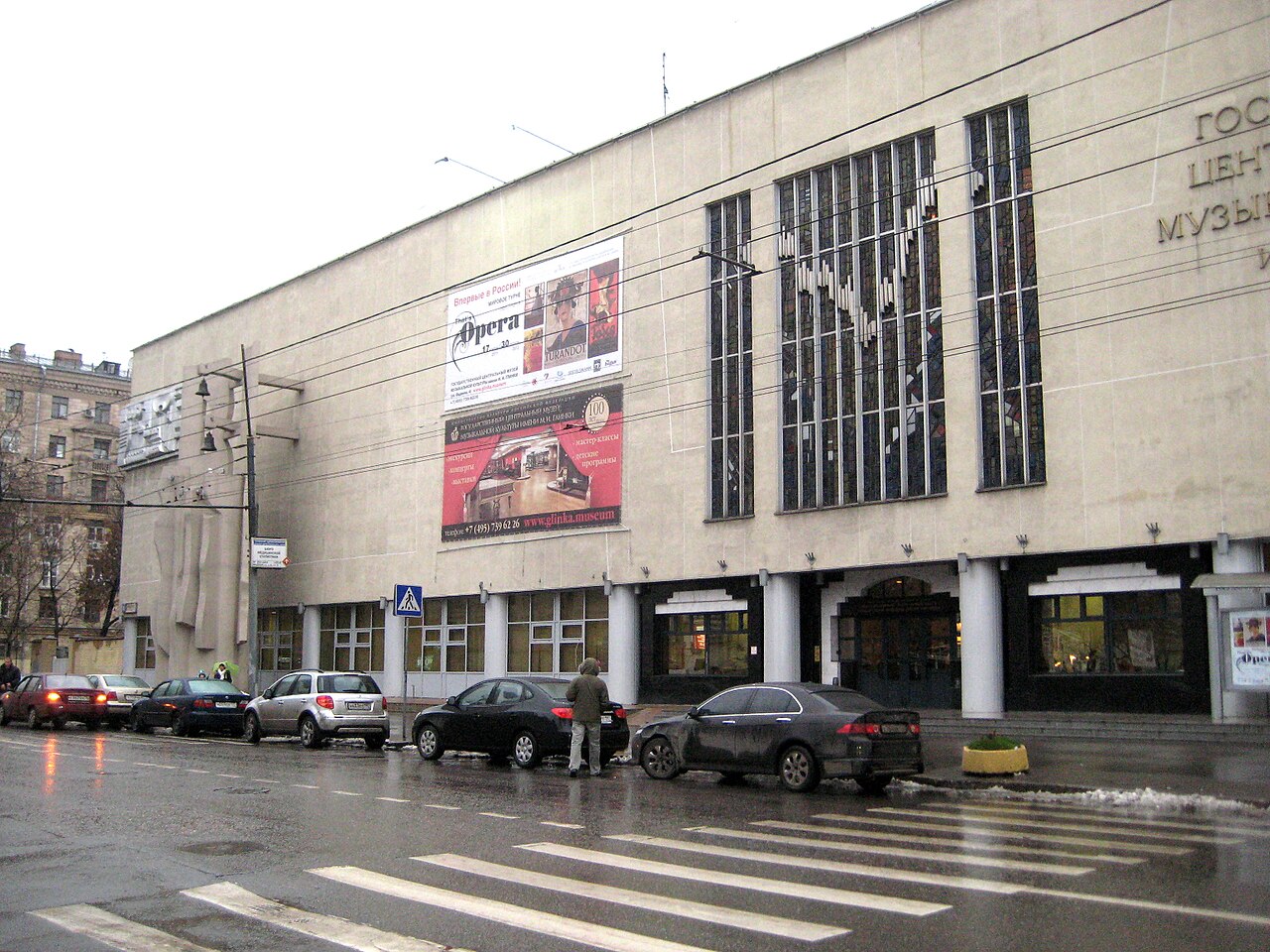
One of the largest collections of musical instruments in the world and the only place in Russia where the instrument is shown as an object of history. One can go from horn and gusli to Murzin’s synthesiser, named with Scriabin’s initials — the machine on which the music for Solaris was written. Here too is kept the State Collection of unique instruments: Stradivari, Guarneri, Amati. The Horniman shows the instrument as ethnography and the Royal College of Music shows it as performance history; here both lines run in one room, and the electronic one continues them. One thing must be known: the collection is a working one, instruments are lent to musicians, and they are not always to be found in the case.

Instruments of the peoples of the world, from Russian gusli to the Japanese koto. The ANS synthesiser of Yevgeny Murzin, named with Scriabin’s initials. Autographs and manuscripts of Russian composers. The State Collection of stringed instruments, when it is in the museum.

2.0 km from here · Fadeyeva Street 4
· No. 65
for enthusiasts
The Museum of Contemporary History
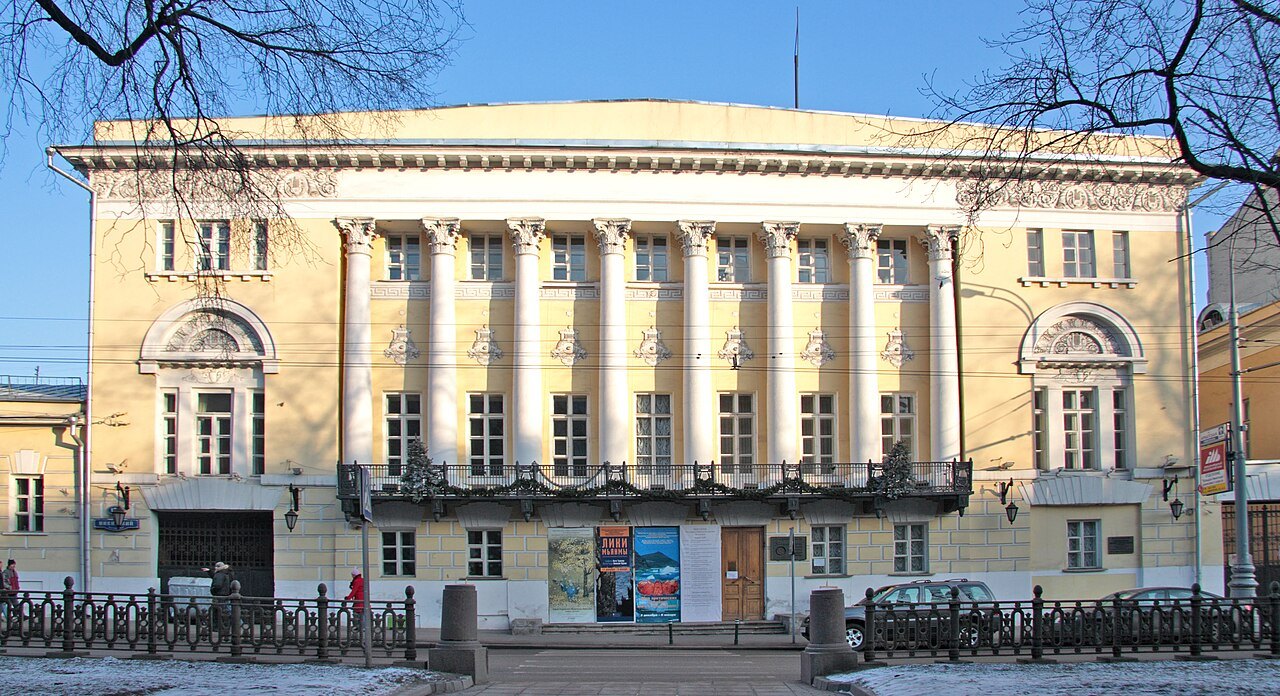
The collection is large, but the display is built ideologically and is unreliable as a source of knowledge — we say so plainly. The value is the building: this is the Moscow English Club, the one from the novels, and some objects such as the propaganda porcelain.

The building of the Moscow English Club — the club of Eugene Onegin and War and Peace, with the lions on its gate; Soviet propaganda porcelain; the collection of gifts to Stalin.

2.5 km from here · Tverskaya 21 · ·
· No. 28
significant
The Museum of Decorative Art
shakko, CC BY-SA 3.0 · Wikimedia Commons
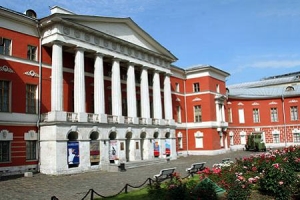
Lacquer miniature of four schools and propaganda porcelain — the objects by which Russia is recognisable in world decorative art. The material is first-rate; the display is not up to it.

Lacquer miniature — Palekh, Fedoskino, Mstyora, Kholuy; Soviet propaganda porcelain; toys of the peoples of the world; embroidery and samovars.

2.5 km from here · Delegatskaya 3, bldg 1 · ·
· No. 32
History · since 2012

The Jewish Museum

significant
The Jewish Museum
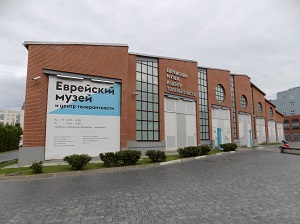
Come for two things at once: the Bakhmetevsky garage by Melnikov and Shukhov, a building of world significance, and the history of Russian Jewry told from inside as nowhere else. The holdings of originals are modest, and that is worth knowing beforehand.

The building itself — the Bakhmetevsky garage of 1926–1927, one of Konstantin Melnikov’s principal works with steel structures by Vladimir Shukhov; the Café on Basseynaya, a reconstruction of shtetl life.

2.6 km from here · Obraztsova 11, bldg 1a · ·
· No. 47
Architecture and estates · since 2020

The Narkomfin Building

significant
The Narkomfin Building
Retired electrician, CC0 · Wikimedia Commons
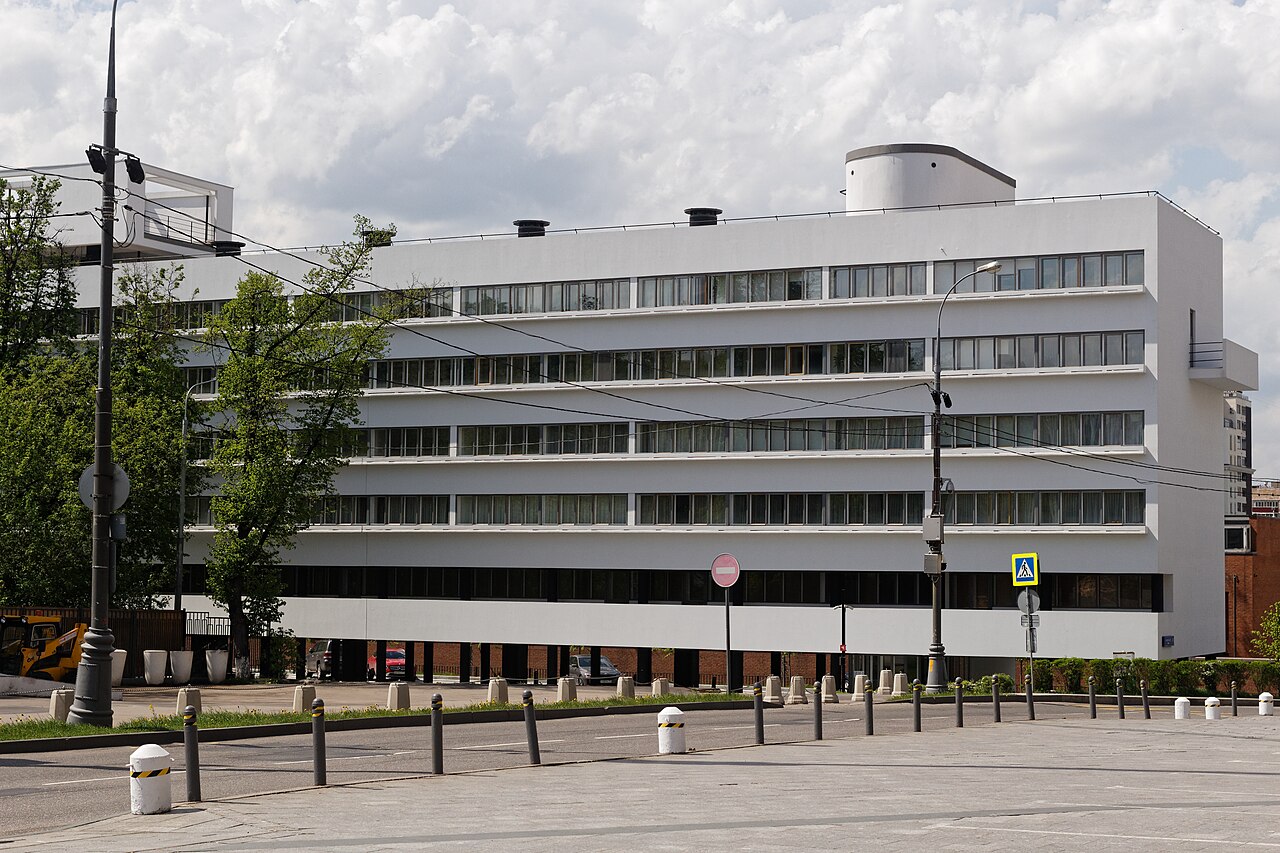
The 1930 house by Ginzburg and Milinis is the transitional commune-house with which any conversation about twentieth-century housing begins: two-level units, a corridor every second floor, kitchen and laundry taken out of the flat. Le Corbusier knew this building and leaned on it in the Unité d’habitation at Marseille — the ribbon window, the pilotis and the interlocking sections are all here first. But expectations must be squared honestly: the restoration of 2017–2020 gave the house back to its residents, and the museum here is one restored unit, not a building. Looking is done from outside and in a single flat, by appointment.

A restored type F unit, furnished to Ginzburg’s drawings. The building itself: the residential block on columns, the communal block, the bridge between them.

2.6 km from here · Novinsky Boulevard 25, block 1 · ·
· No. 74
Architecture and estates · since 1965

The Ryabushinsky Mansion

outstanding
The Ryabushinsky Mansion
Ekaterina Borisova, CC BY-SA 4.0 · Wikimedia Commons
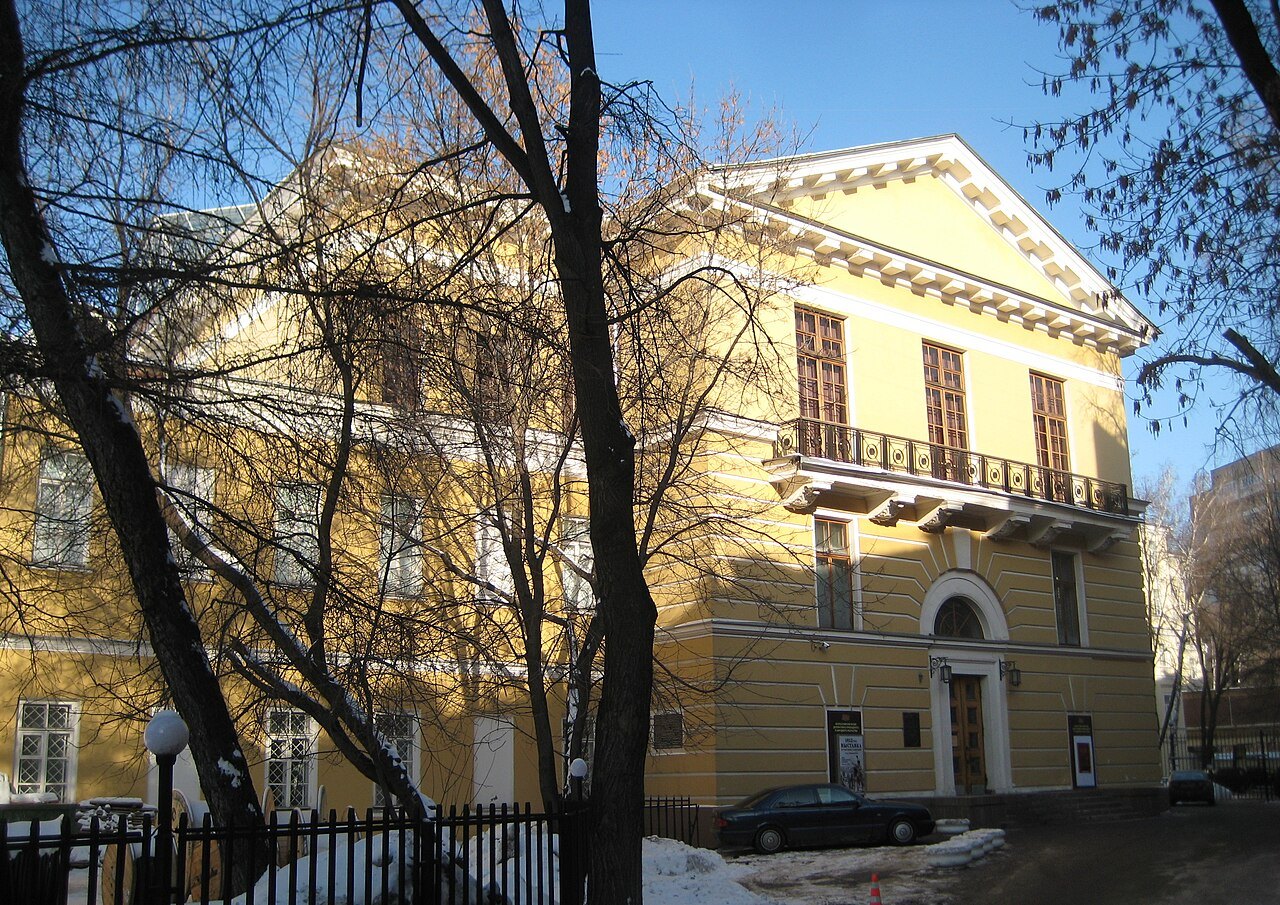
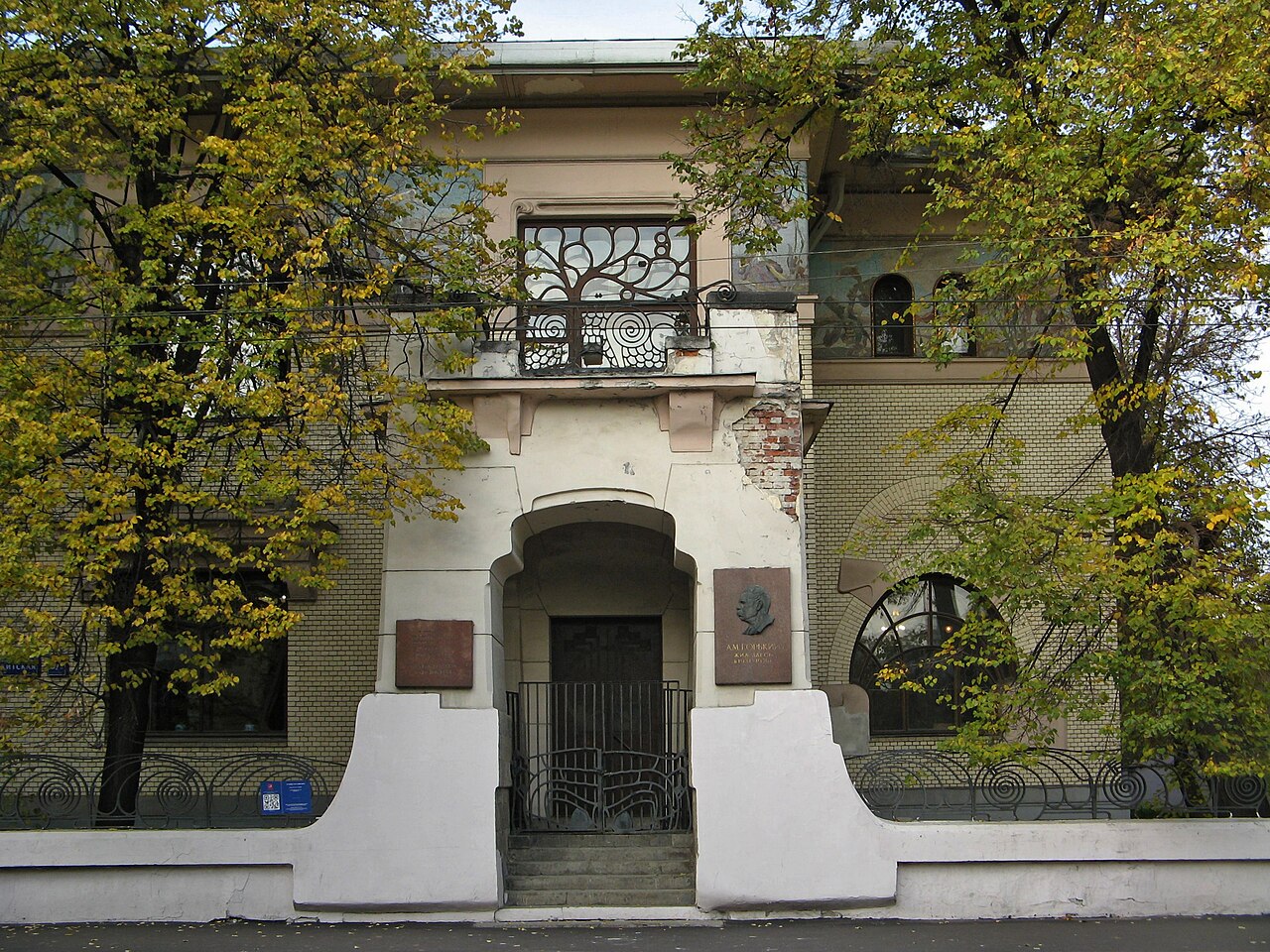
The best surviving interior of Moscow Art Nouveau: Shekhtel built the mansion in 1900–1903 and thought it out down to the door handle, and the wave staircase with its jellyfish lamp is the thing for which one comes here instead of any museum of decorative art. What Horta did at the Hôtel Tassel and Mackintosh at the Glasgow School of Art — one hand over the whole building, from plan to fittings — Shekhtel did here, and here it survives with the fittings in place. Upstairs is hidden an Old Believers’ chapel that could not be shown openly, and it has come through. The memorial part — Gorky lived here from 1931 — is markedly weaker than the architecture, and that should be known in advance: one comes for Shekhtel, not for Gorky.

The wave staircase with its jellyfish light. Stained glass and the mosaic frieze of orchids along the façade. The Old Believers’ chapel on the top floor. Gorky’s study and library.

2.9 km from here · Malaya Nikitskaya Street 6/2 ·
· No. 71
outstanding
The Museum of Oriental Art
Panther, CC BY-SA 3.0 · Wikimedia Commons
Western museums of the East were formed by colonial routes; this collection grew out of nationalised private collections and Soviet expeditions. Hence the Central Asian, Caucasian, Buryat and Chukchi sections that London and Paris lack: there the East begins with India and Egypt, here with what lay inside the country and next to it. That is the reason to come.

Central Asian and Caucasian carpets and metalwork transferred from the State Museum Fund; Iranian Qajar painting and tilework; Chinese bronze and porcelain, Japanese prints; a Korean section rare for Russia; Buddhist sculpture of Buryatia and Mongolia.

3.2 km from here · Nikitsky Boulevard 12a · ·
· No. 43
House museums · since 1922

The Scriabin Museum

significant
A flat from which nothing was carried out: Scriabin rented it for his last three years and died here in 1915, and it became a museum in 1922 — almost without a gap. Furniture, books, piano and the fittings of the study are the very ones. But the chief thing is another: Scriabin conceived music together with light, and the trace of that conception survives in the flat — the colour score of Prometheus and the light apparatus. No other composer’s museum in Russia shows the idea and not merely the domestic life.

The Bechstein grand at which the last works were written. The study and the library with the owner’s markings. The colour score of Prometheus and the colour-light apparatus assembled to his design. A concert hall in the same house.

3.5 km from here · Bolshoy Nikolopeskovsky Lane 11
· No. 76
Unusual · since 2007

The Arcade Machines Museum

for enthusiasts
The Arcade Machines Museum
Museum of Soviet Arcade Machines, CC BY-SA 4.0 · Wikimedia Commons
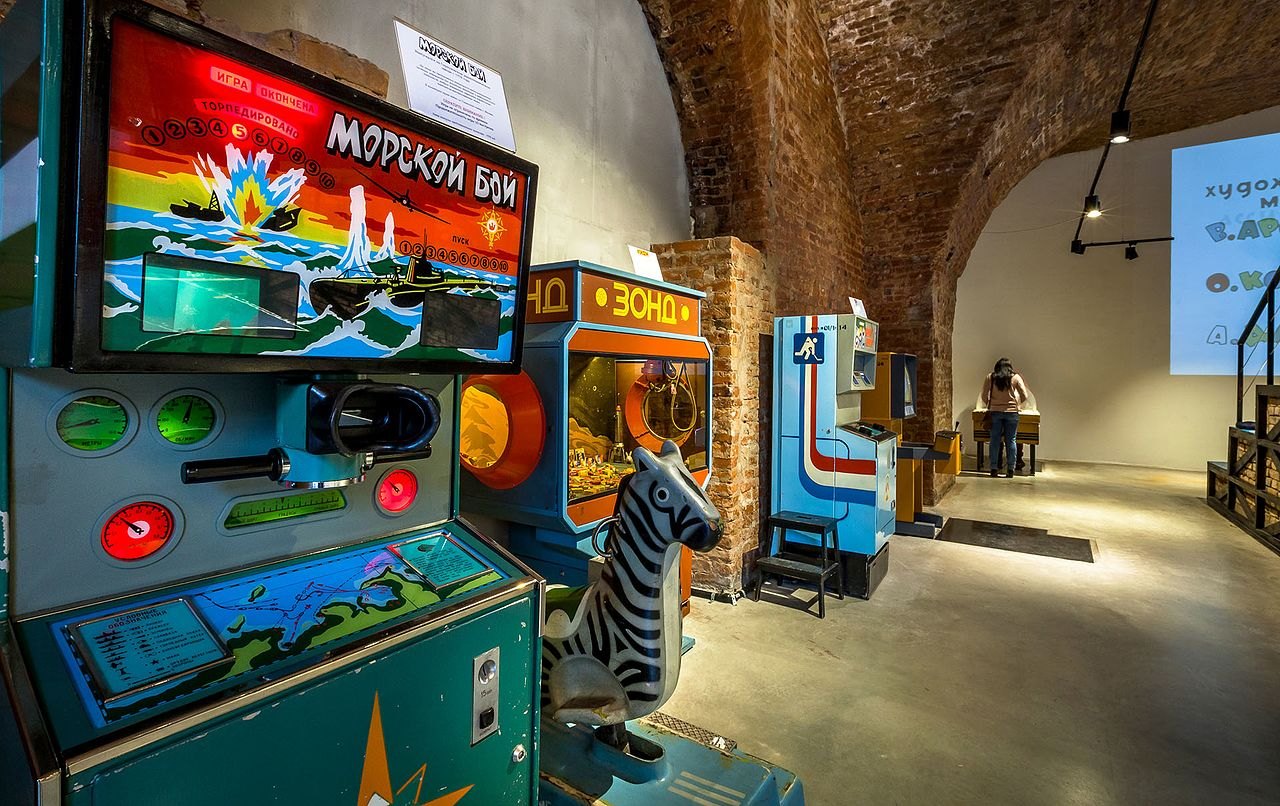
The only museum where the exhibit works: the machine starts on a coin, and that changes the whole way of meeting the object. As a monument of late Soviet daily life it is precise and honest.

Sea Battle, Gorodki, Sniper, Safari — the machines work rather than stand behind glass; and the soda machine with a faceted glass.

3.8 km from here · Rozhdestvenka 12 · ·
· No. 48

5 museums have no point set. They are not in this count.