Skip to content

Your browser is older than this page. The catalogue still reads here: the list, the filter and the cards all work. Your browser will mark filter choices with plain checkboxes, as best it can. Update your browser to see the page as it was built.

Museums near The Ryabushinsky Mansion

We do not ask your browser where you are. We collect no data about people. Place the point on the city map yourself — we will find the nearest museums that suit your preferences.

Distance
Filter
How much time
We count what is left today: from now — or from opening, if the museum has not opened yet — to the last admission. The closing hour is of no use for such a count: past the last admission nobody is let in. Where the last admission is not established we allow half an hour: erring towards «you will not make it» costs less than sending someone to a locked door.
When I go
We show those open on at least one of the days chosen. Today is Friday.
Who with
One thing is asked here: whether a child will find it interesting inside. The ease of the way and of the rooms is a question of another kind, and it stands under “Access”. In the entry this shows as a mark, and the age in the note beside it.
What to see
Access
The accessibility of a museum and the accessibility of the way to it are different things, and we keep them apart. It happens that everything inside is arranged faultlessly while the door itself cannot be reached in a wheelchair; it happens the other way round too.
How valuable
What sets it apart
Showing 46 museums

Drag the pin or press the map.

open nowclosed nowhours not known

Map — OpenStreetMap

Nearest museums · 46
outstanding
The Museum of Oriental Art
Panther, CC BY-SA 3.0 · Wikimedia Commons
Western museums of the East were formed by colonial routes; this collection grew out of nationalised private collections and Soviet expeditions. Hence the Central Asian, Caucasian, Buryat and Chukchi sections that London and Paris lack: there the East begins with India and Egypt, here with what lay inside the country and next to it. That is the reason to come.

Central Asian and Caucasian carpets and metalwork transferred from the State Museum Fund; Iranian Qajar painting and tilework; Chinese bronze and porcelain, Japanese prints; a Korean section rare for Russia; Buddhist sculpture of Buryatia and Mongolia.

300 m from here · Nikitsky Boulevard 12a · ·
· No. 43
House museums · since 1922

The Scriabin Museum

significant
A flat from which nothing was carried out: Scriabin rented it for his last three years and died here in 1915, and it became a museum in 1922 — almost without a gap. Furniture, books, piano and the fittings of the study are the very ones. But the chief thing is another: Scriabin conceived music together with light, and the trace of that conception survives in the flat — the colour score of Prometheus and the light apparatus. No other composer’s museum in Russia shows the idea and not merely the domestic life.

The Bechstein grand at which the last works were written. The study and the library with the owner’s markings. The colour score of Prometheus and the colour-light apparatus assembled to his design. A concert hall in the same house.

900 m from here · Bolshoy Nikolopeskovsky Lane 11
· No. 76
outstanding
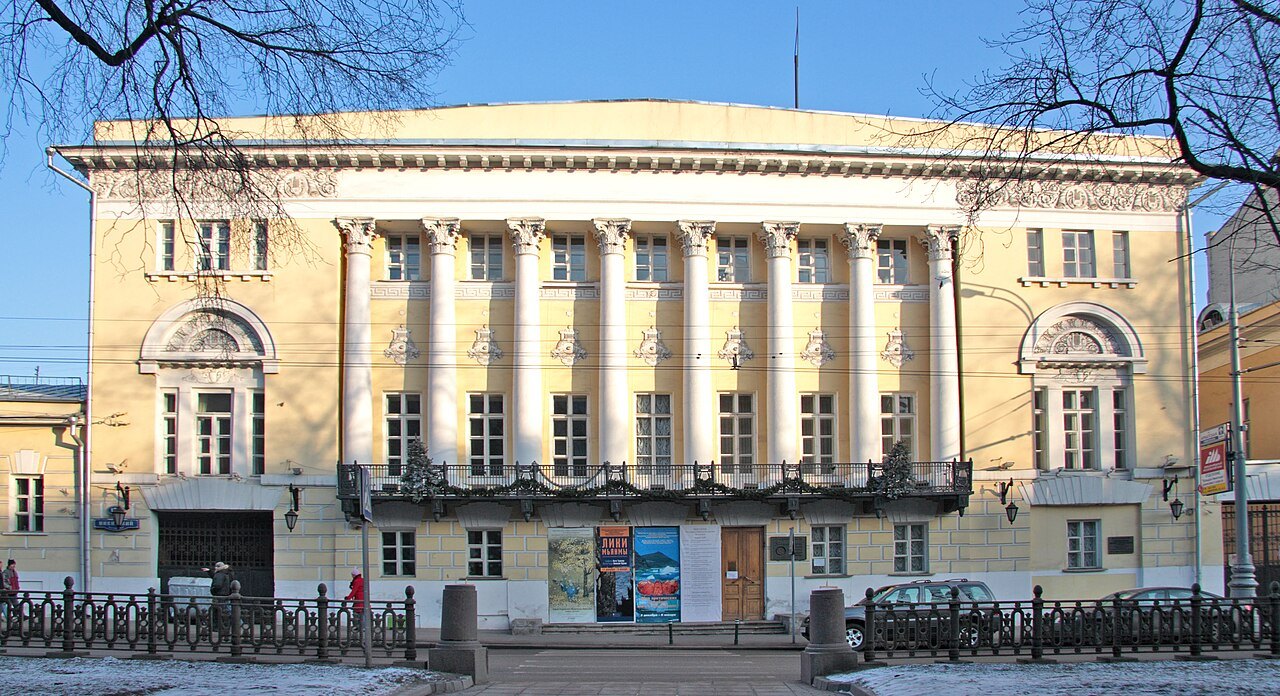
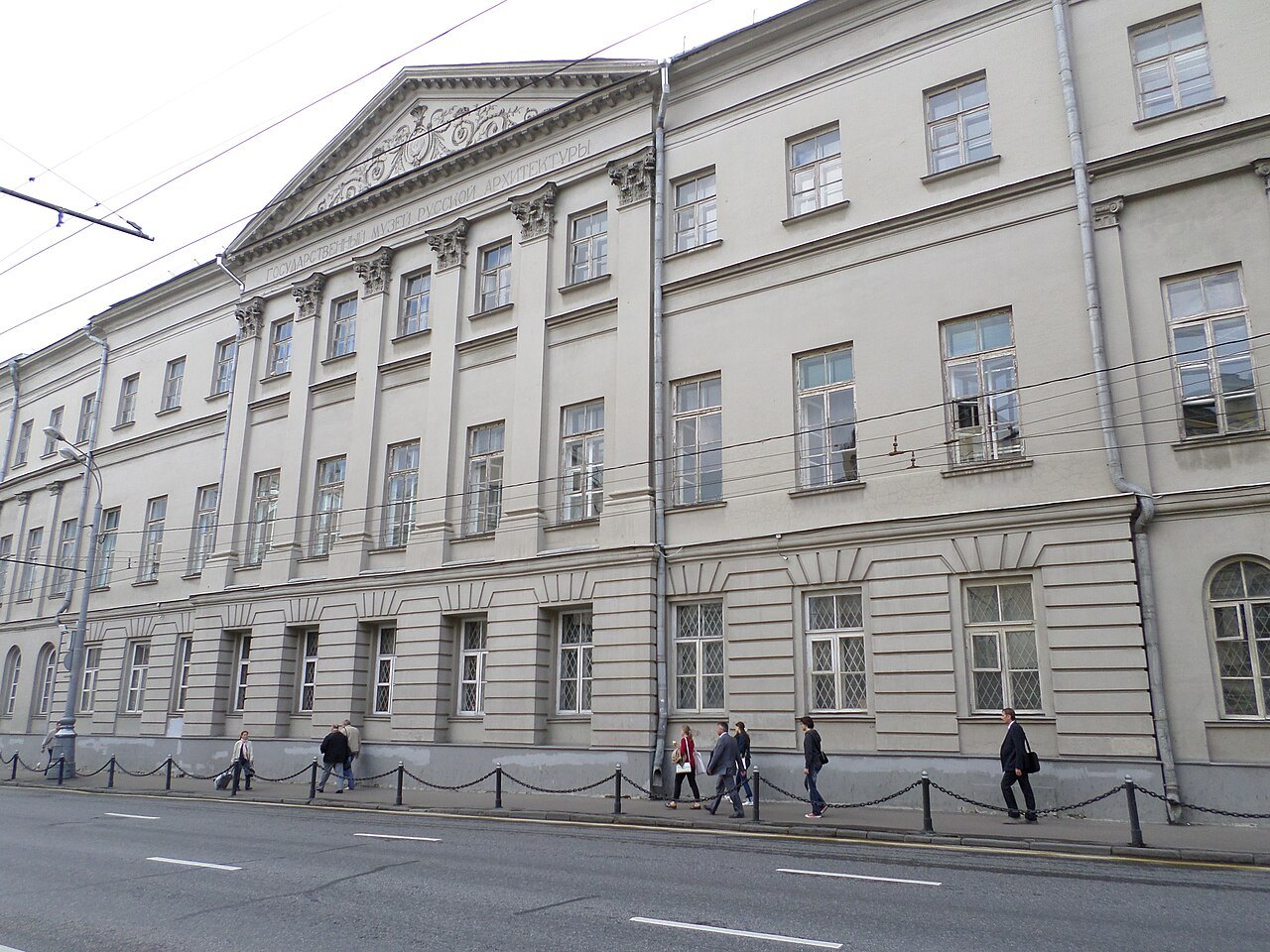
The Museum of Architecture
SergeyStepykin, CC BY-SA 3.0 · Wikimedia Commons
The only museum of architecture in Russia and one of the few in the world. It holds fragments of demolished buildings — reliefs from the Cathedral of Christ the Saviour, details of the Sukharev Tower: things that exist nowhere else because the buildings do not.

The enfilade of the Talyzin house with its exhibitions; the Apothecary Office, 17th-century chambers where fragments of demolished Moscow buildings are shown; models of unbuilt projects, including material on the Palace of the Soviets.

900 m from here · Vozdvizhenka 5/25 · ·
· No. 53
Architecture and estates · since 2020

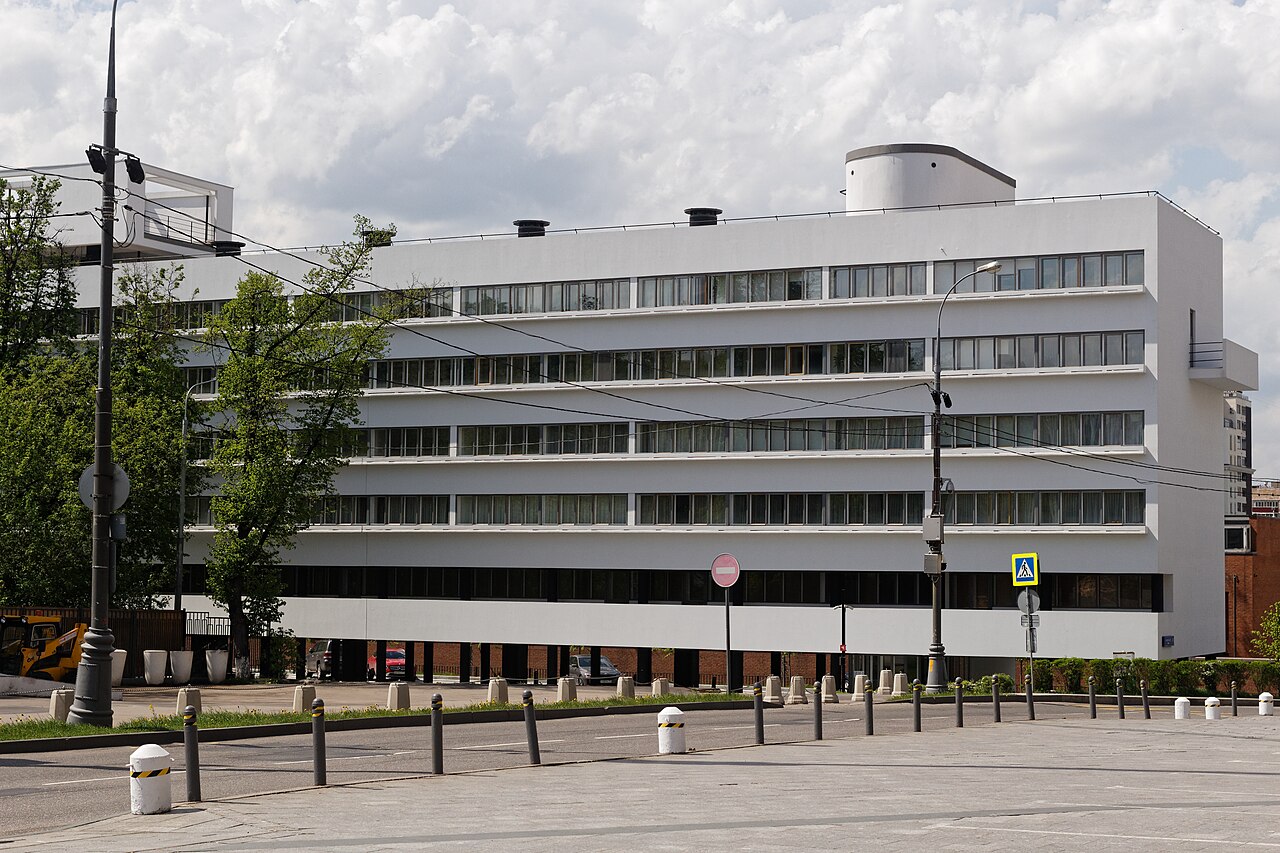
The Narkomfin Building

significant
The Narkomfin Building
Retired electrician, CC0 · Wikimedia Commons
The 1930 house by Ginzburg and Milinis is the transitional commune-house with which any conversation about twentieth-century housing begins: two-level units, a corridor every second floor, kitchen and laundry taken out of the flat. Le Corbusier knew this building and leaned on it in the Unité d’habitation at Marseille — the ribbon window, the pilotis and the interlocking sections are all here first. But expectations must be squared honestly: the restoration of 2017–2020 gave the house back to its residents, and the museum here is one restored unit, not a building. Looking is done from outside and in a single flat, by appointment.

A restored type F unit, furnished to Ginzburg’s drawings. The building itself: the residential block on columns, the communal block, the bridge between them.

950 m from here · Novinsky Boulevard 25, block 1 · ·
· No. 74
for enthusiasts
The Museum of Contemporary History
The collection is large, but the display is built ideologically and is unreliable as a source of knowledge — we say so plainly. The value is the building: this is the Moscow English Club, the one from the novels, and some objects such as the propaganda porcelain.

The building of the Moscow English Club — the club of Eugene Onegin and War and Peace, with the lions on its gate; Soviet propaganda porcelain; the collection of gifts to Stalin.

1000 m from here · Tverskaya 21 · ·
· No. 28
Art · since 1817

The Manege

significant
The Manege
Bernt Rostad uploaded and derivative work: MrPanyGoff, CC BY 2.0 · Wikimedia Commons
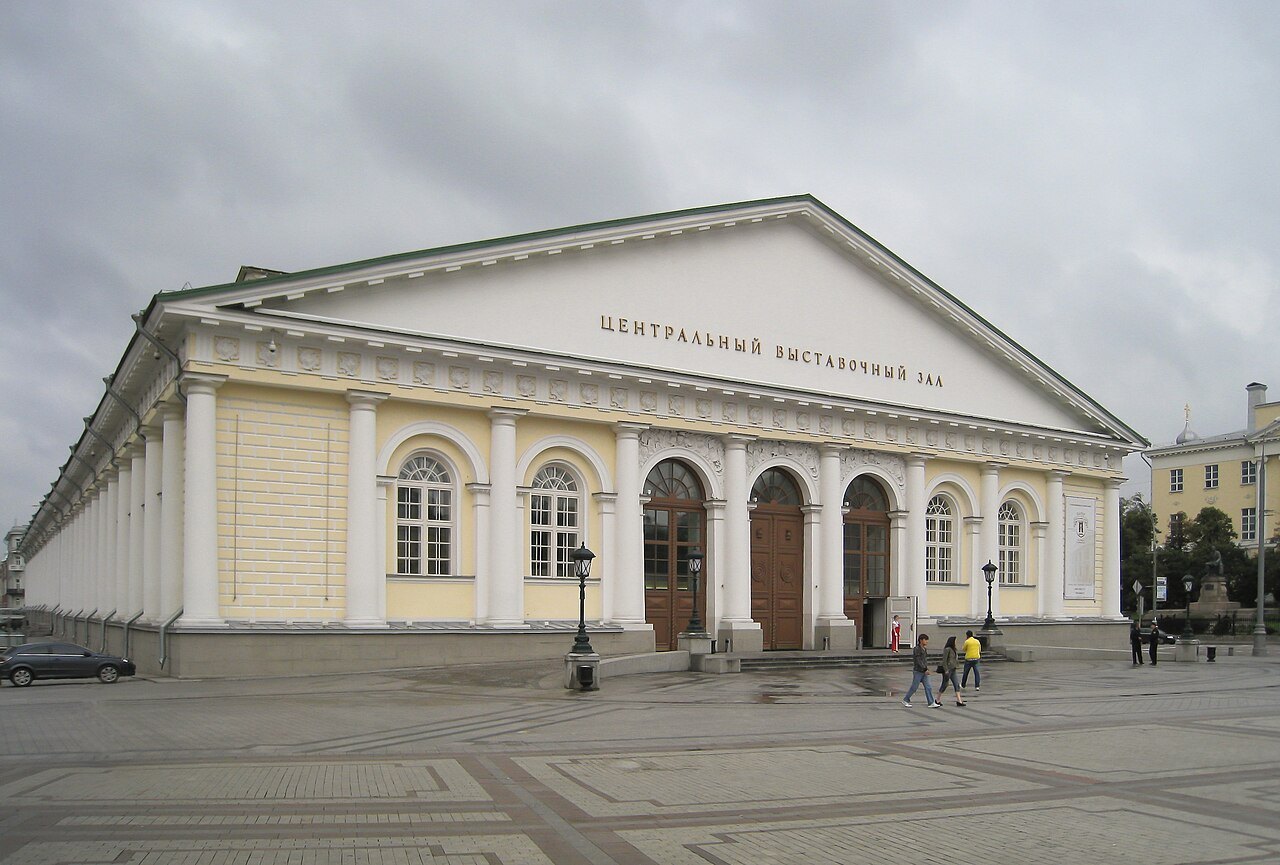
There is no collection; the value is entirely engineering — a column-free span of nearly 45 metres calculated by Betancourt, a monument of engineering thought with few equals in Europe. Everything else here is temporary.

The building itself: a column-free hall spanned by timber trusses of almost 45 metres, calculated by the engineer Agustín de Betancourt — a rare monument of engineering.

1.1 km from here · Manezhnaya Square 1 ·
· No. 19
world-class
The Pushkin Museum of Fine Arts
user:Ghirlandajo, CC BY-SA 3.0 · Wikimedia Commons
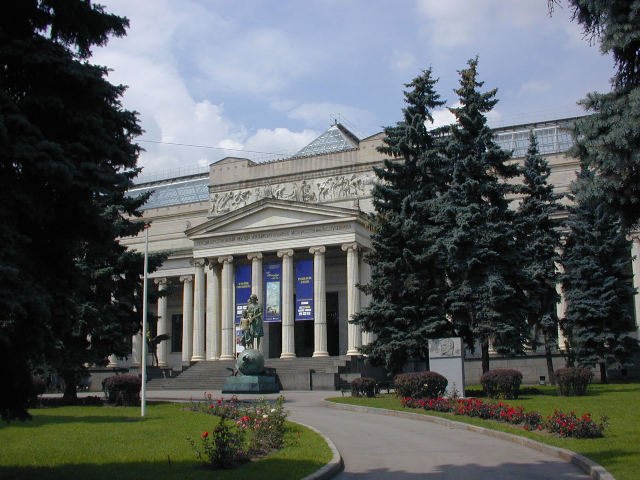
The Louvre and the Metropolitan hold more originals; what is unique is Tsvetaev’s cast collection — the only large teaching museum of the history of art in the world still intact and still working as intended. In Europe such collections went into storage in the 20th century. Add the Fayum portraits and objects from Schliemann’s Trojan hoards.

The teaching collection of plaster casts after antique and Renaissance sculpture — Tsvetaev’s idea, unmatched for completeness; the Fayum portraits; objects from Priam’s Treasure found by Schliemann at Troy; the Egyptian collection. The French 19th–20th century is in the Gallery at Volkhonka 14, on a separate ticket.

1.3 km from here · Volkhonka 12 · ·
· No. 20
History · since 1997

Museum of Moscow Archaeology

for enthusiasts
Museum of Moscow Archaeology
Qweasdqwe, CC BY-SA 4.0 · Wikimedia Commons
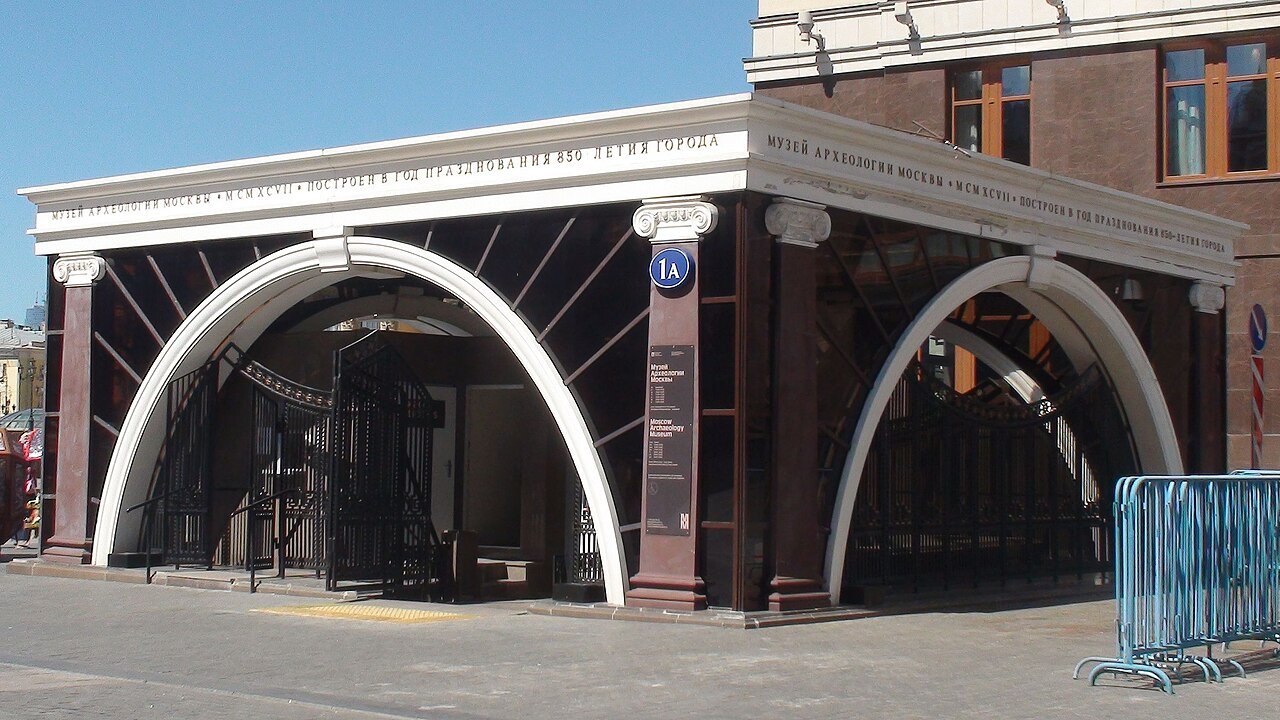
A museum built around what cannot be moved: the 16th-century bridge piers stayed where they were and the building went up over them. That method of display is rare, and it is the reason to go down.

The white-stone piers of the Voskresensky Bridge of the 16th to 18th century — the museum was built around them; coin hoards found in the city centre; the everyday things of medieval Moscow.

1.3 km from here · Manezhnaya Square 1a · ·
· No. 15
History · since 1872

The Historical Museum

world-class
The Historical Museum
Diego Delso, CC BY-SA 4.0 · Wikimedia Commons
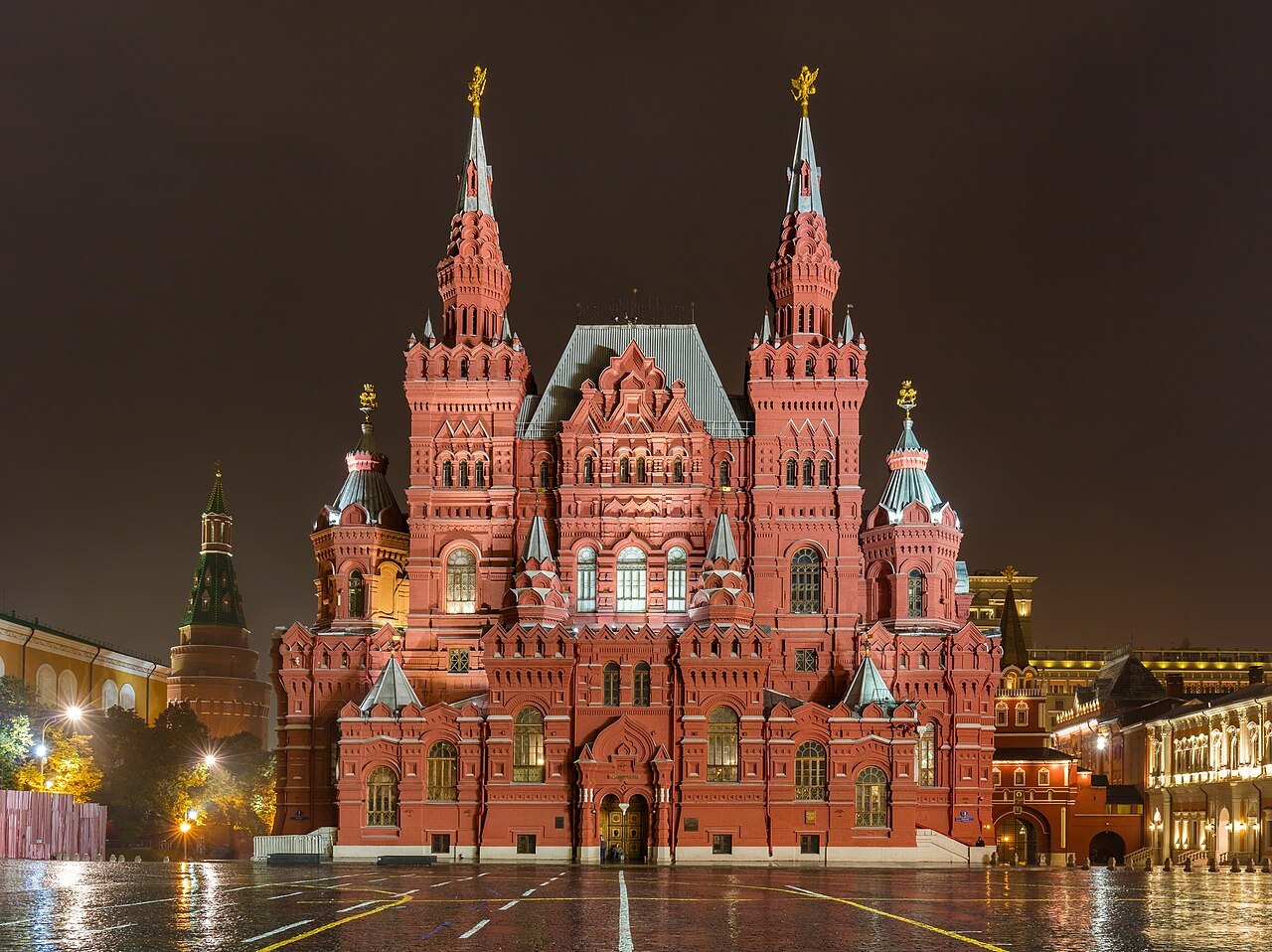
A collection of material sources on Russian history unmatched for completeness: archaeology, numismatics, arms and manuscripts in one sequence, five million objects. And a rarity of another kind — Sherwood’s fully preserved Russian Revival interior, a monument in itself.

A dugout boat some 3,500 years old; the Mstislav Gospel of the early 12th century; the helmet of Prince Yaroslav Vsevolodovich; a Blaeu globe; personal belongings of Peter the Great. Look up: the halls themselves are painted after Old Russian models and count as an exhibit.

1.4 km from here · Red Square 1 · ·
· No. 6
History · since 1806

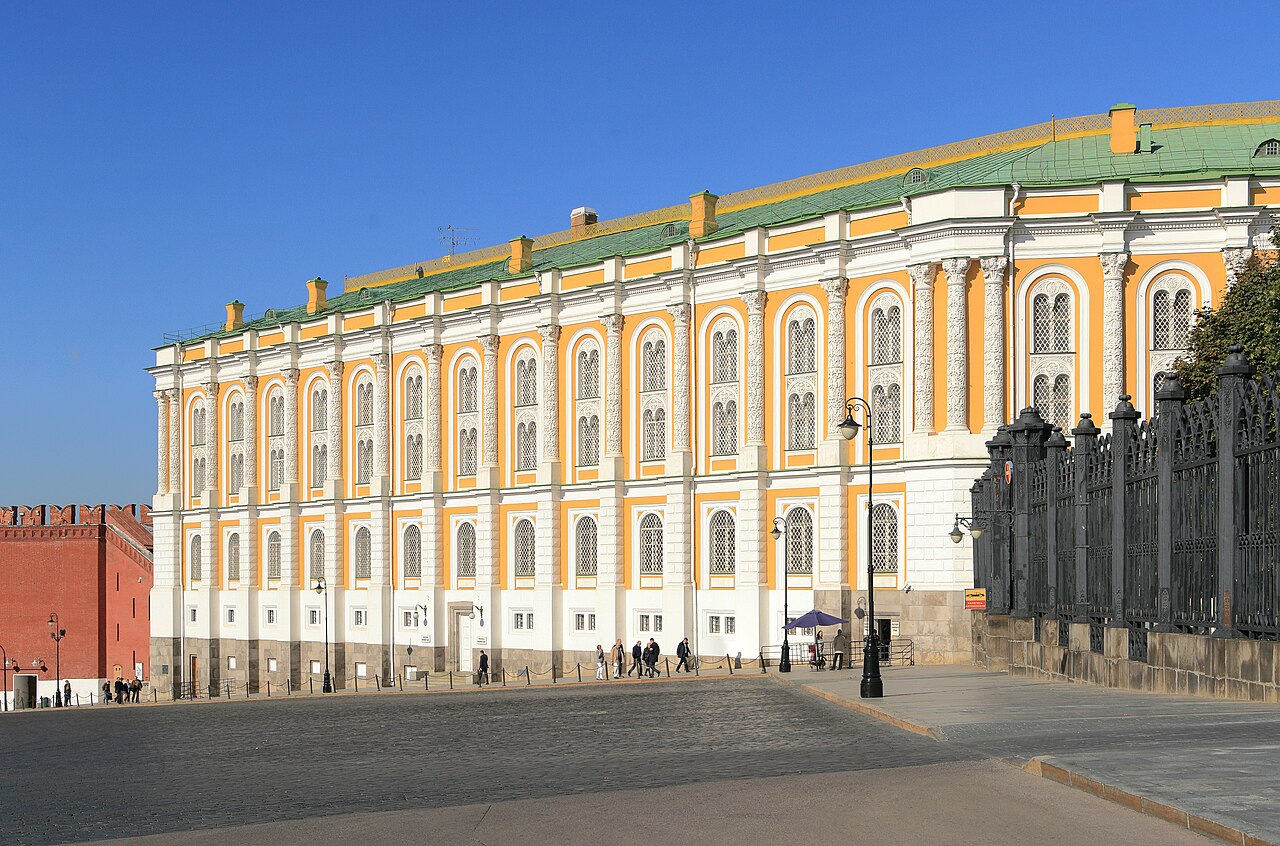
The Armoury Chamber

world-class
The Armoury Chamber
Ludvig14, CC BY-SA 3.0 · Wikimedia Commons
A treasury formed by keeping rather than by collecting: things entered as the sovereign’s property or as an embassy gift, and so came through where in Europe they went to the crucible. English silver of the sixteenth and seventeenth centuries stands here more fully than in England itself — the royal plate at home was melted under the Commonwealth, while what had been sent to Moscow was never touched. Neither the Tower nor the Victoria and Albert can be as complete about that English century as this room in Moscow. There is no painting here at all: this is a chamber of objects.

The Cap of Monomakh and the double throne of the boy tsars Ivan and Peter. Tudor and Stuart silver, a holding with no equal anywhere. Fabergé Easter eggs. Icon covers, panagias and chalices of pre-Mongol Rus. The carriage rooms: coronation coaches of the eighteenth century.

1.5 km from here · The Moscow Kremlin (entrance through the Kutafya Tower) · ·
· No. 59

5 museums have no point set. They are not in this count.