Museums near The Esterházy Summer House
We do not ask your browser where you are. We collect no data about people. Place the point on the city map yourself — we will find the nearest museums that suit your preferences.
The English Garden and its artificial ruins
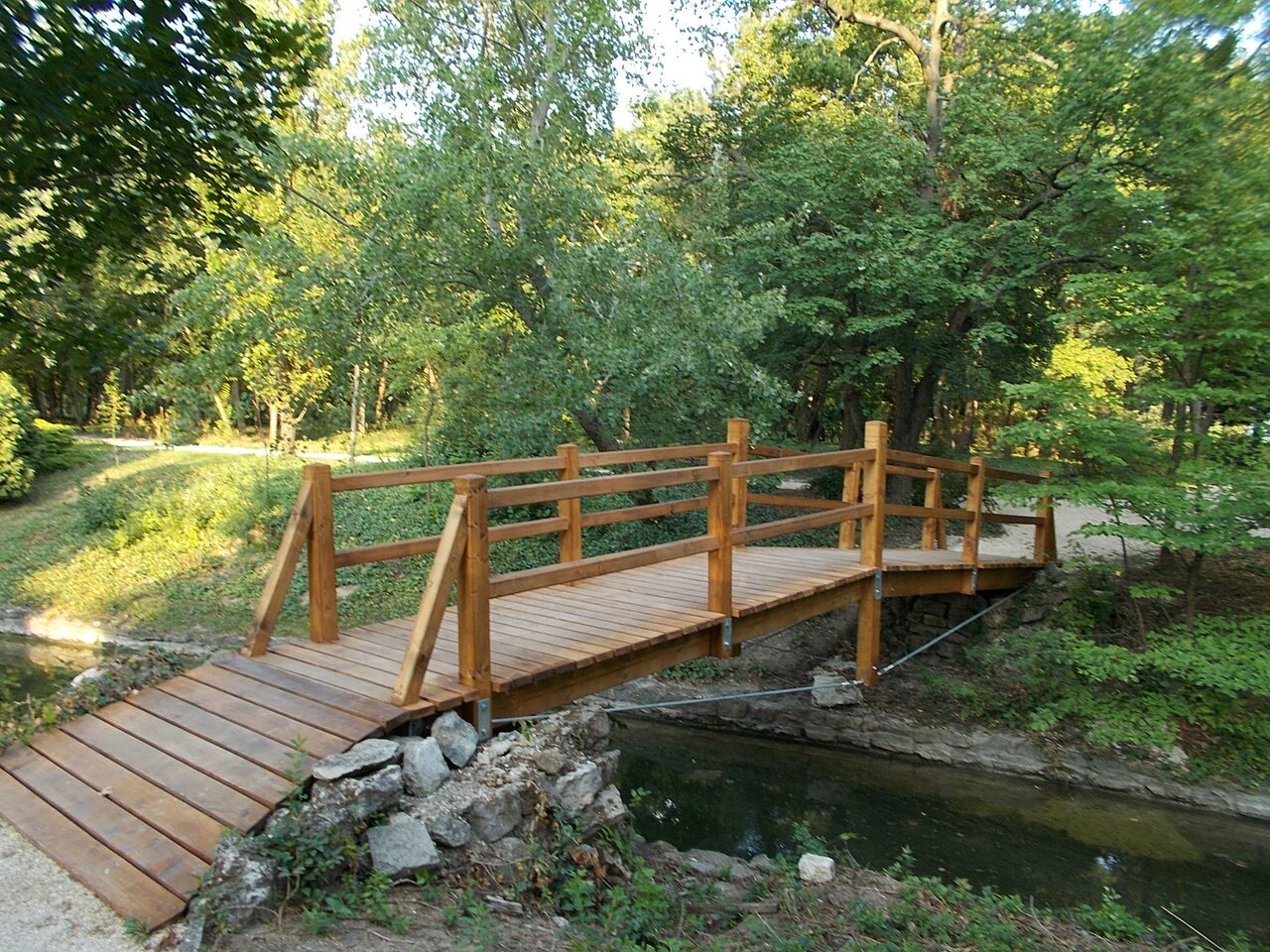
The artificial ruins of 1801 to a scheme by Charles de Moreau: clustered columns and twenty-four carved capitals from the abbey of Vértesszentkereszt, a Roman tombstone of the third century from Látó Hill set in a niche, gravestones from Szőny. The Turkish Mosque and the stone griffins at the entrance. The garden of 1783 around the Cseke lake, laid out by Ferenc Bőhm. The Esterházy summer house stands in the same garden.
The Museum of the Hungarian Germans
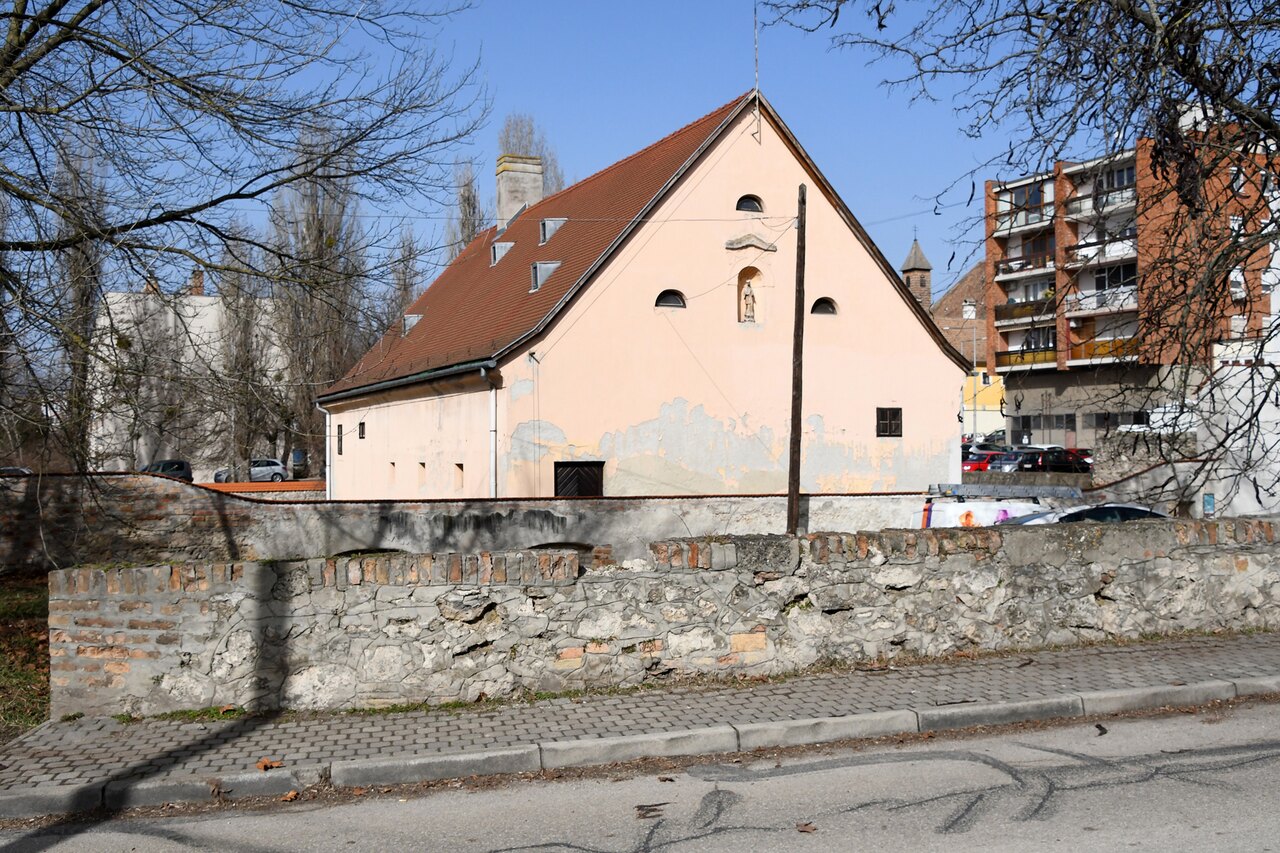
The standing display We and the Others (Mi és a többiek, 2015): the Histories section — a thousand years of the state’s dealings with its minorities, laid out as a river with its shoals and dams — and facing it the personal keepsakes given to the museum by people and communities; the Objects section — what has counted at various times as a typically German thing. The Nepomuk mill of 1758 by Jakab Fellner: how the mill was built and how it worked is shown on the ground floor. The wooden statue of John of Nepomuk on the front. An open store in the former granary. Of the costume and household gear one expects from a local museum there is less here than there is talk.
The Kuny Domokos Museum in Tata Castle
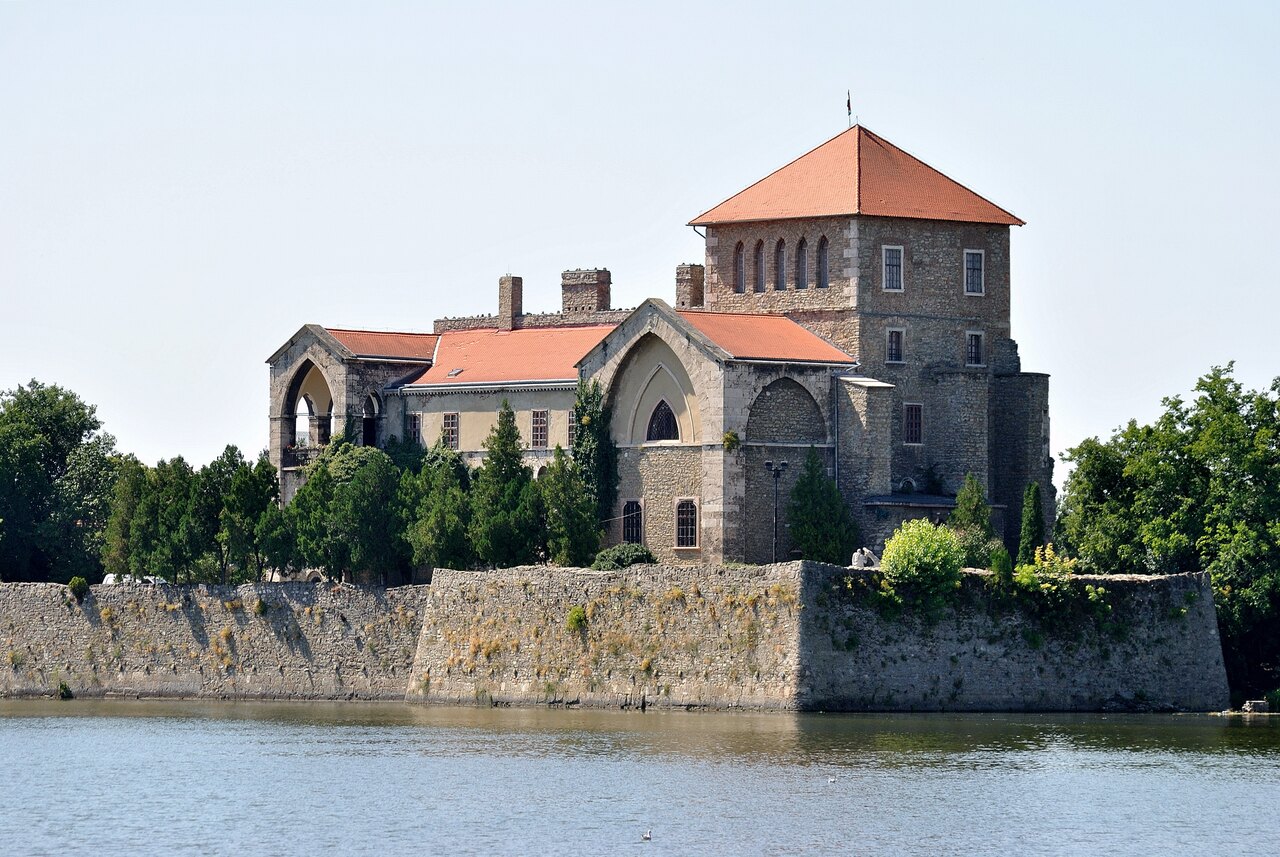
The green-glazed stove with knight figures — put back together from fragments out of a cellar filled in during the sixteenth century, and it carries the furnishing of the palace in the time of Matthias Corvinus. The Roman lapidary, opened in 1955 — stones from Brigetio and Almásfüzitő. The medieval lapidary — carving from the abbey of Vértesszentkereszt. The faience of Domokos Kuny (1754–1822). The Knights’ Hall of 1815, with the neo-Romanesque windows put in for the imperial manoeuvres of 1897. The standing displays A City Is Born and Everyday Life in the Middle Ages.
The Esterházy Palace
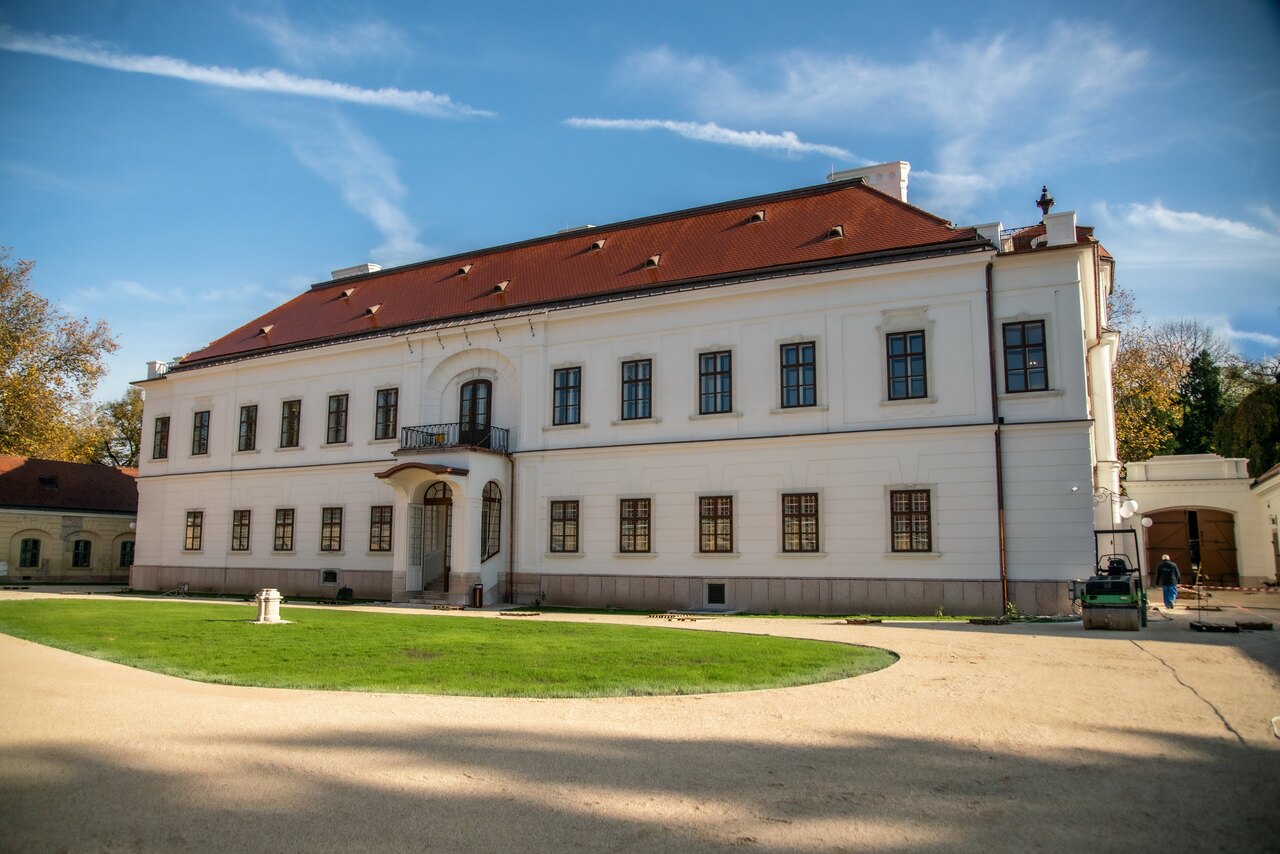
The dolls’ house of the counts’ daughters — a scale model of the palace itself, and beside it the sons’ lead soldiers, drawn up on an exact relief of the very imperial manoeuvres held at Tata. The great dining hall with restored wooden panelling and portraits of the family’s forebears; then the salon on those Esterházys who served in diplomacy. The library, the countess’s rooms, the count’s rooms on the ground floor. The tower room and the Tent Room — named after their wall painting; there too is a model of the palace theatre, and in the next room a short film about the musical past of the house: a standing orchestra was kept from 1806. All of it goes under the one name The Island of Peace (A béke szigete).
The former synagogue, exhibition hall
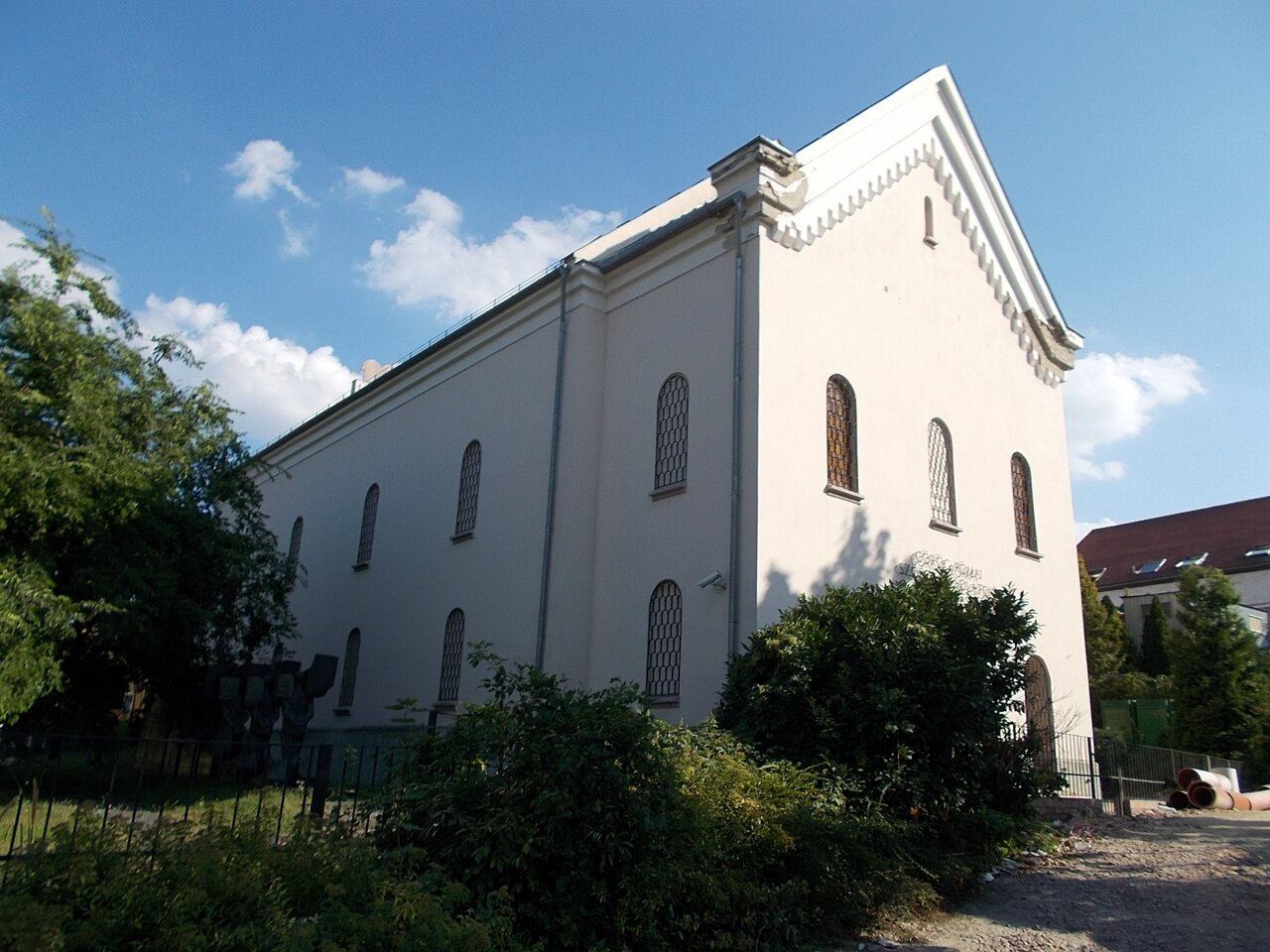
The building itself — the rebuilding of 1861 to the design of Ignác Wechselmann (1828–1903). In the garden, the memorial place of Komárom-Esztergom county and the sculptural group by Mária Lugossy, In Memory of the Martyrs of All Times, of 2004. There is no standing display; the hall is given to temporary ones.
The Geologists’ Garden on Kálvária Hill
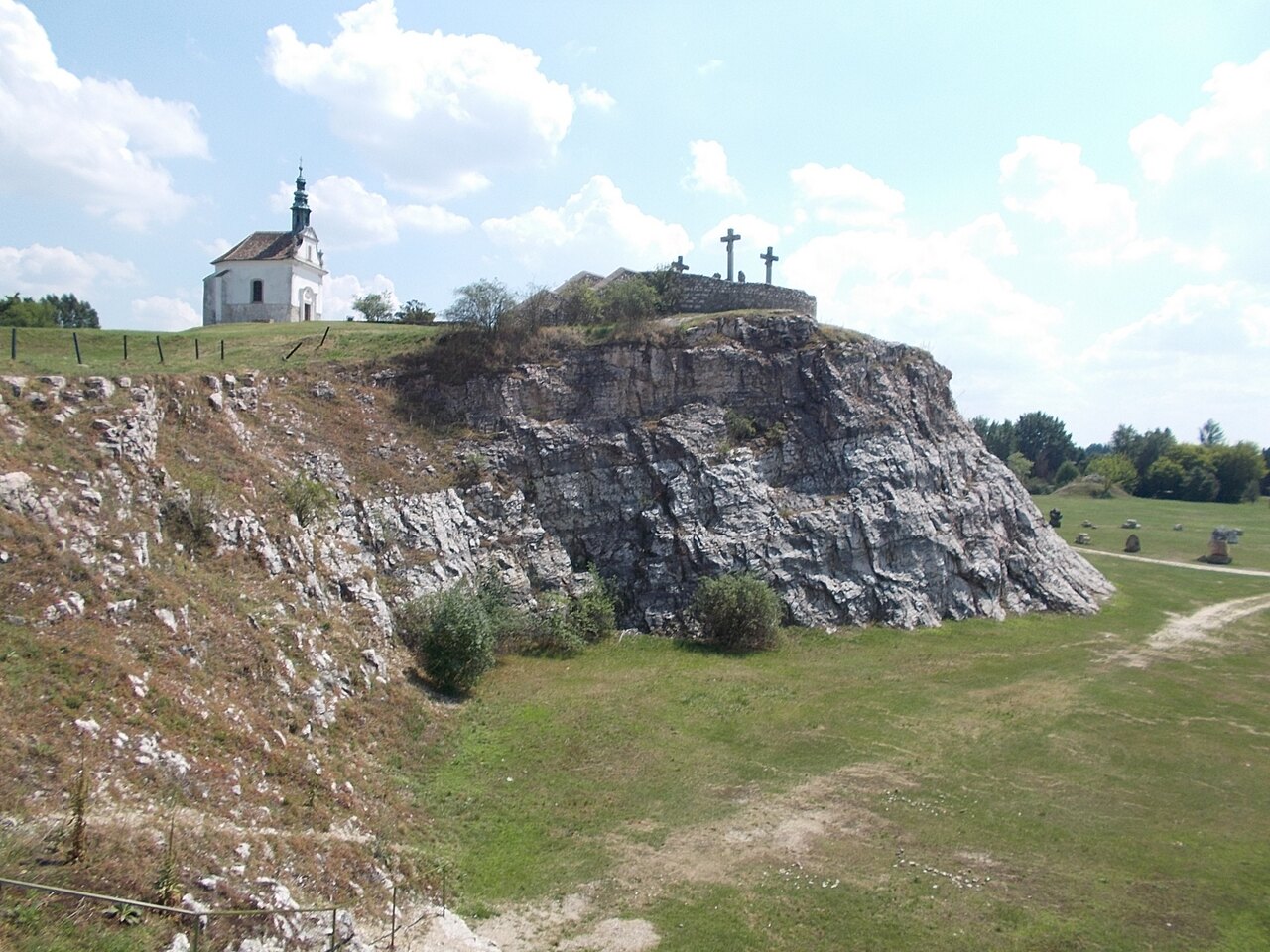
The cleared rock faces — stones of a kind no longer formed today, and phenomena that a textbook can only draw as a diagram. The stone park — the commonest rock-forming stones of Hungary, gathered into one walk. The traces of Copper Age flint working. On the top of the hill a baroque chapel and a calvary, and beside them a lookout tower, the Söréttorony.
5 museums have no point set. They are not in this count.