Skip to content

Your browser is older than this page. The catalogue still reads here: the list, the filter and the cards all work. Your browser will mark filter choices with plain checkboxes, as best it can. Update your browser to see the page as it was built.

Museums near The Rublev Museum

We do not ask your browser where you are. We collect no data about people. Place the point on the city map yourself — we will find the nearest museums that suit your preferences.

Distance
Filter
How much time
We count what is left today: from now — or from opening, if the museum has not opened yet — to the last admission. The closing hour is of no use for such a count: past the last admission nobody is let in. Where the last admission is not established we allow half an hour: erring towards «you will not make it» costs less than sending someone to a locked door.
When I go
We show those open on at least one of the days chosen. Today is Friday.
Who with
One thing is asked here: whether a child will find it interesting inside. The ease of the way and of the rooms is a question of another kind, and it stands under “Access”. In the entry this shows as a mark, and the age in the note beside it.
What to see
Access
The accessibility of a museum and the accessibility of the way to it are different things, and we keep them apart. It happens that everything inside is arranged faultlessly while the door itself cannot be reached in a wheelchair; it happens the other way round too.
How valuable
What sets it apart
Showing 44 museums

Drag the pin or press the map.

open nowclosed nowhours not known

Map — OpenStreetMap

Nearest museums · 44
Literature · since 1934

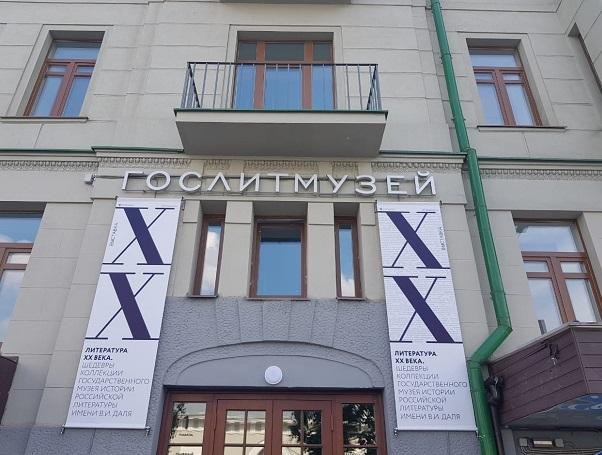
The Dahl Literary Museum

significant
The Dahl Literary Museum
Levnevskiy, CC BY-SA 4.0 · Wikimedia Commons
The only museum built not around a single name but around literature as a process. Hence its strength — comparisons impossible in a house museum, and a fund of 700,000 items that makes such comparisons possible.

The permanent display Zubovsky 15: a house of science, literature and art, and the exhibitions on 20th-century Russian letters.

5.1 km from here · Zubovsky Boulevard 15, bldg 1 · ·
· No. 8
Unusual · since 1912

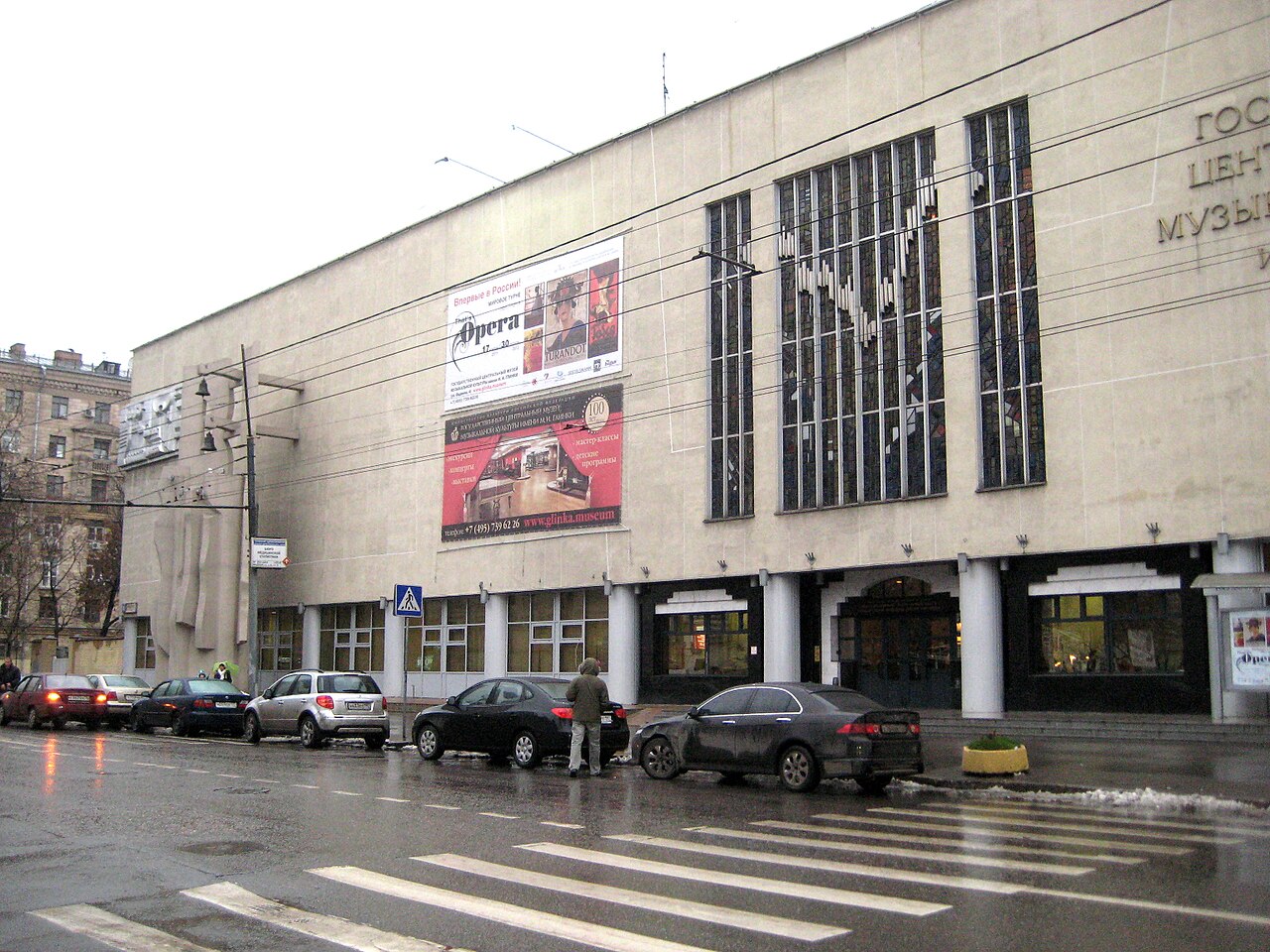
The Museum of Music

outstanding
The Museum of Music
shakko, CC BY-SA 3.0 · Wikimedia Commons
One of the largest collections of musical instruments in the world and the only place in Russia where the instrument is shown as an object of history. One can go from horn and gusli to Murzin’s synthesiser, named with Scriabin’s initials — the machine on which the music for Solaris was written. Here too is kept the State Collection of unique instruments: Stradivari, Guarneri, Amati. The Horniman shows the instrument as ethnography and the Royal College of Music shows it as performance history; here both lines run in one room, and the electronic one continues them. One thing must be known: the collection is a working one, instruments are lent to musicians, and they are not always to be found in the case.

Instruments of the peoples of the world, from Russian gusli to the Japanese koto. The ANS synthesiser of Yevgeny Murzin, named with Scriabin’s initials. Autographs and manuscripts of Russian composers. The State Collection of stringed instruments, when it is in the museum.

5.2 km from here · Fadeyeva Street 4
· No. 65
Art · since 2015

The AZ Museum

significant
A one-artist museum, Anatoly Zverev, grown out of a private collection. Its value is not scale — the rooms are few and the works small — but the way of showing: an exhibition here is built as a statement, with sequence and light, rather than hung along the walls, and in Moscow that is rare. About Zverev himself an honest word is owed: an uneven artist, part of whose legacy rests on the speed of the hand rather than on depth, and his best things have to be picked out. The museum does not conceal this, which is why it is believed.

Painting and drawing by Anatoly Zverev from Natalia Opaleva’s collection. Exhibitions setting Zverev beside other artists of his circle. Work by Vladimir Nemukhin and other nonconformists.

5.4 km from here · 2nd Tverskaya-Yamskaya Street 20–22 · ·
· No. 73
House museums · since 1921

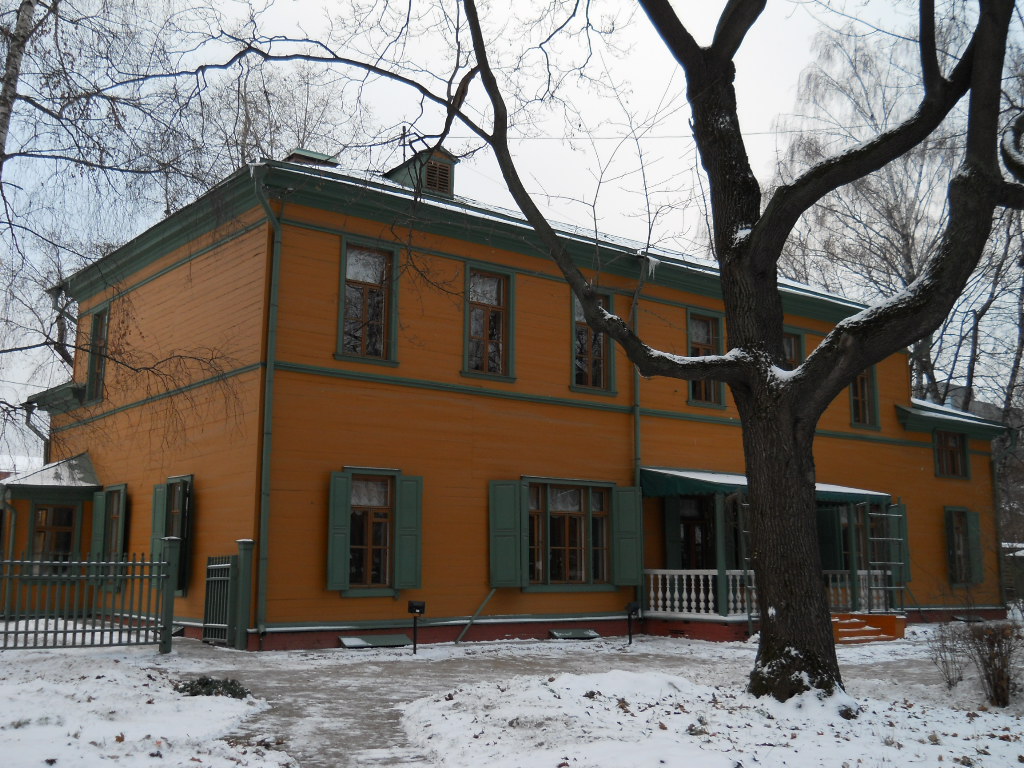
Tolstoy in Khamovniki

outstanding
Tolstoy in Khamovniki
Shuvaev, CC BY-SA 3.0 · Wikimedia Commons
A house in which nothing was reconstructed: the furnishings are its own, the objects are the family’s, and their placing follows an inventory taken while the owners were alive. There is no electric light here and never was — Tolstoy refused it on principle, so the rooms are lit as they were in his time, which for a house museum is almost unheard of. Anyone who has been to Carlyle’s House in Chelsea knows the effect and will find it carried further here: there the gas fittings survive, here there is nothing but daylight and a lamp. The literary display on Prechistenka answers the question of what he wrote; here the question answered is how he lived — and in his case that is the subject.

The study with its low chair, cut down to the short sight of its owner, and the writing table. Sofya Andreyevna’s room. The hall with the piano at which Taneyev and Rachmaninoff played. The cobbler’s bench — Tolstoy made his own boots. The garden, which has outlived the century along with the house.

5.5 km from here · Lva Tolstogo Street 21 ·
· No. 62
Architecture and estates · since 2020

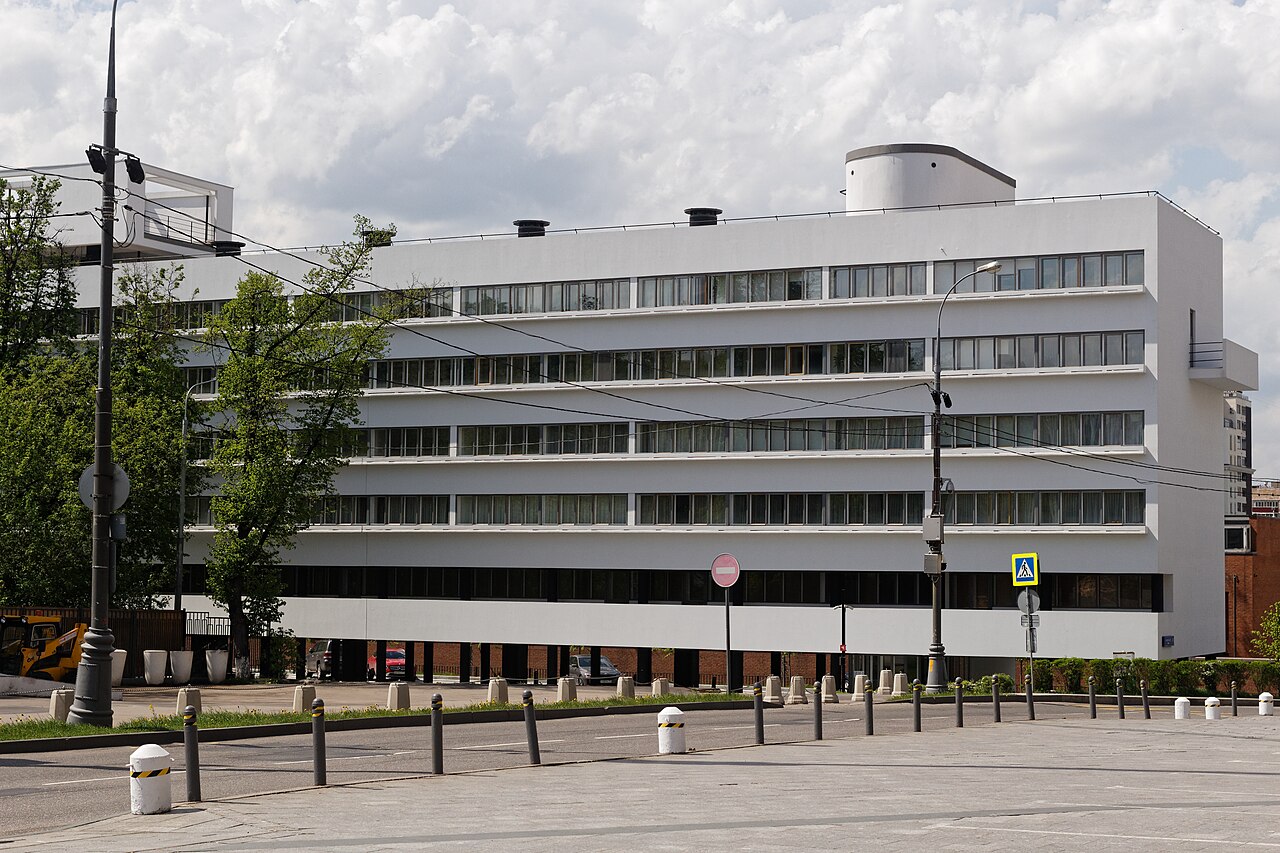
The Narkomfin Building

significant
The Narkomfin Building
Retired electrician, CC0 · Wikimedia Commons
The 1930 house by Ginzburg and Milinis is the transitional commune-house with which any conversation about twentieth-century housing begins: two-level units, a corridor every second floor, kitchen and laundry taken out of the flat. Le Corbusier knew this building and leaned on it in the Unité d’habitation at Marseille — the ribbon window, the pilotis and the interlocking sections are all here first. But expectations must be squared honestly: the restoration of 2017–2020 gave the house back to its residents, and the museum here is one restored unit, not a building. Looking is done from outside and in a single flat, by appointment.

A restored type F unit, furnished to Ginzburg’s drawings. The building itself: the residential block on columns, the communal block, the bridge between them.

5.6 km from here · Novinsky Boulevard 25, block 1 · ·
· No. 74
History · since 2012

The Jewish Museum

significant
The Jewish Museum
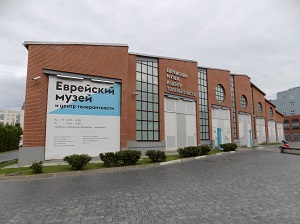
Come for two things at once: the Bakhmetevsky garage by Melnikov and Shukhov, a building of world significance, and the history of Russian Jewry told from inside as nowhere else. The holdings of originals are modest, and that is worth knowing beforehand.

The building itself — the Bakhmetevsky garage of 1926–1927, one of Konstantin Melnikov’s principal works with steel structures by Vladimir Shukhov; the Café on Basseynaya, a reconstruction of shtetl life.

5.8 km from here · Obraztsova 11, bldg 1a · ·
· No. 47
Science and nature · since 1716

The Mineralogical Museum

outstanding
The Mineralogical Museum
Anton Cherny, public domain · Wikimedia Commons
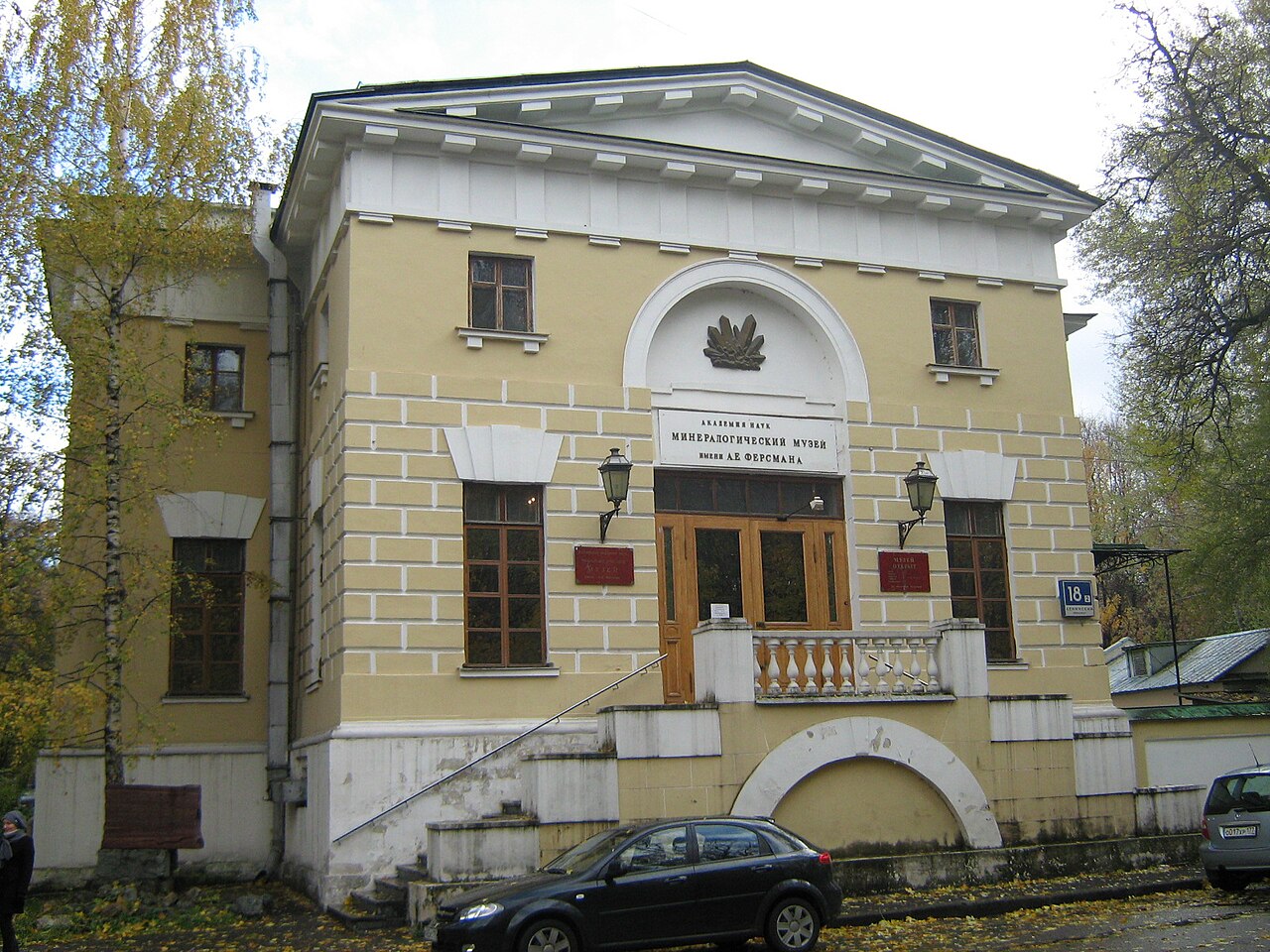
A collection more than three hundred years old: it grew out of the mineral cabinet of Peter’s Kunstkamera and moved to Moscow with the Academy of Sciences. Some hundred and forty thousand specimens make it one of the largest mineralogical museums in the world, and for the systematics of stone it has no equal in Russia. The Vault at South Kensington shows a few dozen chosen stones magnificently; the point here is the opposite — the whole class, in order, with the ordinary specimen beside the extraordinary one, which is what a systematic collection is for. Come knowing that this is a scientific museum and not an entertaining one: cases, labels, no screens. Anyone who wants the telling needs a guided tour, and it must be booked ahead.

The systematic collection — the whole known mineral world by class. Ural malachite and rhodonite from the old crown holdings. Meteorites. Hardstone work by Fabergé and the Peterhof lapidary works. Large specimens of a size only museums of this age possess.

5.9 km from here · Leninsky Prospekt 18, building 2 · ·
· No. 63
outstanding
Museum of Russian Impressionism
Sergey A. Demidov, CC BY 4.0 · Wikimedia Commons
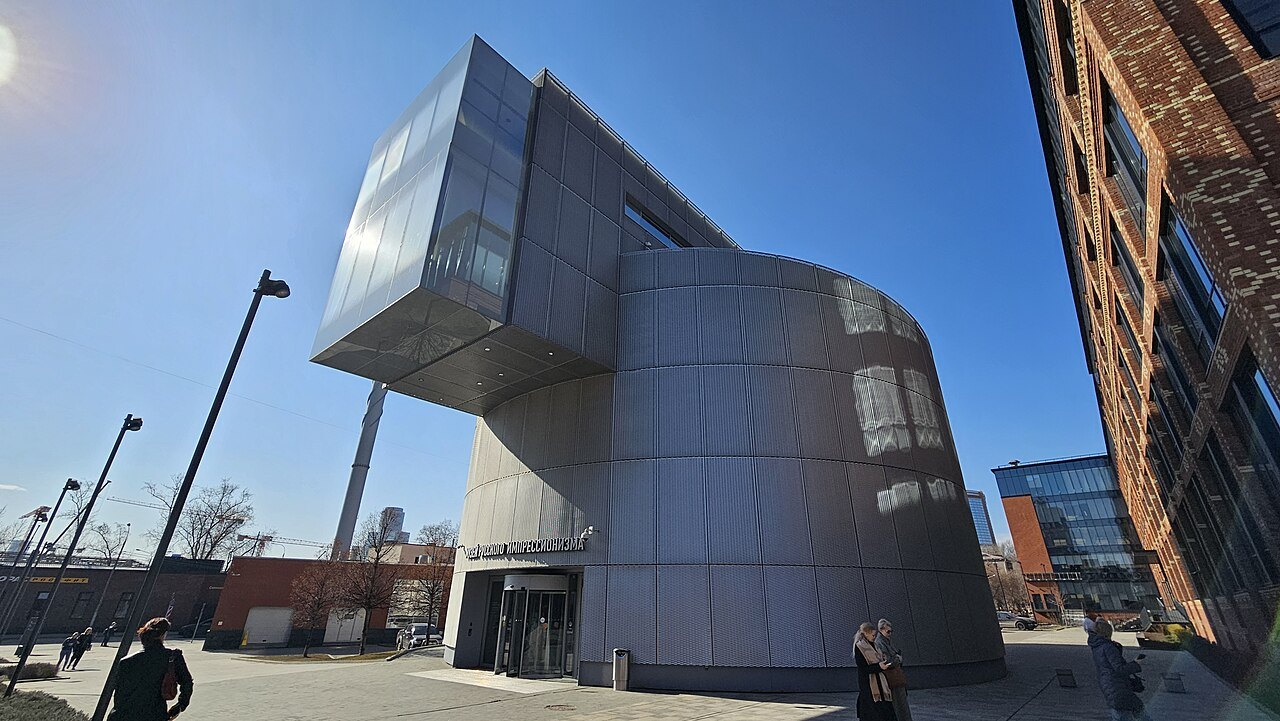
The term “Russian impressionism” is contested, and this is the only institution that investigates rather than illustrates it. The value is the exhibition programme: works come here from private collections that would otherwise never be seen.

Konstantin Korovin, Valentin Serov, Igor Grabar, Nikolai Bogdanov-Belsky. The building is a converted cylindrical flour store of the Bolshevik factory — a rare case of industry turned into a museum.

7.1 km from here · Leningradsky Prospekt 15, bldg 11 · ·
· No. 51
Architecture and estates · since 1524

Novodevichy Convent

outstanding
Novodevichy Convent
Ivtorov, CC BY-SA 4.0 · Wikimedia Commons
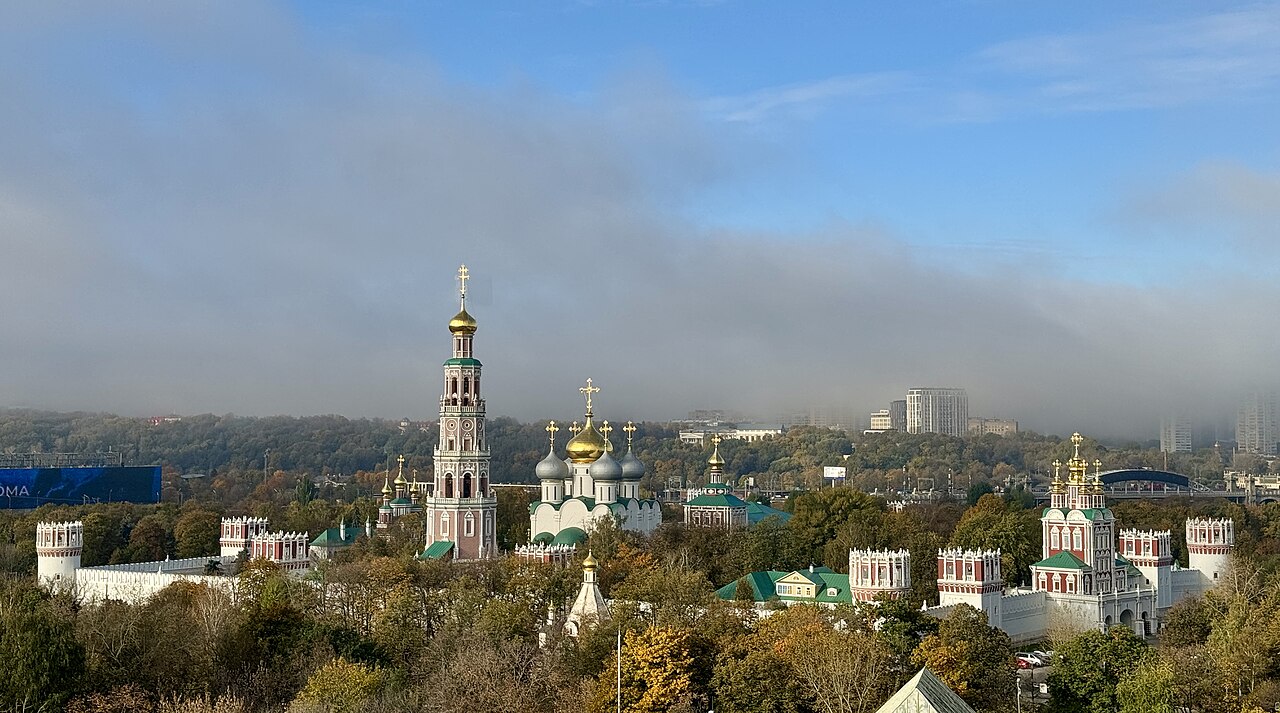
After Kolomenskoye the second building of Moscow on the World Heritage list, and for wholeness of ensemble the first: a convent of the late seventeenth century has come down almost without rebuilding — walls, towers, gate churches, refectory. The Smolensk Cathedral of 1524 keeps sixteenth-century frescoes in their places and an iconostasis of a kind of which Moscow has two or three. What is not here is a museum in the ordinary sense: this is a working convent with a museum display, and what is open changes from season to season.

The Smolensk Cathedral of 1524 with its sixteenth-century wall painting and iconostasis. The walls and towers of the late seventeenth century — Moscow Baroque entire. The burial ground: Denis Davydov, Sergei Solovyov, and Chekhov before he was moved.

7.6 km from here · Novodevichy Proyezd 1
· No. 75
Architecture and estates · since 1919

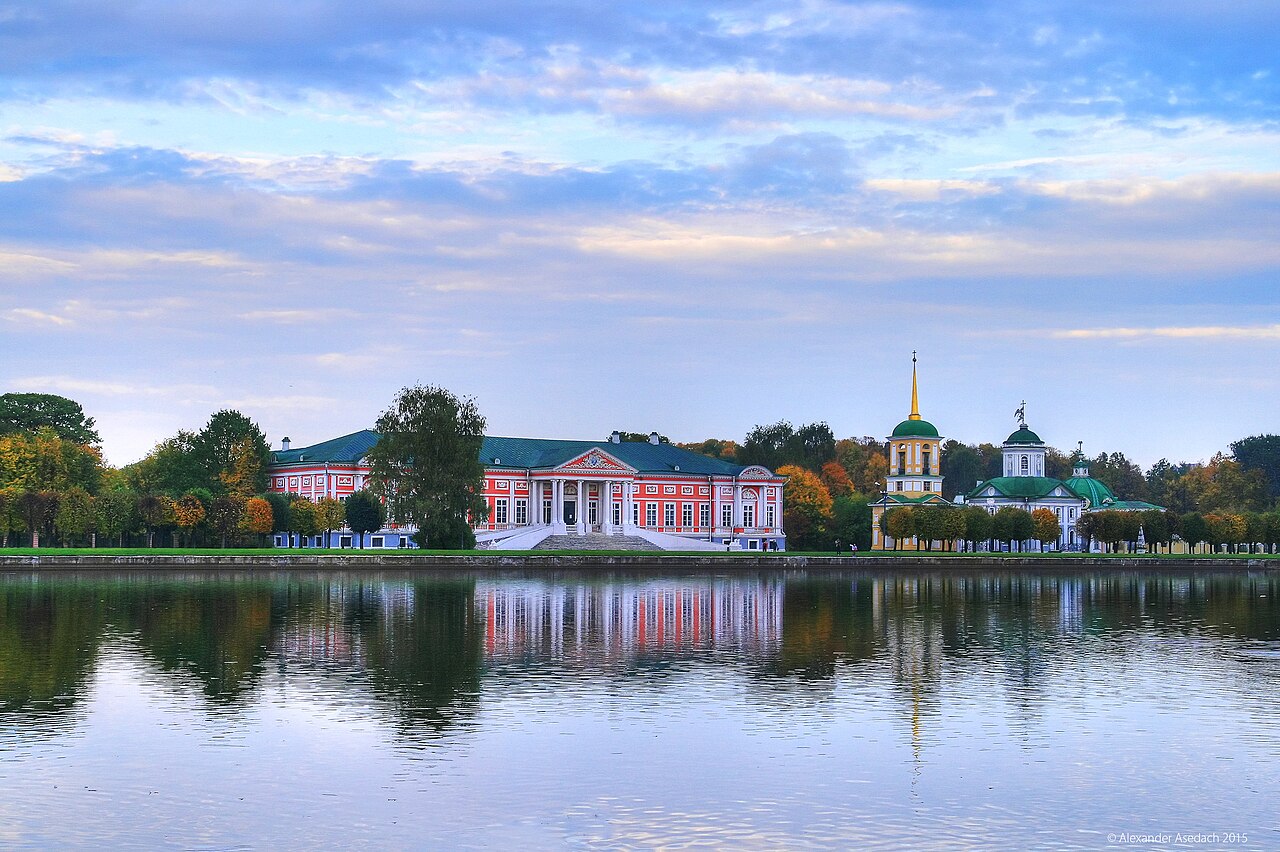
Kuskovo

outstanding
Kuskovo
Asedach Alexander, CC BY 3.0 · Wikimedia Commons
The one Moscow estate to come down almost entire: wooden palace, pavilions, formal park and pond stand as the Sheremetevs meant them in the 1750s–1770s, with almost none of the nineteenth-century alteration. Neither Ostankino nor Tsaritsyno has kept so much. Anyone who knows Ham House by the Thames will recognise the case — a great house left alone rather than improved — and will find here what Ham has not: the whole French parterre, unbuilt over. Attached to the palace is the Museum of Ceramics, one of the largest holdings of porcelain and glass in the world, which arrived in the 1930s and has nothing to do with the estate. Two different museums within one fence, and both are worth entering, knowing that they are about different things.

The wooden palace of 1769–1775 with its interiors and inlaid parquet intact. The Grotto with its shell-work — a thing that exists nowhere else in Russia. The Dutch and Italian houses, the Hermitage, the orangery. A collection of porcelain from Meissen to Soviet agitprop.

8.8 km from here · Yunosti Street 2 · ·
· No. 67

5 museums have no point set. They are not in this count.