Skip to content

Your browser is older than this page. The catalogue still reads here: the list, the filter and the cards all work. Your browser will mark filter choices with plain checkboxes, as best it can. Update your browser to see the page as it was built.

Museums near The Victory Museum

We do not ask your browser where you are. We collect no data about people. Place the point on the city map yourself — we will find the nearest museums that suit your preferences.

Distance
Filter
How much time
We count what is left today: from now — or from opening, if the museum has not opened yet — to the last admission. The closing hour is of no use for such a count: past the last admission nobody is let in. Where the last admission is not established we allow half an hour: erring towards «you will not make it» costs less than sending someone to a locked door.
When I go
We show those open on at least one of the days chosen. Today is Friday.
Who with
One thing is asked here: whether a child will find it interesting inside. The ease of the way and of the rooms is a question of another kind, and it stands under “Access”. In the entry this shows as a mark, and the age in the note beside it.
What to see
Access
The accessibility of a museum and the accessibility of the way to it are different things, and we keep them apart. It happens that everything inside is arranged faultlessly while the door itself cannot be reached in a wheelchair; it happens the other way round too.
How valuable
What sets it apart
Showing 42 museums

Drag the pin or press the map.

open nowclosed nowhours not known

Map — OpenStreetMap

Nearest museums · 42
Military history · since 1962

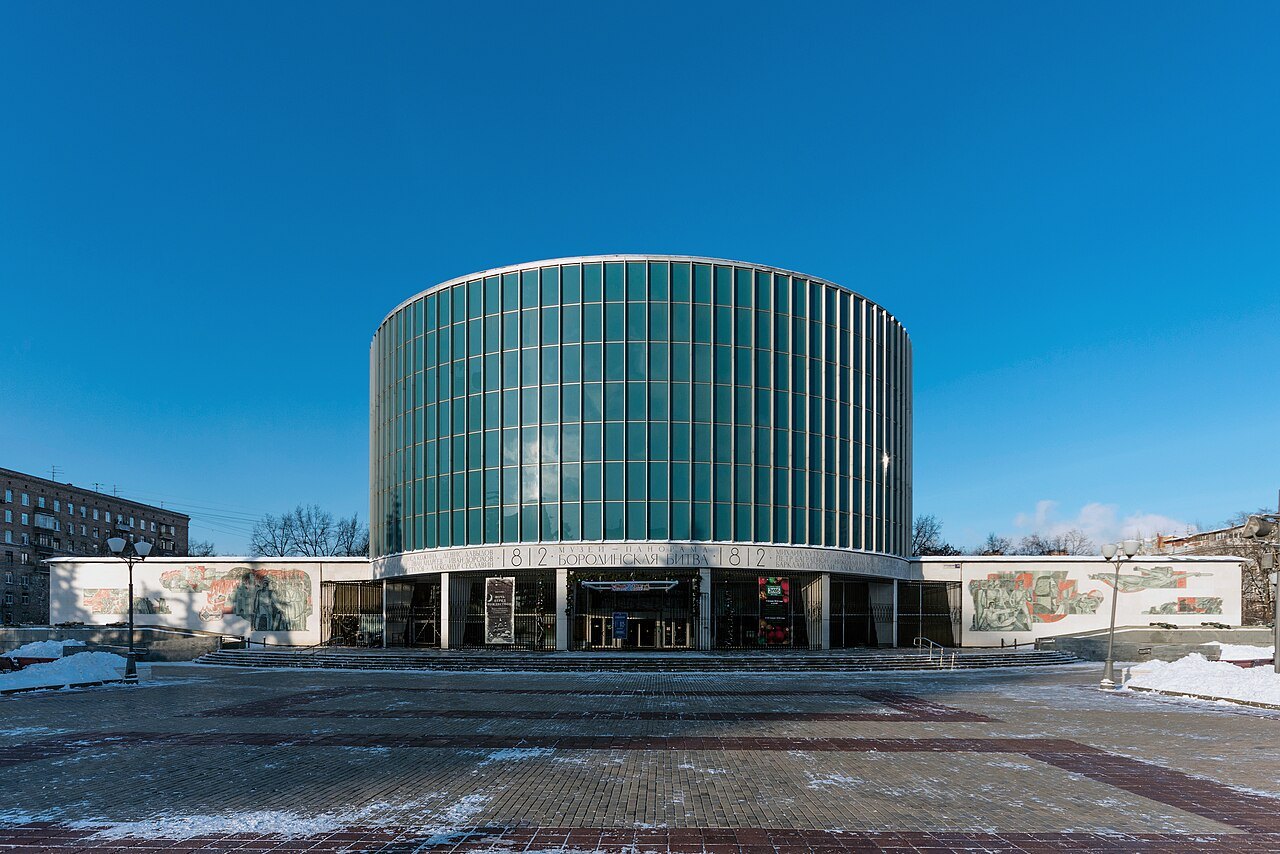
The Borodino Panorama

significant
The Borodino Panorama
Florstein (Telegram:WikiPhoto.Space), CC BY-SA 4.0 · Wikimedia Commons
Roubaud’s panorama is one of the few survivors of a genre that was the summit of 19th-century visual culture and has almost entirely vanished. The value lies in the machinery of the spectacle, not in the subject: this is how people looked before cinema.

Franz Roubaud’s Borodino panorama of 1912: 115 metres of canvas in the round, 15 metres high. Next door, the Kutuzov hut where on 1 September 1812 the council of war decided to abandon Moscow.

1.4 km from here · Kutuzovsky Prospekt 38, bldg 1 · ·
· No. 9
Science and nature · since 1951

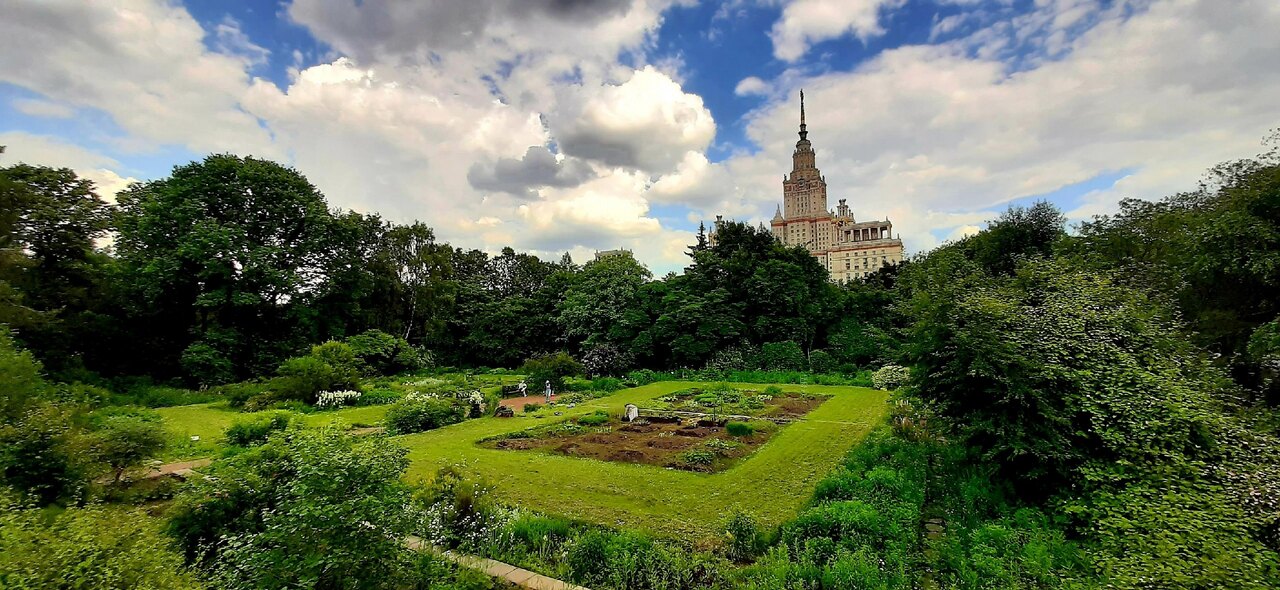
MSU Botanical Garden

for enthusiasts
MSU Botanical Garden
TanyaChu, CC BY-SA 4.0 · Wikimedia Commons
The garden was laid out in 1951 together with the new university buildings on the Lenin Hills, and it is kept as a collection: every holding has its name, its count of varieties and its year. The flowering part by the gate is open to walk through on your own — lilacs, irises, roses, peonies, perennials. There are more than two hundred and fifty varieties of lilac here and about seven hundred irises; the tree peonies were bred in the university itself. Every plant here has its own name and its own provenance.

Lilacs: more than two hundred and fifty varieties, Russian and foreign; the display plot was laid out in 1974. Irises — about seven hundred, from bearded to bulbous. Roses, more than two hundred varieties. Peonies, more than three hundred, among them tree peonies bred in the university itself. Daylilies, about two hundred varieties, from the old ones to the present.

3.1 km from here · Leninskie Gory 1, bldg 12 · ·
· No. 99
Architecture and estates · since 1524

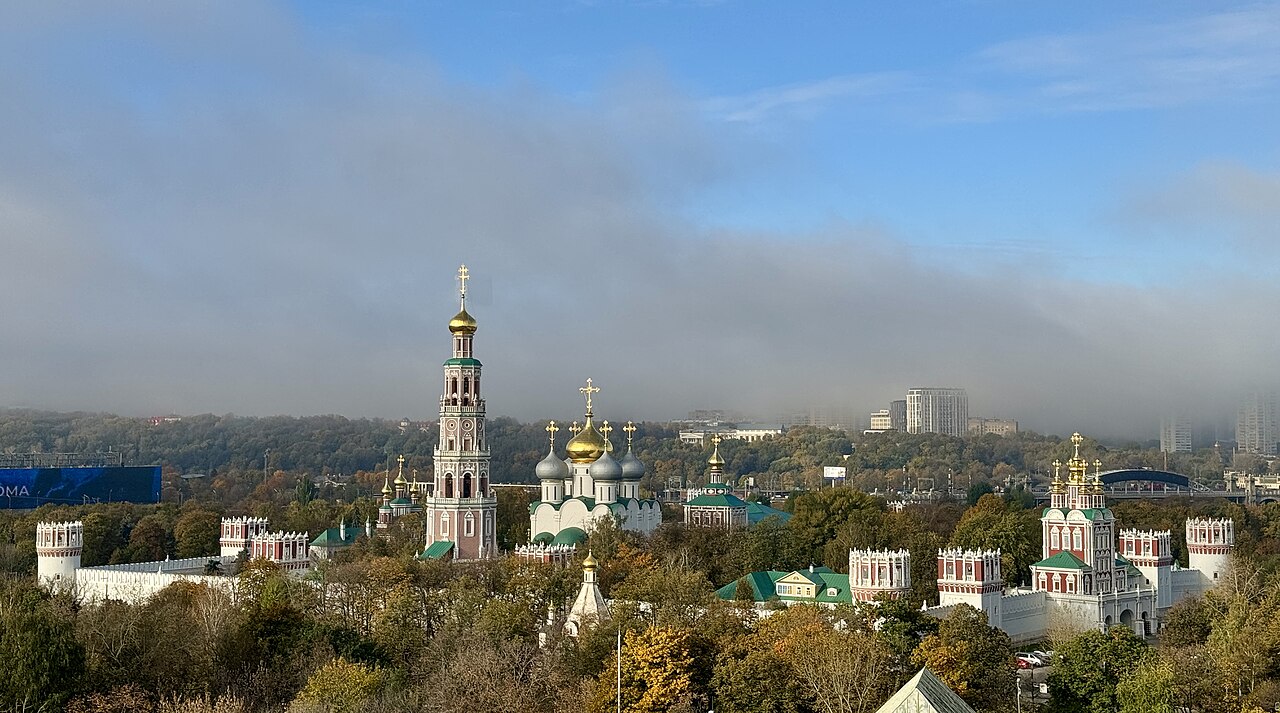
Novodevichy Convent

outstanding
Novodevichy Convent
Ivtorov, CC BY-SA 4.0 · Wikimedia Commons
After Kolomenskoye the second building of Moscow on the World Heritage list, and for wholeness of ensemble the first: a convent of the late seventeenth century has come down almost without rebuilding — walls, towers, gate churches, refectory. The Smolensk Cathedral of 1524 keeps sixteenth-century frescoes in their places and an iconostasis of a kind of which Moscow has two or three. What is not here is a museum in the ordinary sense: this is a working convent with a museum display, and what is open changes from season to season.

The Smolensk Cathedral of 1524 with its sixteenth-century wall painting and iconostasis. The walls and towers of the late seventeenth century — Moscow Baroque entire. The burial ground: Denis Davydov, Sergei Solovyov, and Chekhov before he was moved.

3.3 km from here · Novodevichy Proyezd 1
· No. 75
House museums · since 1921

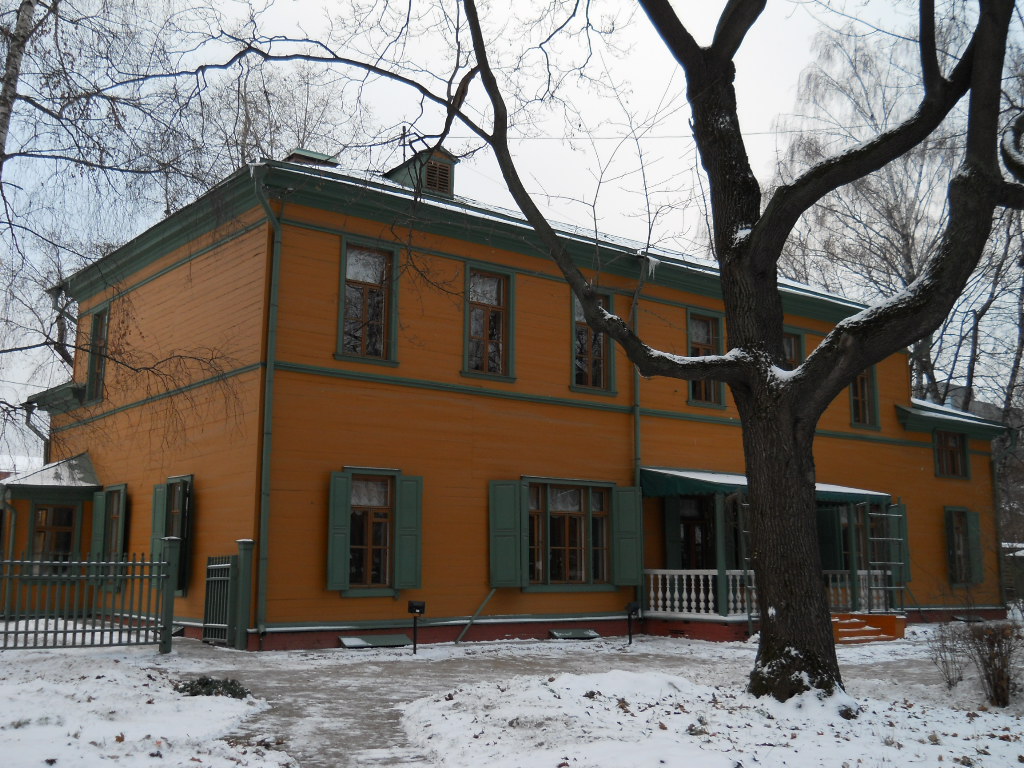
Tolstoy in Khamovniki

outstanding
Tolstoy in Khamovniki
Shuvaev, CC BY-SA 3.0 · Wikimedia Commons
A house in which nothing was reconstructed: the furnishings are its own, the objects are the family’s, and their placing follows an inventory taken while the owners were alive. There is no electric light here and never was — Tolstoy refused it on principle, so the rooms are lit as they were in his time, which for a house museum is almost unheard of. Anyone who has been to Carlyle’s House in Chelsea knows the effect and will find it carried further here: there the gas fittings survive, here there is nothing but daylight and a lamp. The literary display on Prechistenka answers the question of what he wrote; here the question answered is how he lived — and in his case that is the subject.

The study with its low chair, cut down to the short sight of its owner, and the writing table. Sofya Andreyevna’s room. The hall with the piano at which Taneyev and Rachmaninoff played. The cobbler’s bench — Tolstoy made his own boots. The garden, which has outlived the century along with the house.

5.1 km from here · Lva Tolstogo Street 21 ·
· No. 62
Literature · since 1934

The Dahl Literary Museum

significant
The Dahl Literary Museum
Levnevskiy, CC BY-SA 4.0 · Wikimedia Commons
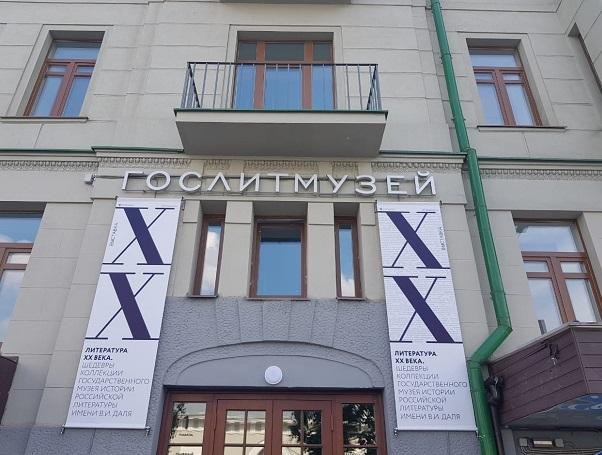
The only museum built not around a single name but around literature as a process. Hence its strength — comparisons impossible in a house museum, and a fund of 700,000 items that makes such comparisons possible.

The permanent display Zubovsky 15: a house of science, literature and art, and the exhibitions on 20th-century Russian letters.

5.5 km from here · Zubovsky Boulevard 15, bldg 1 · ·
· No. 8
History · since 1896

Museum of Moscow

significant
Museum of Moscow
shakko, CC BY-SA 3.0 · Wikimedia Commons
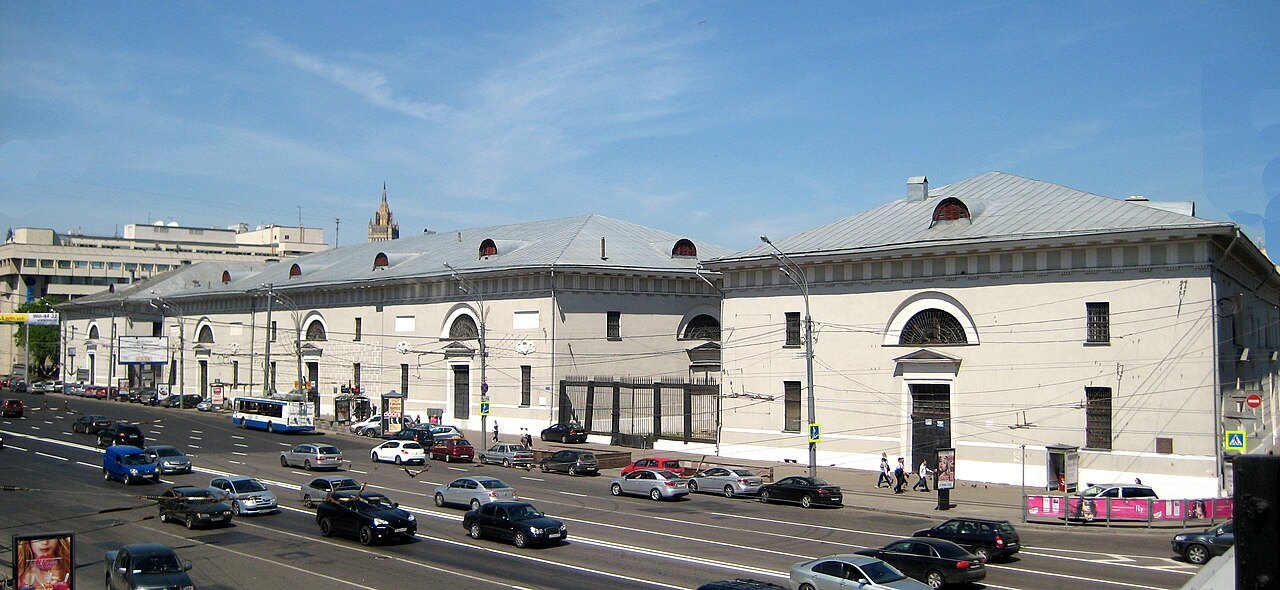
A city museum — an ordinary genre in Europe — but the material is unique in scale: a million objects about one city. The value is also the Provision Warehouses by Stasov, a model Empire building rarely accessible from inside.

The permanent display History of Moscow: the archaeology of Moscow soil, town life, plans and views of the city by century. And the Provision Warehouses themselves, an Empire monument after Vasily Stasov.

5.5 km from here · Zubovsky Boulevard 2, bldg 7 · ·
· No. 56
Architecture and estates · since 2020

The Narkomfin Building

significant
The Narkomfin Building
Retired electrician, CC0 · Wikimedia Commons
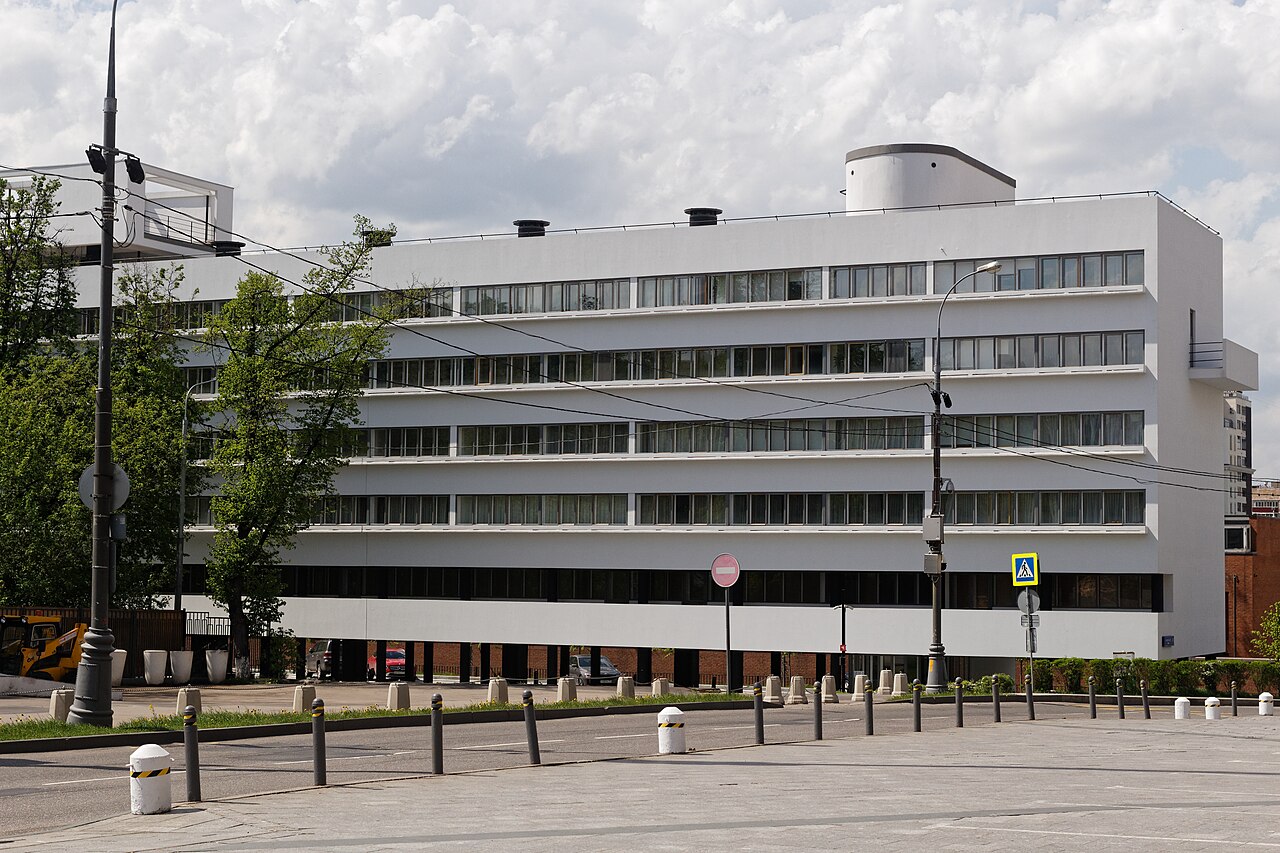
The 1930 house by Ginzburg and Milinis is the transitional commune-house with which any conversation about twentieth-century housing begins: two-level units, a corridor every second floor, kitchen and laundry taken out of the flat. Le Corbusier knew this building and leaned on it in the Unité d’habitation at Marseille — the ribbon window, the pilotis and the interlocking sections are all here first. But expectations must be squared honestly: the restoration of 2017–2020 gave the house back to its residents, and the museum here is one restored unit, not a building. Looking is done from outside and in a single flat, by appointment.

A restored type F unit, furnished to Ginzburg’s drawings. The building itself: the residential block on columns, the communal block, the bridge between them.

5.6 km from here · Novinsky Boulevard 25, block 1 · ·
· No. 74
Science and nature · since 1907

The Darwin Museum

significant
The Darwin Museum
Andrei Subbotin, CC BY 3.0 · Wikimedia Commons
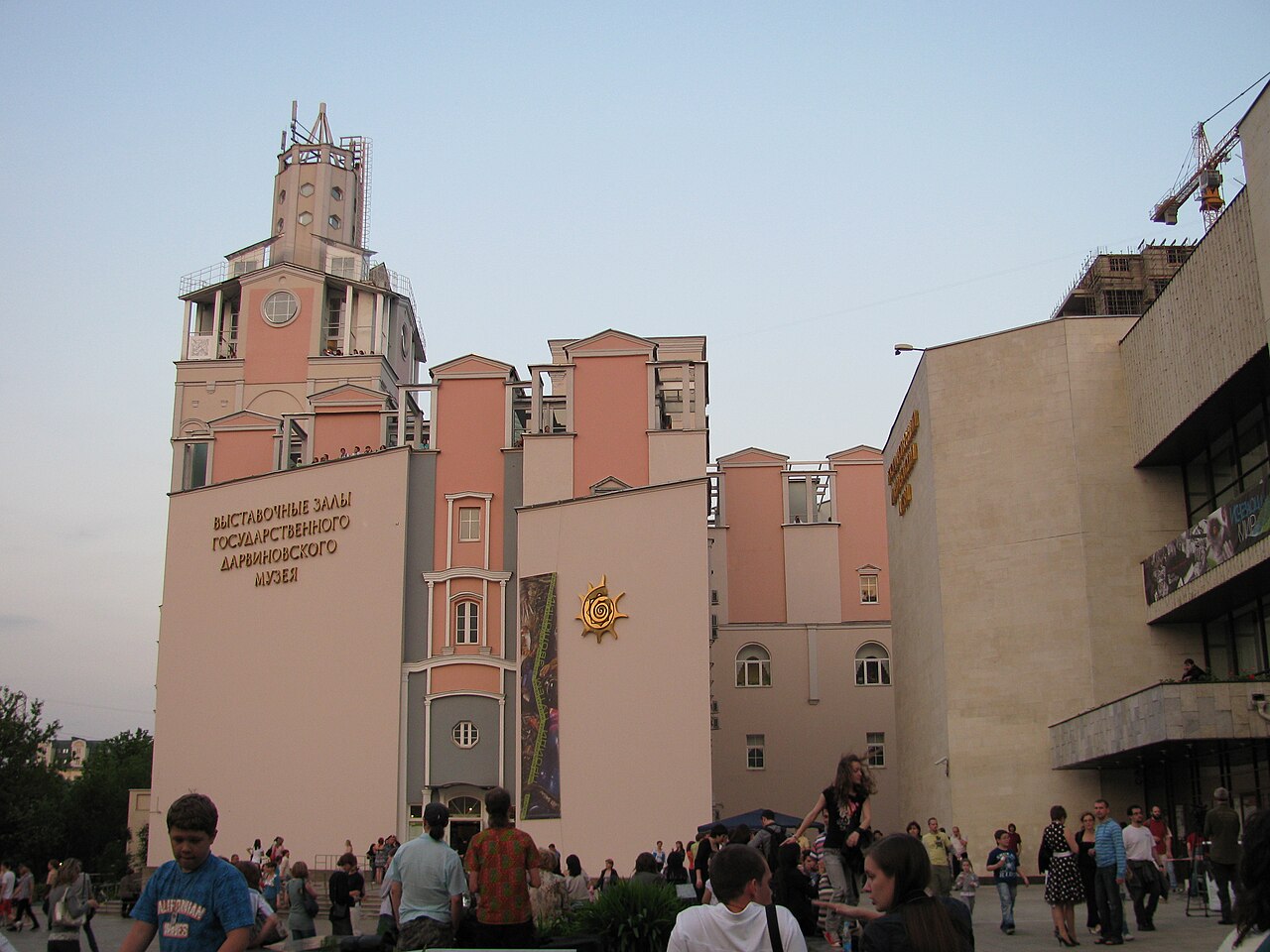
The oldest museum of evolution in Russia, built around an idea rather than around a case of stuffed animals: Kots collected proofs of variability, and the display serves the proof. It cannot match Vienna or Berlin for material, but its way of arguing stands on its own.

Early 20th-century taxidermy by Filipp Fedulov, among the finest anywhere; the collection of albinos and melanists gathered by Kots as visible proof of variability; the Living Planet hall.

5.7 km from here · Vavilova 57 · ·
· No. 57
House museums · since 1922

The Scriabin Museum

significant
A flat from which nothing was carried out: Scriabin rented it for his last three years and died here in 1915, and it became a museum in 1922 — almost without a gap. Furniture, books, piano and the fittings of the study are the very ones. But the chief thing is another: Scriabin conceived music together with light, and the trace of that conception survives in the flat — the colour score of Prometheus and the light apparatus. No other composer’s museum in Russia shows the idea and not merely the domestic life.

The Bechstein grand at which the last works were written. The study and the library with the owner’s markings. The colour score of Prometheus and the colour-light apparatus assembled to his design. A concert hall in the same house.

5.8 km from here · Bolshoy Nikolopeskovsky Lane 11
· No. 76
Science and nature · since 1716

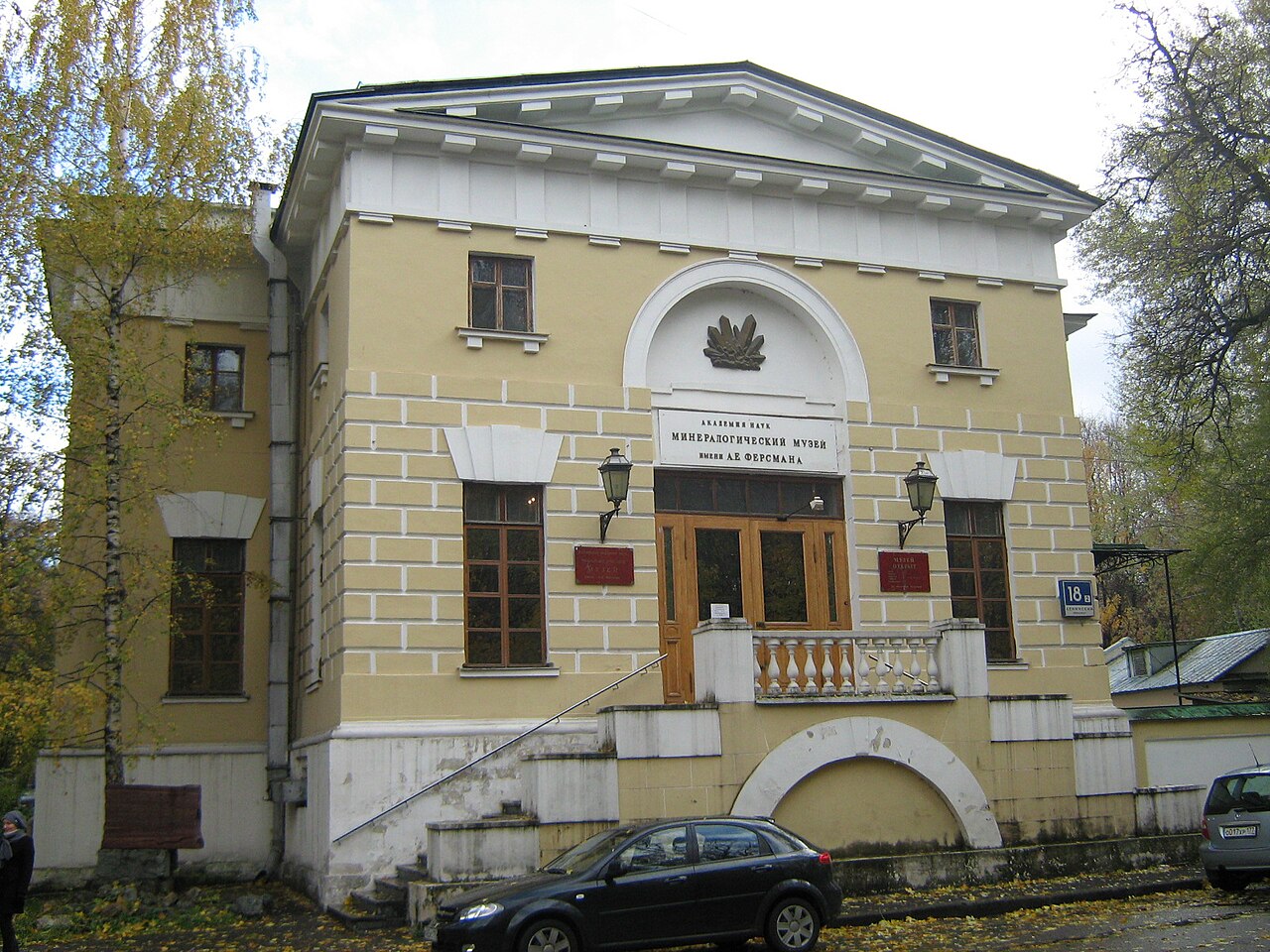
The Mineralogical Museum

outstanding
The Mineralogical Museum
Anton Cherny, public domain · Wikimedia Commons
A collection more than three hundred years old: it grew out of the mineral cabinet of Peter’s Kunstkamera and moved to Moscow with the Academy of Sciences. Some hundred and forty thousand specimens make it one of the largest mineralogical museums in the world, and for the systematics of stone it has no equal in Russia. The Vault at South Kensington shows a few dozen chosen stones magnificently; the point here is the opposite — the whole class, in order, with the ordinary specimen beside the extraordinary one, which is what a systematic collection is for. Come knowing that this is a scientific museum and not an entertaining one: cases, labels, no screens. Anyone who wants the telling needs a guided tour, and it must be booked ahead.

The systematic collection — the whole known mineral world by class. Ural malachite and rhodonite from the old crown holdings. Meteorites. Hardstone work by Fabergé and the Peterhof lapidary works. Large specimens of a size only museums of this age possess.

5.8 km from here · Leninsky Prospekt 18, building 2 · ·
· No. 63

5 museums have no point set. They are not in this count.