Skip to content

Your browser is older than this page. The catalogue still reads here: the list, the filter and the cards all work. Your browser will mark filter choices with plain checkboxes, as best it can. Update your browser to see the page as it was built.

Museums near Museum of Folk Prints

We do not ask your browser where you are. We collect no data about people. Place the point on the city map yourself — we will find the nearest museums that suit your preferences.

Distance
Filter
How much time
We count what is left today: from now — or from opening, if the museum has not opened yet — to the last admission. The closing hour is of no use for such a count: past the last admission nobody is let in. Where the last admission is not established we allow half an hour: erring towards «you will not make it» costs less than sending someone to a locked door.
When I go
We show those open on at least one of the days chosen. Today is Sunday.
Who with
One thing is asked here: whether a child will find it interesting inside. The ease of the way and of the rooms is a question of another kind, and it stands under “Access”. In the entry this shows as a mark, and the age in the note beside it.
What to see
Access
The accessibility of a museum and the accessibility of the way to it are different things, and we keep them apart. It happens that everything inside is arranged faultlessly while the door itself cannot be reached in a wheelchair; it happens the other way round too.
How valuable
What sets it apart

Drag the pin or press the map.

open nowclosed nowhours not known

Map — OpenStreetMap

Nearest museums · 51
outstanding
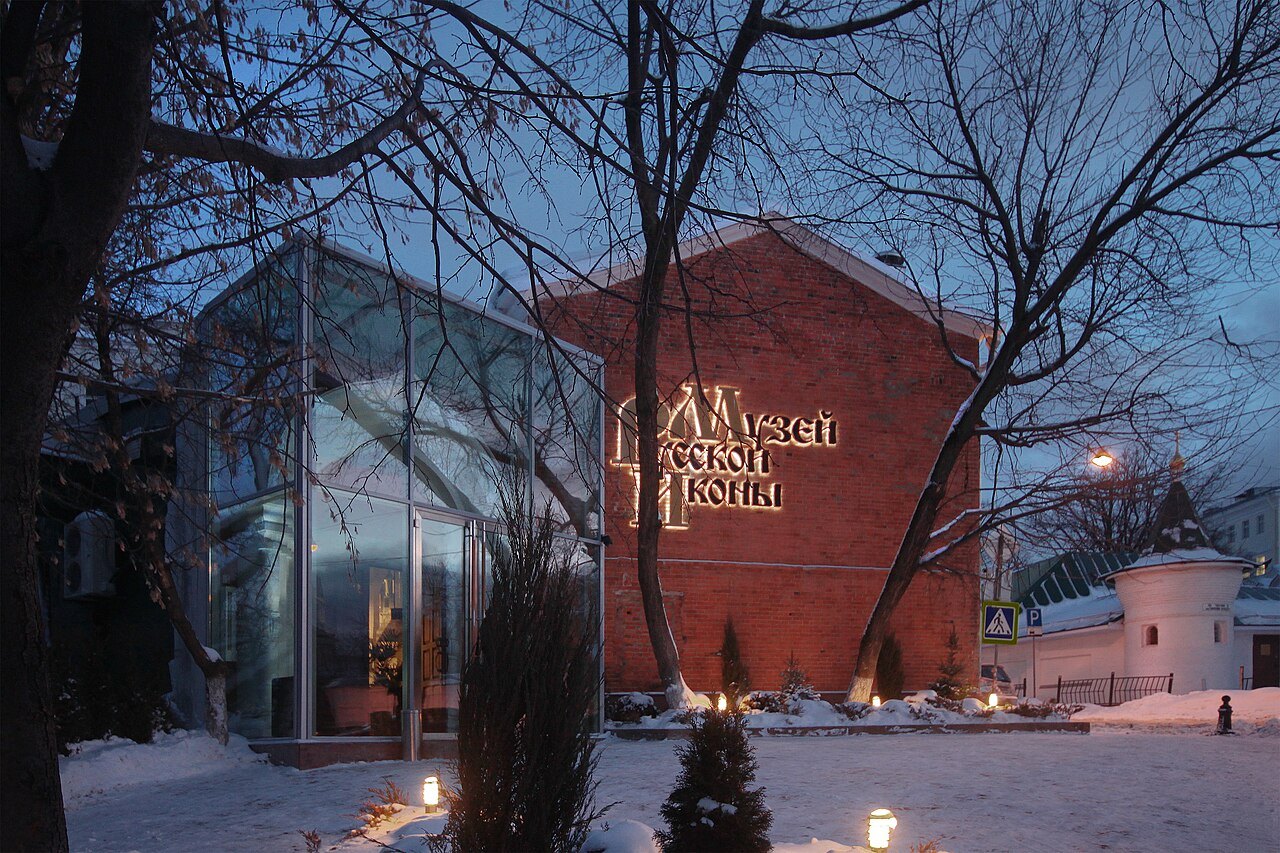
The Museum of the Russian Icon
Museum of the Russian icon, CC BY-SA 3.0 · Wikimedia Commons
For Ethiopian Christian art it is the only collection in Russia; for the Russian icon it competes with state museums. Add a circumstance almost unheard of anywhere in the world for a collection of this level: admission is free.

The Russian icon of the 14th to 20th century, from Novgorod panels to Old Believer painting; Ethiopian Christian art, the only such collection in Russia; a reconstructed iconostasis and post-Byzantine Greek icons.

2.6 km from here · Goncharnaya 3, bldg 1 · ·
· No. 54
Architecture and estates · since 1965

The Ryabushinsky Mansion

outstanding
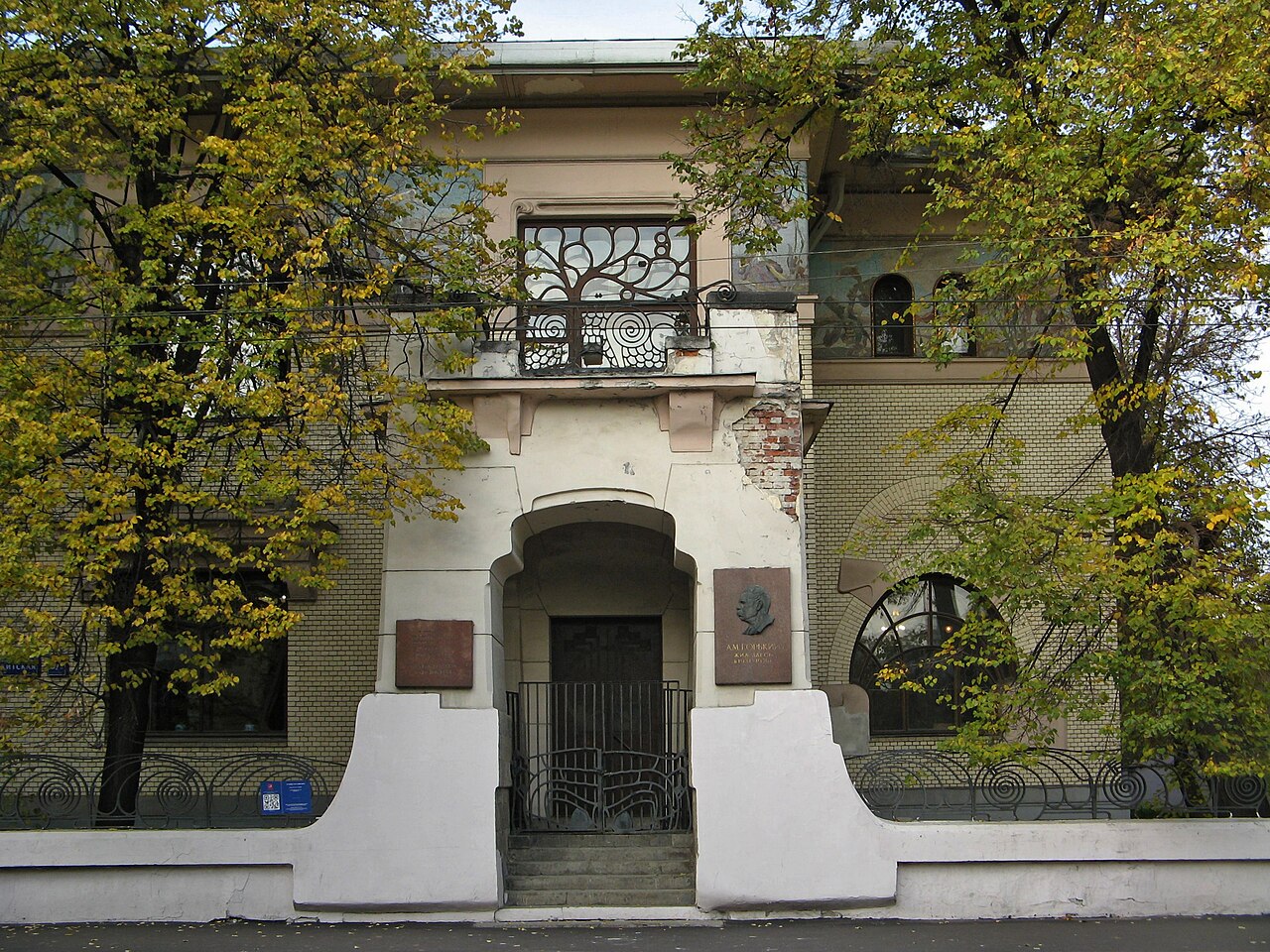
The Ryabushinsky Mansion
Ekaterina Borisova, CC BY-SA 4.0 · Wikimedia Commons
The best surviving interior of Moscow Art Nouveau: Shekhtel built the mansion in 1900–1903 and thought it out down to the door handle, and the wave staircase with its jellyfish lamp is the thing for which one comes here instead of any museum of decorative art. What Horta did at the Hôtel Tassel and Mackintosh at the Glasgow School of Art — one hand over the whole building, from plan to fittings — Shekhtel did here, and here it survives with the fittings in place. Upstairs is hidden an Old Believers’ chapel that could not be shown openly, and it has come through. The memorial part — Gorky lived here from 1931 — is markedly weaker than the architecture, and that should be known in advance: one comes for Shekhtel, not for Gorky.

The wave staircase with its jellyfish light. Stained glass and the mosaic frieze of orchids along the façade. The Old Believers’ chapel on the top floor. Gorky’s study and library.

2.6 km from here · Malaya Nikitskaya Street 6/2, building 5 · ·
· No. 71
Literature · since 2005

The Gogol House

significant
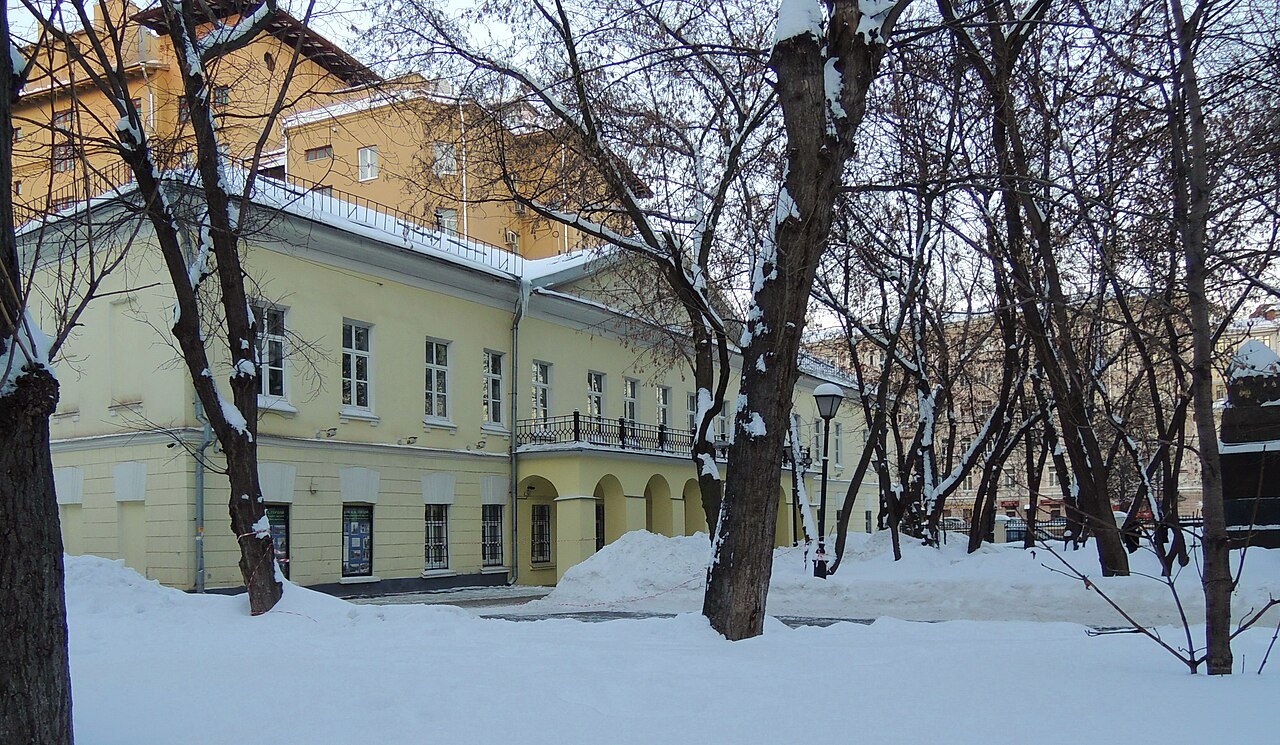
The Gogol House
Shakko, CC BY-SA 4.0 · Wikimedia Commons
The only memorial museum of Gogol in the world, in the authentic walls of his last four years. The value is topographic: the room, the fireplace and the staircase give what no edition can.

Six memorial rooms; the fireplace in which, on the night of 12 February 1852, Gogol burned the manuscript of the second volume of Dead Souls.

2.7 km from here · Nikitsky Boulevard 7a · ·
· No. 4
History · since 2012

The Jewish Museum

significant
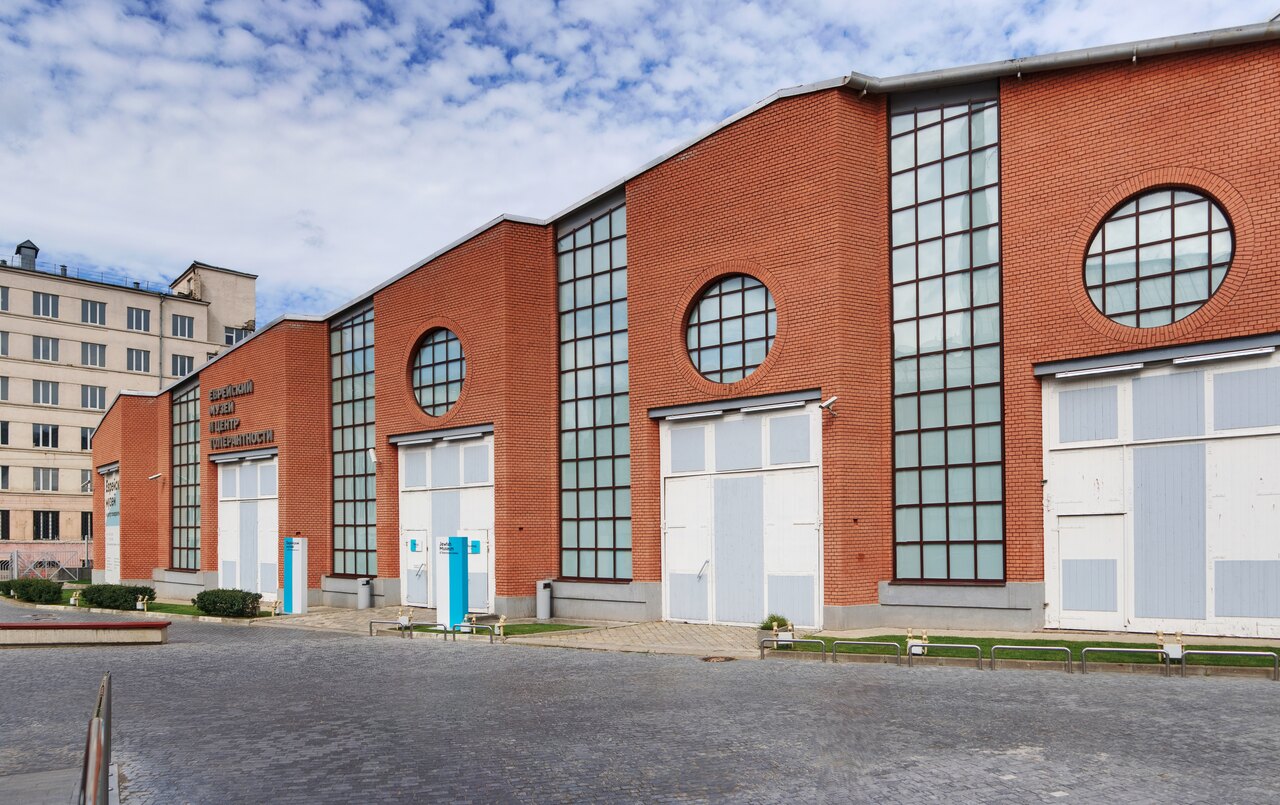
The Jewish Museum
Ludvig14, CC BY-SA 4.0 · Wikimedia Commons
Come for two things at once: the Bakhmetevsky garage by Melnikov and Shukhov, a building of world significance, and the history of Russian Jewry told from inside as nowhere else. The holdings of originals are modest, and that is worth knowing beforehand.

The building itself — the Bakhmetevsky garage of 1926–1927, one of Konstantin Melnikov’s principal works with steel structures by Vladimir Shukhov; the Café on Basseynaya, a reconstruction of shtetl life.

2.8 km from here · Obraztsova 11, bldg 1a · ·
· No. 47
world-class
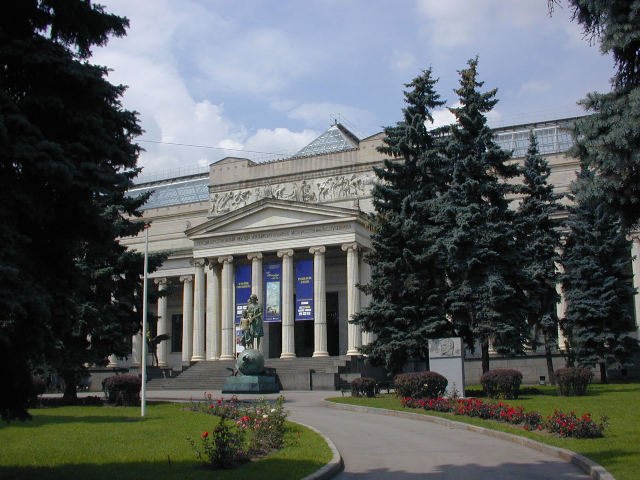
The Pushkin Museum of Fine Arts
user:Ghirlandajo, CC BY-SA 3.0 · Wikimedia Commons
The Louvre and the Metropolitan hold more originals; what is unique is Tsvetaev’s cast collection — the only large teaching museum of the history of art in the world still intact and still working as intended. In Europe such collections went into storage in the 20th century. Add the Fayum portraits and objects from Schliemann’s Trojan hoards.

The teaching collection of plaster casts after antique and Renaissance sculpture — Tsvetaev’s idea, unmatched for completeness; the Fayum portraits; objects from Priam’s Treasure found by Schliemann at Troy; the Egyptian collection. The French 19th–20th century is in the Gallery at Volkhonka 14, on a separate ticket.

3.0 km from here · Volkhonka 12 · ·
· No. 20
significant
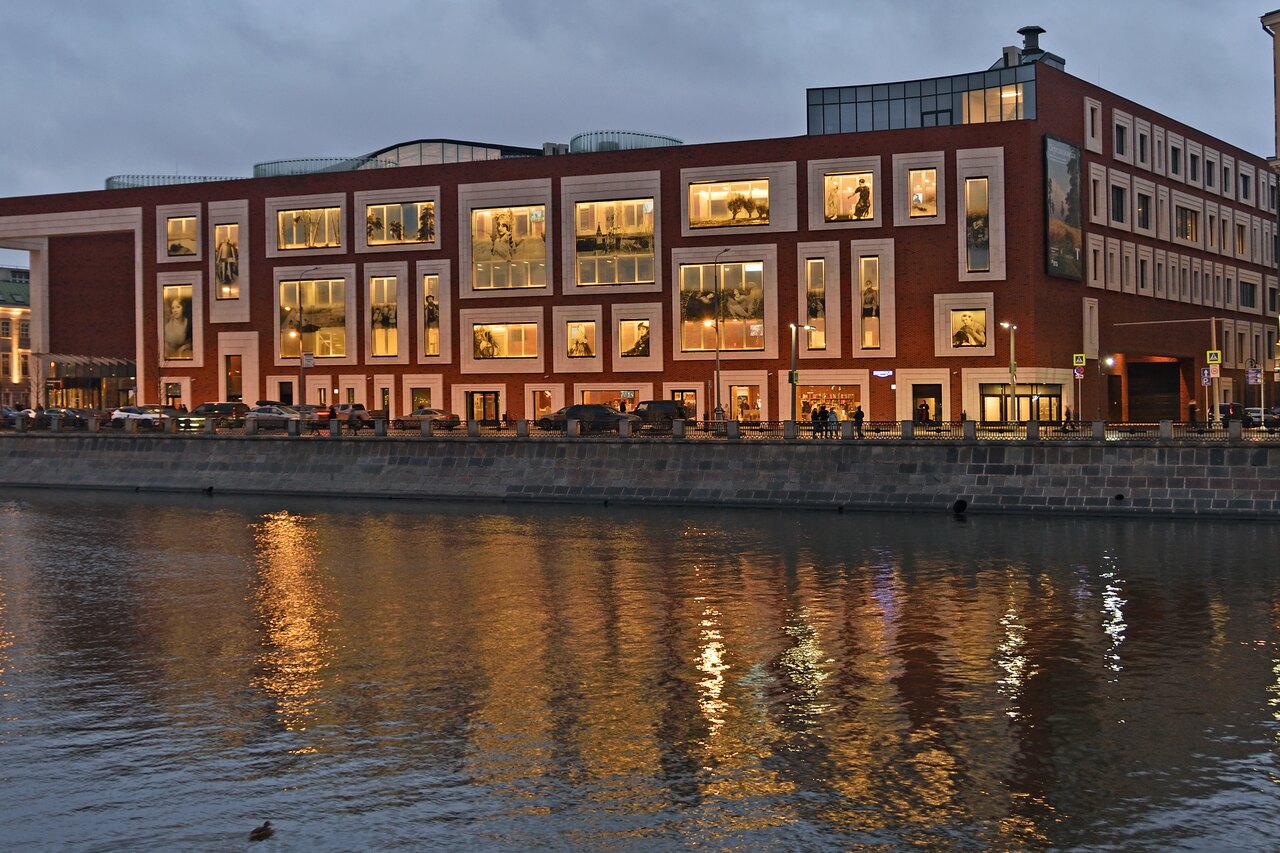
The Tretyakov on Kadashevskaya
Ludvig14, CC BY-SA 4.0 · Wikimedia Commons
Not yet a collection but an instrument: the first exhibition building in Moscow built to 21st-century museum standards — climate, light, spans. Its value is that things can now be brought here that could not be brought before.

There is no permanent collection — this is an exhibition wing. See the atrium, open without a ticket, and the façades: they carry reproductions of 34 works by Russian artists.

3.0 km from here · Kadashevskaya Embankment 12 · ·
· No. 55
Art · since 1947

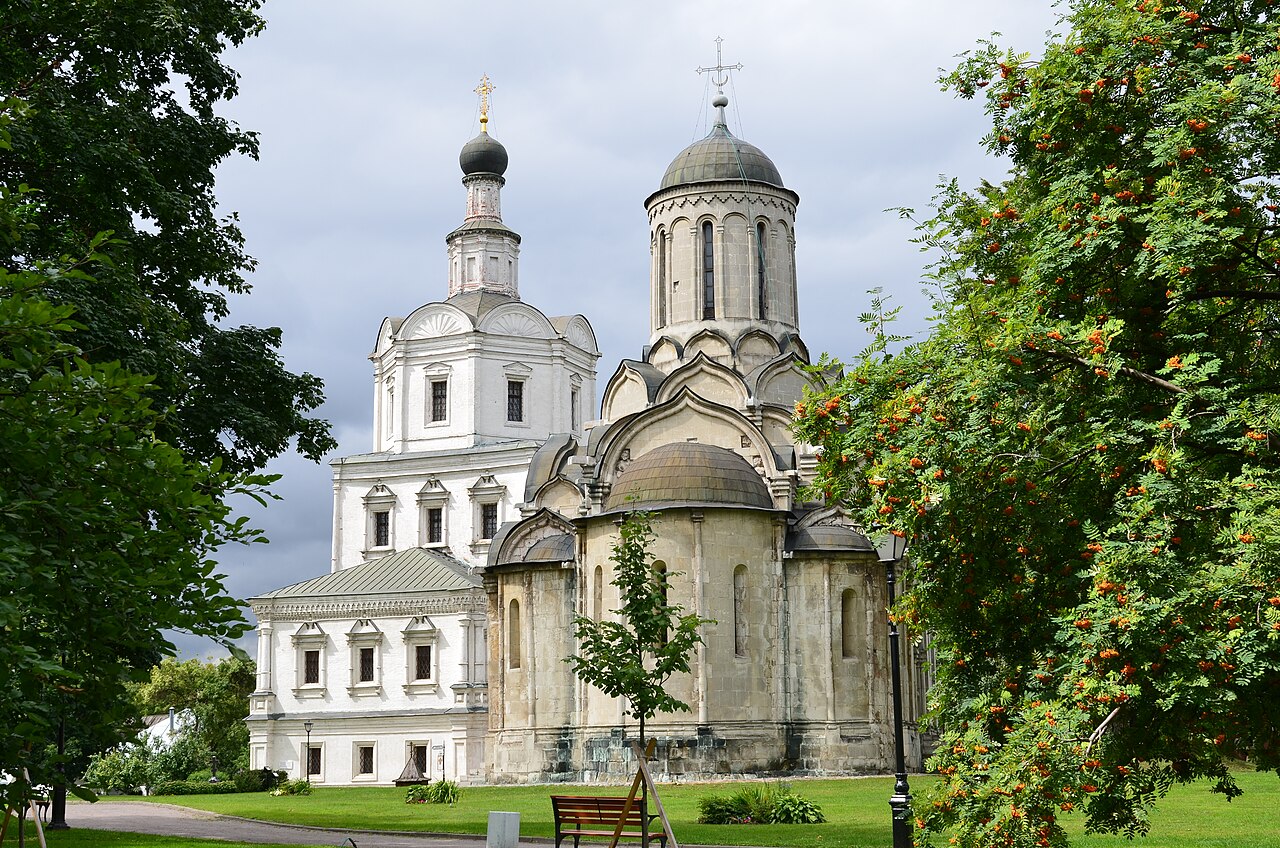
The Rublev Museum

outstanding
The Rublev Museum
Pegushev, CC BY-SA 3.0 · Wikimedia Commons
The third collection of Russian icons after the Tretyakov and the Russian Museum, and the only one built as a museum of one subject: here the icon does not stand in a row of Russian art but is explained in itself, from the board and the gesso to the iconography. The holding was formed from things brought out by the museum’s expeditions from closed and ruined churches, and its value is the completeness of the line rather than single stars: famous names are almost absent, but the sequence runs unbroken from the thirteenth century to the seventeenth. In Britain icons are met in ones and twos, in Byzantine rooms and in the trade; a museum where the subject has a building of its own does not exist there. The monastery’s Saviour Cathedral, in which all this stands, is the oldest surviving building in Moscow.

Icons of the thirteenth to seventeenth centuries, gathered by the museum’s own expeditions. Royal doors and whole iconostasis sets. Fragments of wall painting. The Saviour Cathedral of the 1420s — the oldest building in Moscow, with remains of ornamental painting associated with Rublev.

3.1 km from here · Andronyevskaya Square 10 · ·
· No. 61
Art · since 1856

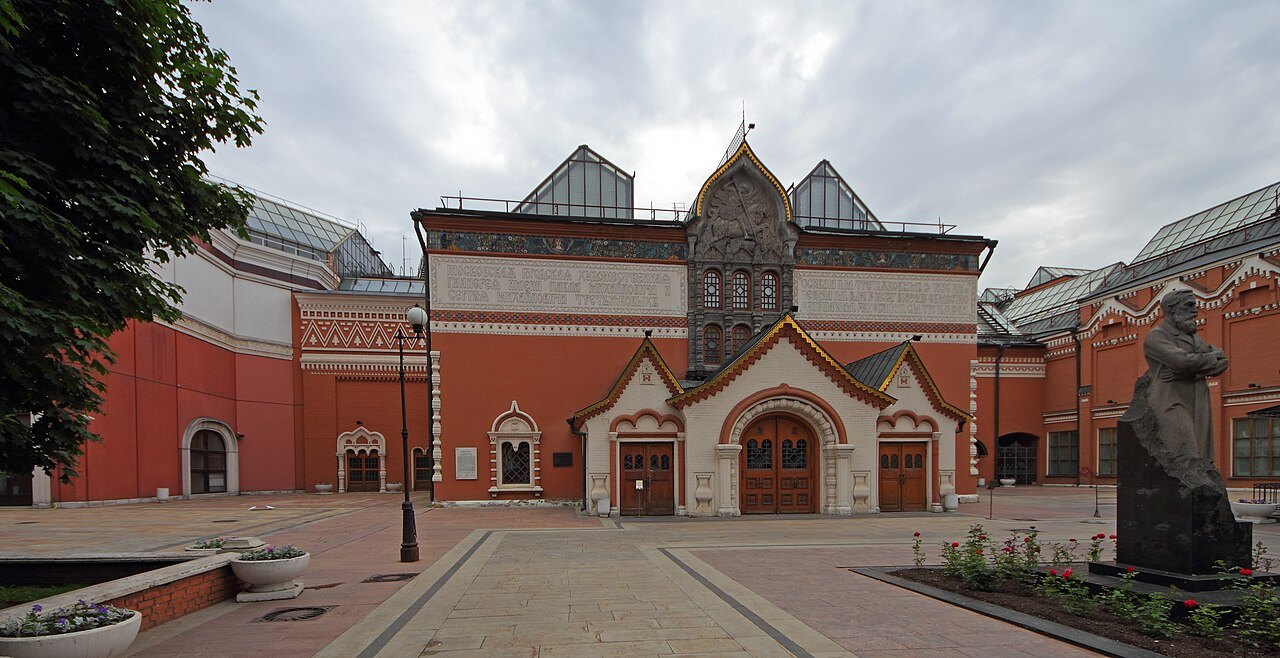
The Tretyakov Gallery

world-class
The Tretyakov Gallery
A.Savin, CC BY-SA 3.0 · Wikimedia Commons
Russian art of the 11th to early 20th century is nowhere else assembled so fully — only the Russian Museum compares. But the canon was formed here: Tretyakov bought from living artists what he himself thought mattered, and one man’s private judgement became what we now call the Russian school. Seeing the 19th century elsewhere means seeing fragments.

Ivanov’s The Appearance of Christ Before the People in its own hall; Surikov’s Boyarynya Morozova and Morning of the Streltsy Execution; Repin’s Ivan the Terrible and His Son; Serov’s Girl with Peaches; Vasnetsov’s Bogatyrs; the icon halls. Rublev’s Trinity is no longer here: it was handed to the Church in 2023.

3.2 km from here · Lavrushinsky Lane 10 · ·
· No. 1
House museums · since 1922

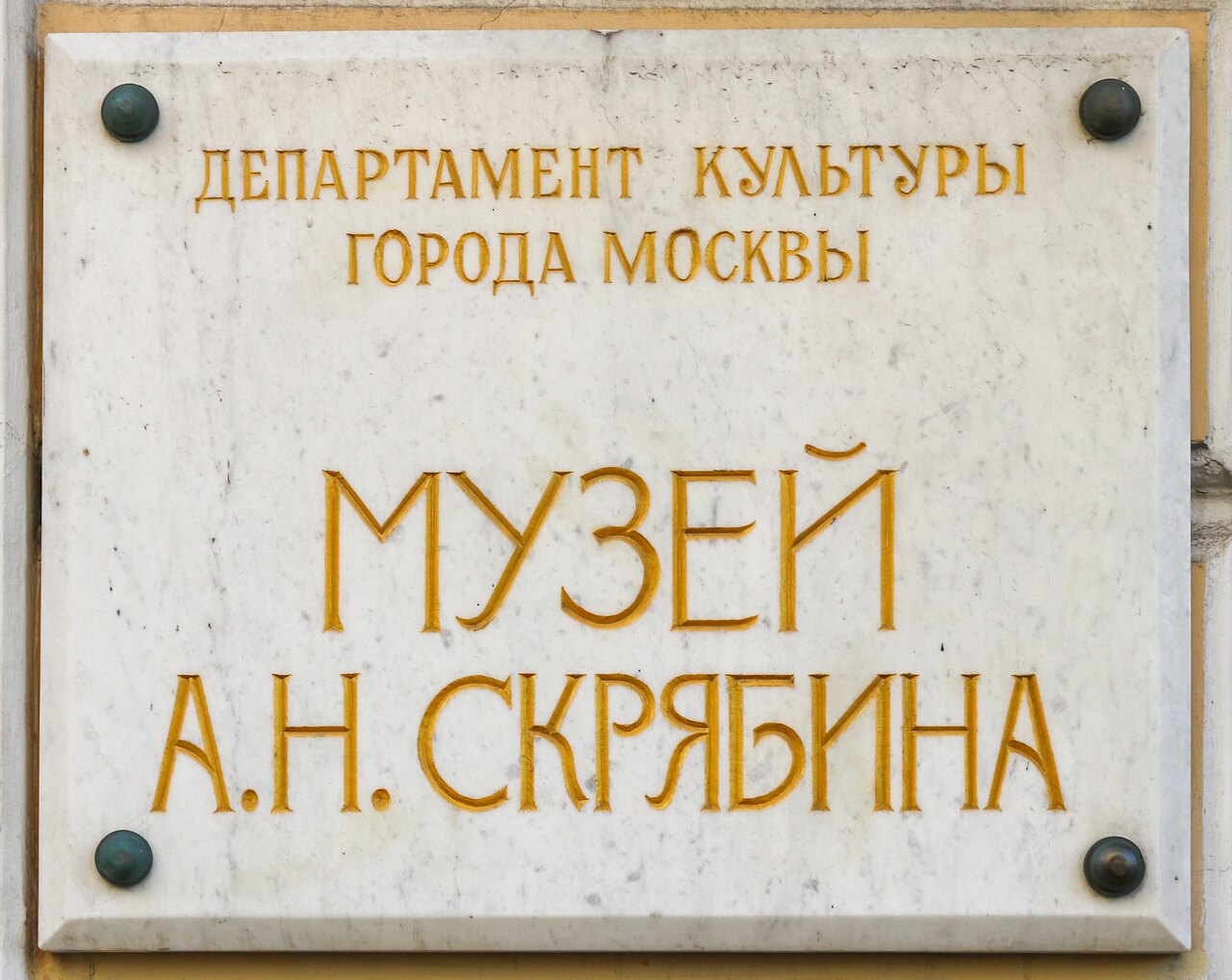
The Scriabin Museum

significant
The Scriabin Museum
Stolbovsky, CC BY-SA 3.0 · Wikimedia Commons
A flat from which nothing was carried out: Scriabin rented it for his last three years and died here in 1915, and it became a museum in 1922 — almost without a gap. Furniture, books, piano and the fittings of the study are the very ones. But the chief thing is another: Scriabin conceived music together with light, and the trace of that conception survives in the flat — the colour score of Prometheus and the light apparatus. No other composer’s museum in Russia shows the idea and not merely the domestic life.

The Bechstein grand at which the last works were written. The study and the library with the owner’s markings. The colour score of Prometheus and the colour-light apparatus assembled to Scriabin’s design. The music room is on the ground floor of the flat itself; the concert hall is next door, in the Scriabin House.

3.4 km from here · Bolshoy Nikolopeskovsky Lane 11 · ·
· No. 76
Architecture and estates · since 2020

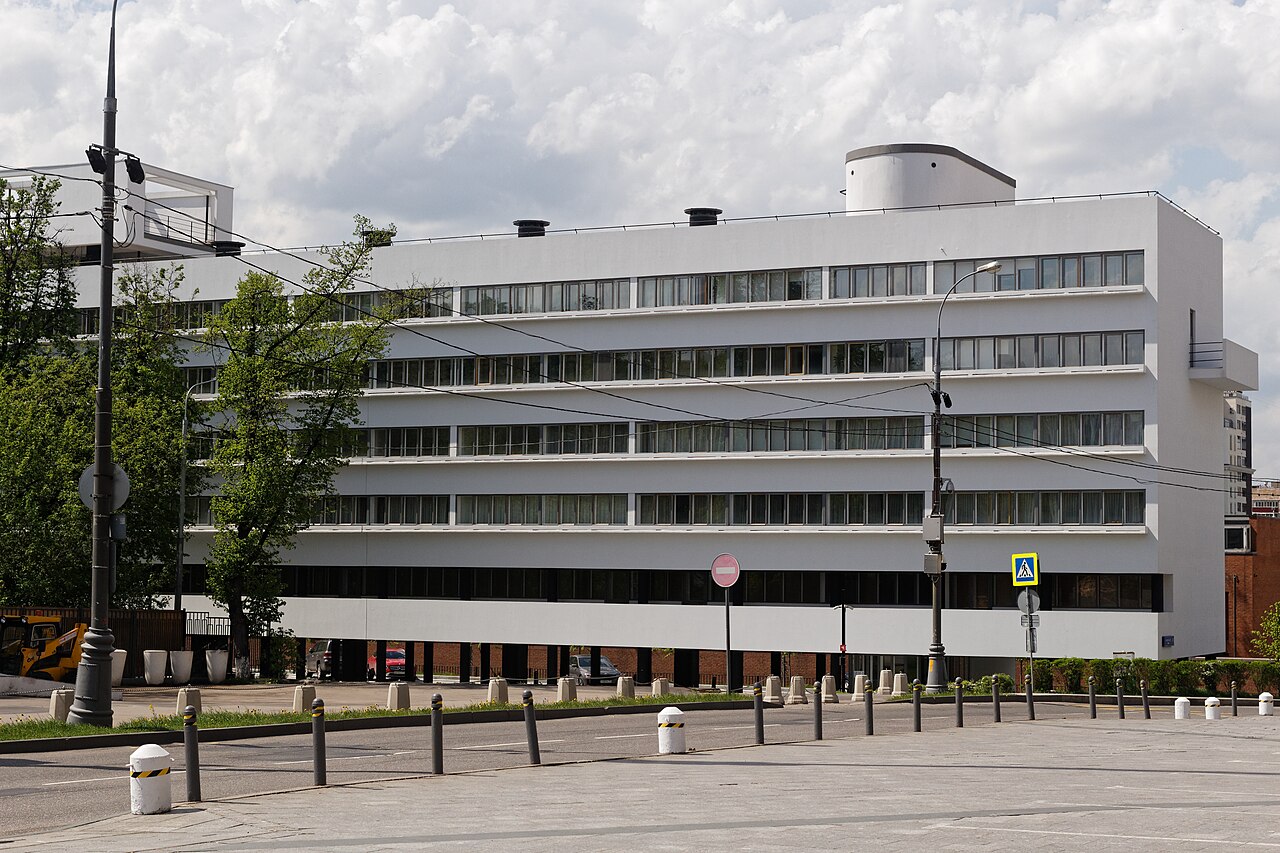
The Narkomfin Building

significant
The Narkomfin Building
Retired electrician, CC0 · Wikimedia Commons
The 1930 house by Ginzburg and Milinis is the transitional commune-house with which any conversation about twentieth-century housing begins: two-level units, a corridor every second floor, kitchen and laundry taken out of the flat. Le Corbusier knew this building and leaned on it in the Unité d’habitation at Marseille — the ribbon window, the pilotis and the interlocking sections are all here first. But expectations must be squared honestly: the restoration of 2017–2020 gave the house back to its residents, and the museum here is one restored unit, not a building. Looking is done from outside and in a single flat, by appointment.

A restored type F unit, furnished to Ginzburg’s drawings. The building itself: the residential block on columns, the communal block, the bridge between them.

3.6 km from here · Novinsky Boulevard 25, block 1 · ·
· No. 74