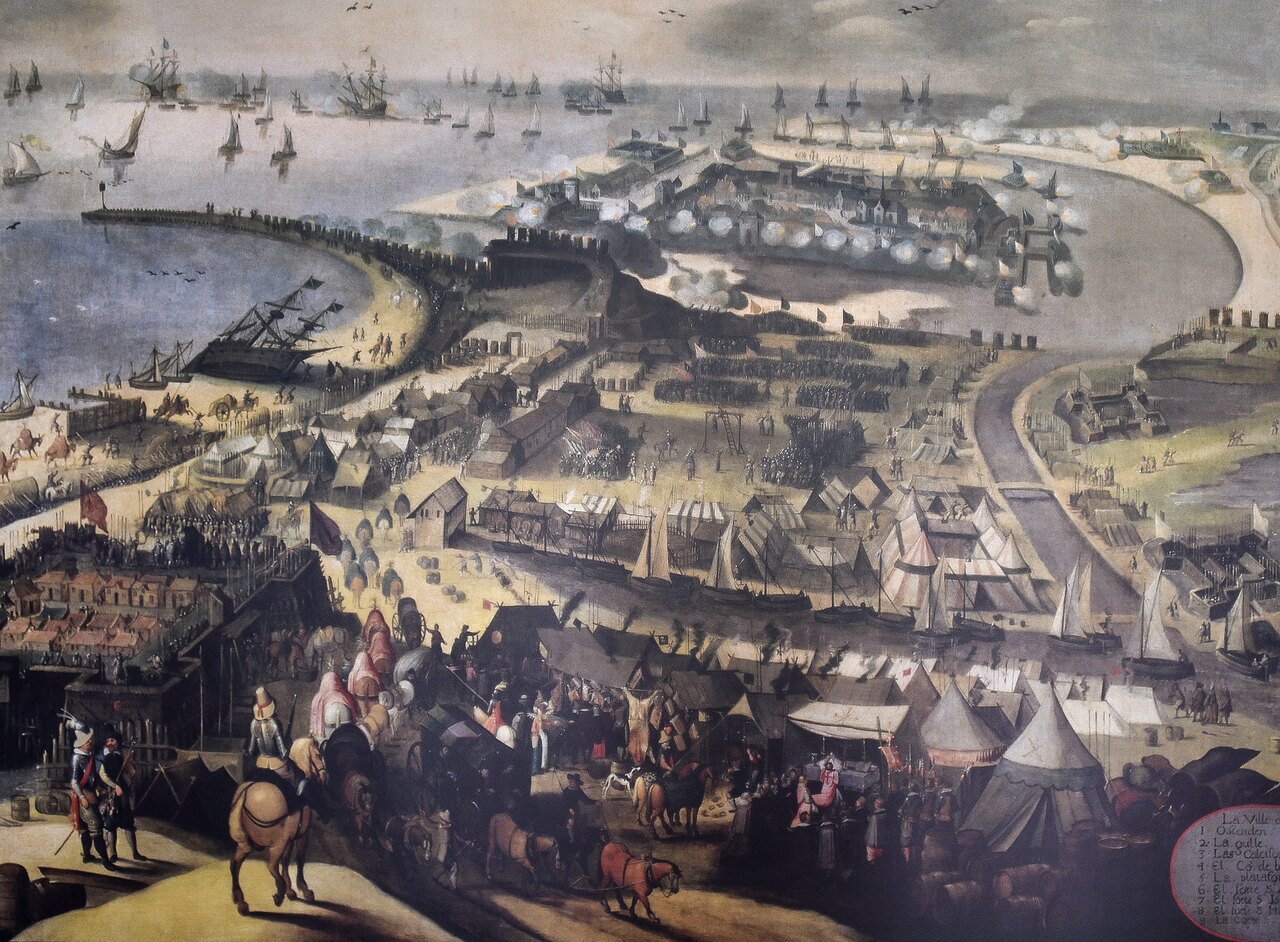
Ostend has been begun again twice: the three-year siege of 1601–1604 left nothing of the old town, and Leopold II built a royal seaside resort in its place, with galleries along the dyke. No museum quarter grew up here. The art collection is in the centre, the Atlantic Wall batteries are at Raversijde on the western edge, and the Napoleonic fort is across the harbour. Much on this list is not a collection at all: at the fort, at the batteries in the dunes, on the sailing ship it is the building and the place one looks at.
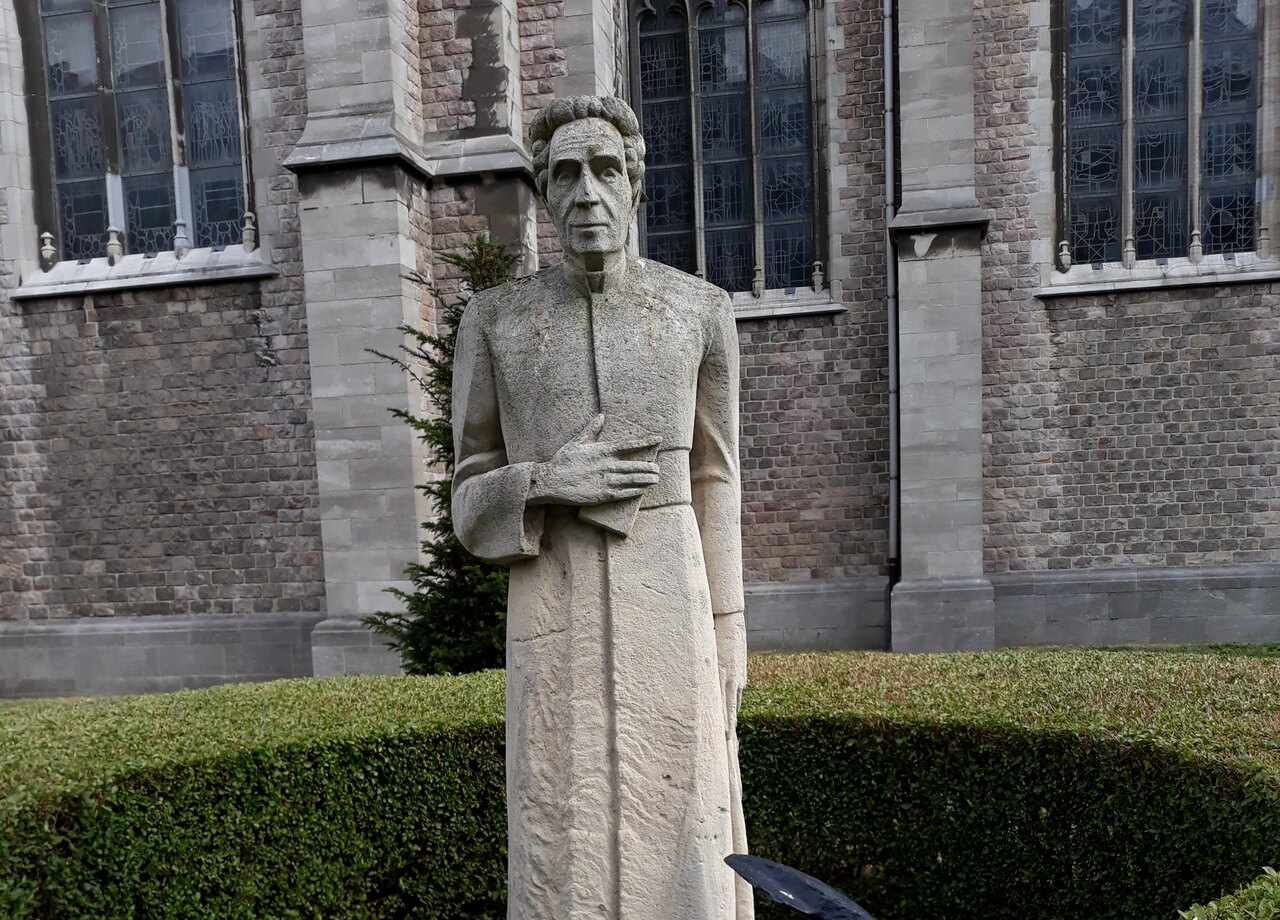
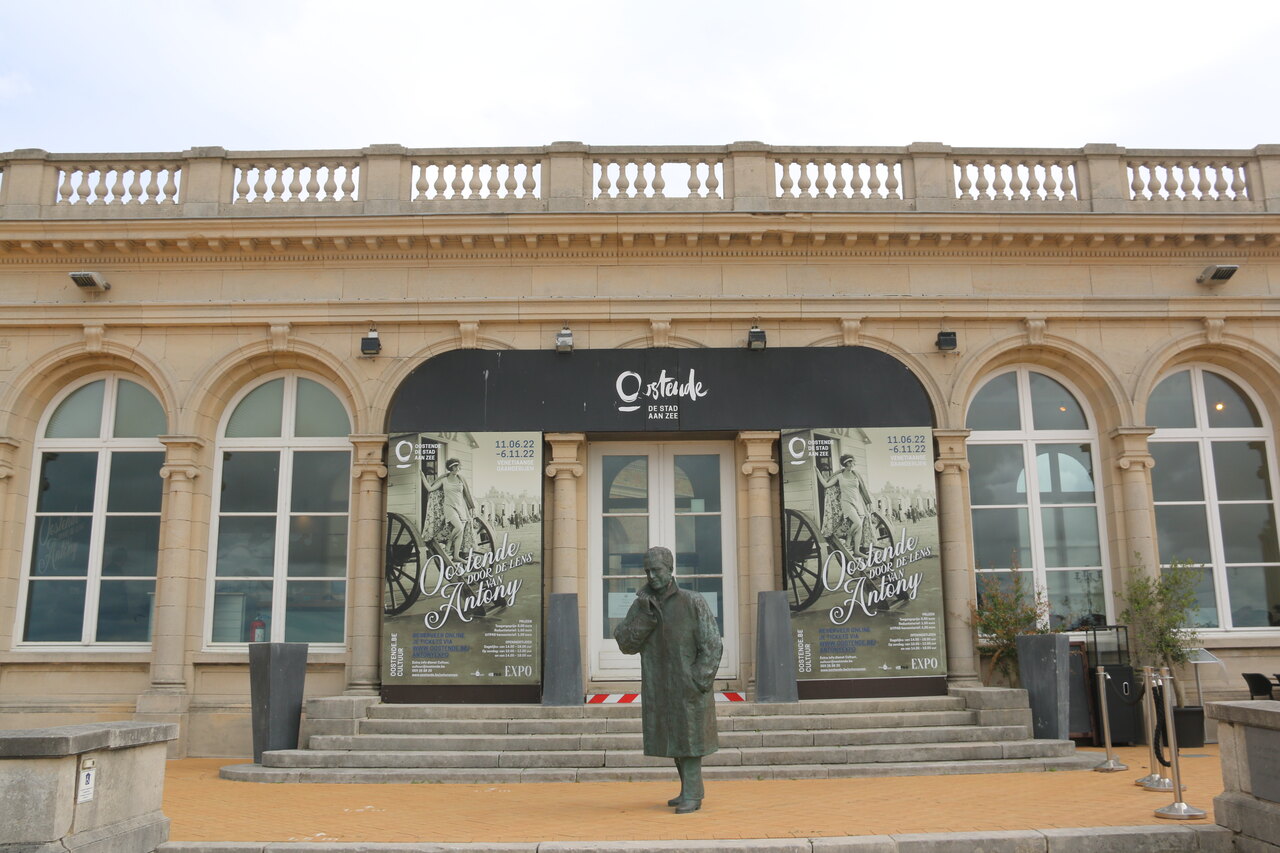
The priest whom Ostend called the father of the fishermen, and the country’s first chaplain at sea. Antony’s photographs of his funeral procession and pieces from his estate are shown for the first time, among them a lifebuoy from the training ship that bore his name.
Three films by Guillaume Bijl and Jean Strijckers beside photographs: a staged portrait of Ensor passed off as authentic, and a 1958 reel of Ostend shot by an academy student.
Graffiti before it became street art: a route through the dark fort after an invented writer, a metro carriage under tags, and a wall the visitors write on themselves.
The only collection arranged as one continuous account of art in Belgium: eight thousand works by 1,341 artists, from François Bossuet of 1821 to Luc Tuymans; the museum puts it as “from 1880 to tomorrow”. There is more Spilliaert here than anywhere in the world — a hundred and ten works of its own plus a private collection on long loan since 2020, and that is what people come for.
The museum’s own building on Romestraat has been closed for rebuilding since January 2025 and reopens in 2028; the collection is shown in parts in the Venetian Galleries, so the whole of it cannot be seen at present. The Léon Spilliaert holding — the Ostend seafront and dyke, the night self-portraits; nothing matches it anywhere, and at its core stands Self-portrait with Red Pencil of 1908, Indian ink, gouache and pastel on paper, 85 × 69 cm, inv. SM000005. James Ensor and the circle of Les XX (Willy Finch). Constant Permeke, Jean Brusselmans, Frits Van den Berghe — Flemish expressionism. Paul Delvaux, Georges Vantongerloo, Roger Raveel, Luc Tuymans. The oldest work is François Bossuet’s The Sawmills at Slijkens near Ostend, 1821.
Venetian Galleries (Venetiaanse Gaanderijen), Parijsstraat 2, at the corner of the sea dyke ··
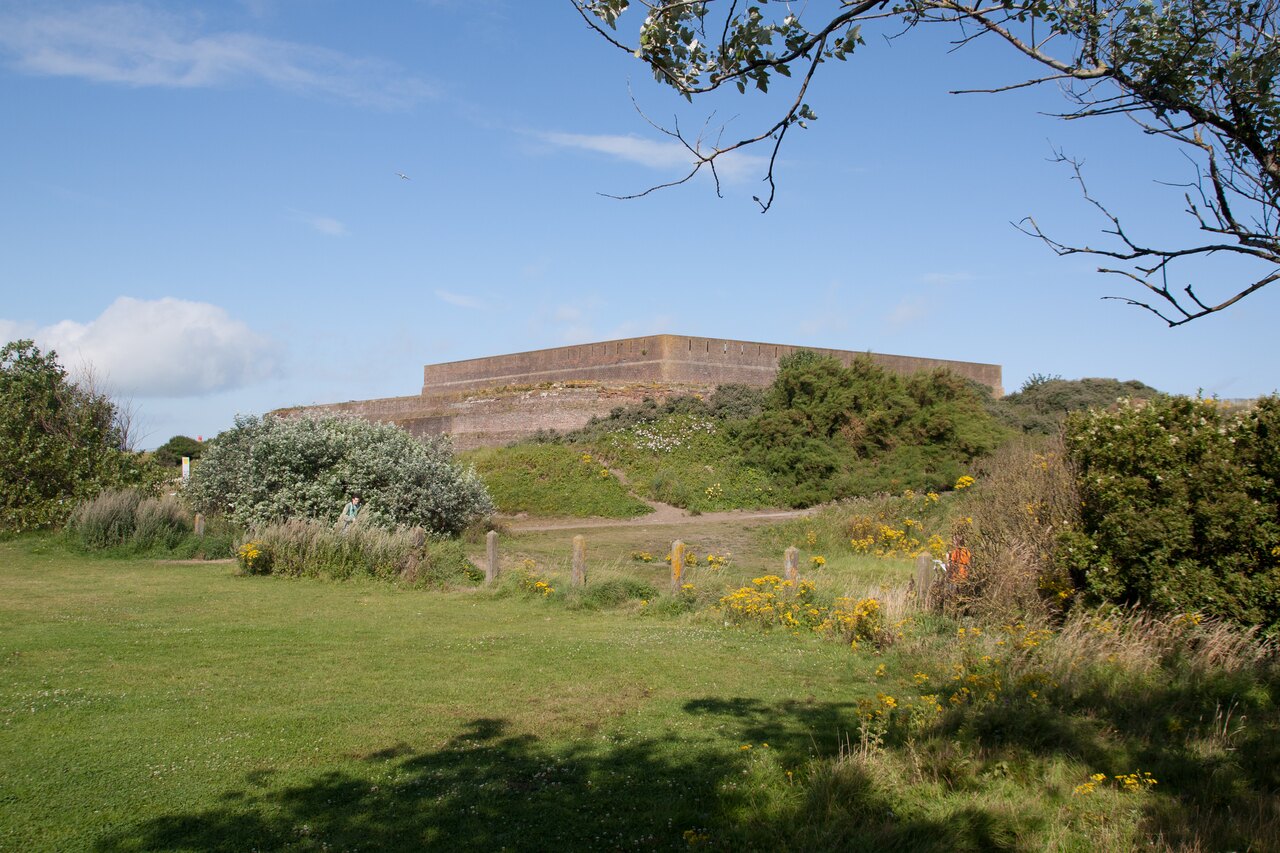
A five-sided tower fort of 1811, of the tours et redoutes modèle 1811 type: five walls of 27.4 metres, brickwork 2.65 metres thick, more than eight million bricks, the foundation pit dug by Spanish prisoners of war and conscripted local builders. The fort saw neither siege nor action: Napoleon’s star set before it was needed, and so it came through whole. It did not stand empty, though. In the First World War the Germans made it the artillery’s assembly quarters, put the Hindenburg battery behind it and brought in electricity, heating and water; in the Second the fort was taken into the Atlantic Wall. From that first occupation the murals of 1915 remain on its walls, and they are the one thing here that can be called a collection. What is shown now is a story route and temporary exhibitions.
The mural Der Barbar of 1915 by the soldier-artist Heinrich-Otto Pieper (1881–1968), over the chimneypiece: a German knight in armour with his broadsword at a Scot’s throat, and beside him the severed heads of an Italian, a Frenchman, a Japanese, a Senegalese and a Russian — German war propaganda without a fig leaf; next to it an allegorical version of the Bremen Town Musicians. Restored in 1932. The building itself: a pentagon with its north corner to the sea, two tiers of casemates, a dormitory for five hundred soldiers with 96 loopholes, a dry moat ten metres wide and five caponiers.
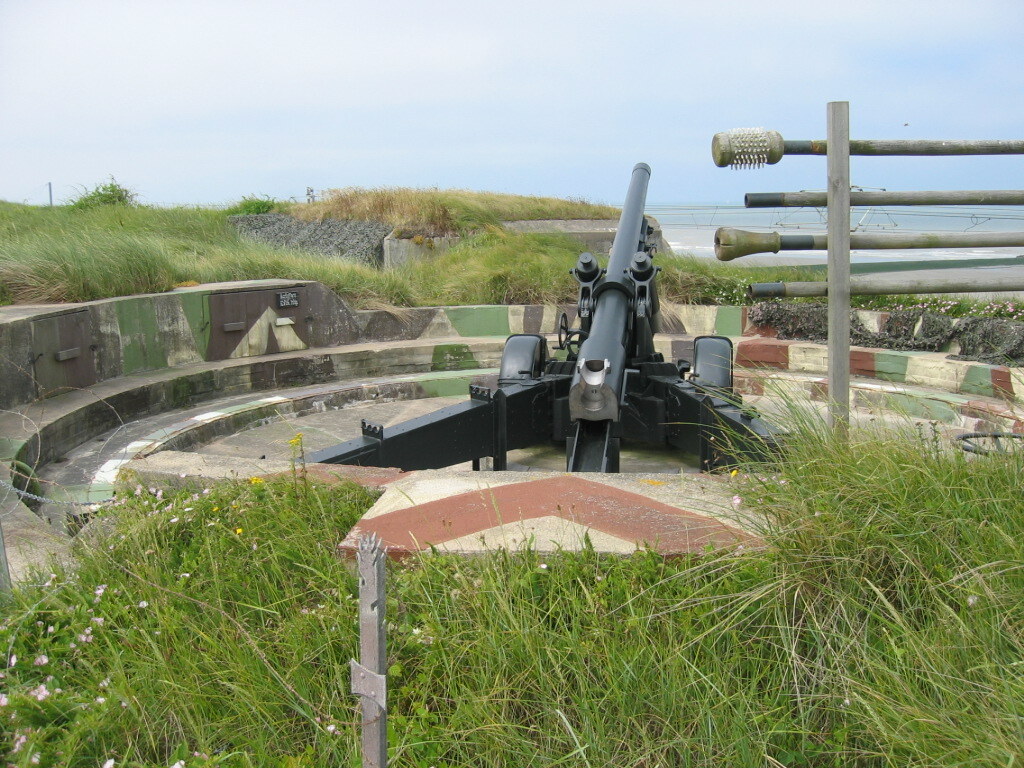
A strip of dune where the works of both world wars have survived side by side. The chief thing here is the Aachen battery of 1915: the only German coastal battery of the First World War of which enough is left to read the whole arrangement of that war’s coastal defence; of the others only scattered concrete boxes remain.
The Aachen battery — begun on 8 January 1915 and in service by the end of that April: the observation post, the gun positions, the communication trenches. The Saltzwedel-neu battery of the Second World War — more than sixty bunkers and underground galleries. Everything has been kept where it stands: nothing was carted in.
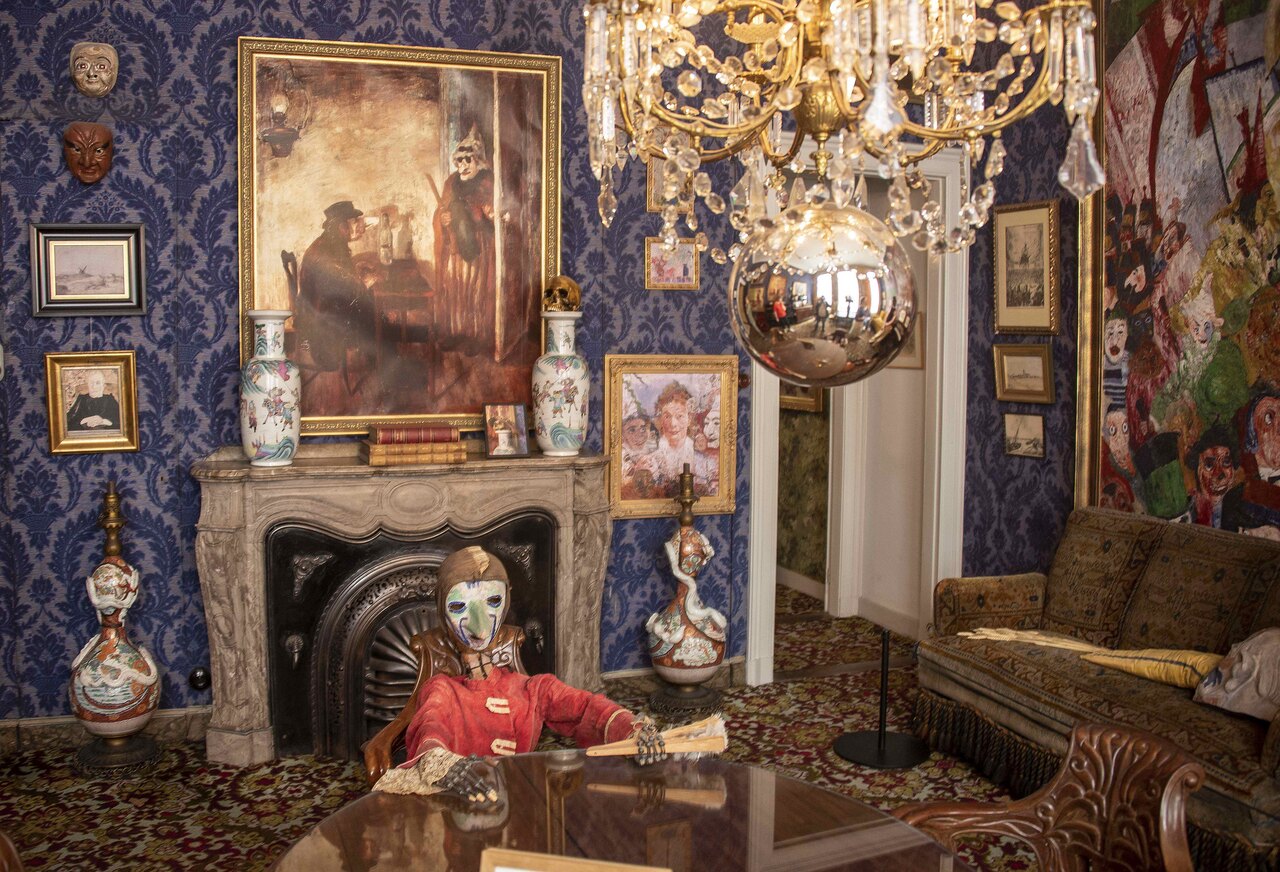
The house where Ensor lived and worked from 1917 until his death in 1949 — the only house-museum of a painter from whom both expressionism and what was later called surrealism are reckoned. There is no collection here: most of the furniture was sold off before the museum opened in 1952, and since 2020 the house has been arranged as an experience centre, five rooms with full-scale reproductions. What is authentic is the shell-and-souvenir shop that came to him from his uncle and aunt and that he left untouched, and the room itself where the Entry of Christ into Brussels hung.
The Blue Salon with a full-scale copy of The Entry of Christ into Brussels in 1889, hung where the original hung; the original itself has been at the Getty since 1987. The shell-and-souvenir shop on the ground floor — the trade of the artist’s aunt and uncle, which he closed but did not clear out. The studio and the living rooms with what furniture survived. Five experience rooms, each on its own theme: Ensor’s world, interiors, his public life, the criticism, masks and strange figures. An exhibition space in the annexed house, where the shows are made with Xavier Tricot.
A planetarium and space science centre on the Duinkerkseweg: there is no collection, and what is shown is knowledge. Here they talk about natural science.
The planetarium dome and the sky shows. The space-flight section. There are no objects of a museum kind.
The house on the Langestraat was built between 1770 and 1780, and from 1834 the royal couple rented it: Louise-Marie, whose lungs were weak, had been ordered sea air by her doctors. Here she died on 11 October 1850, at ten past eight in the morning — the first queen of the Belgians. The room where it happened is furnished as it was then. Leopold II bought the house in 1867 and kept it as a memory of his mother. Beyond that comes the city’s memory — of the fishery and the port, of shipping and of the resort that ate the fishing town. The museum explains Ostend.
The room where Queen Louise-Marie died on 11 October 1850: furnished as it was then, and the bed in it is in all likelihood her deathbed. The house at Langestraat 69, built between 1770 and 1780 and rented by the royal couple from 1834. The halls of the fishery, the port and shipping; posters, papers and photographs of the resort. The temporary exhibitions are made by the De Plate local-history society, which works in the same house.
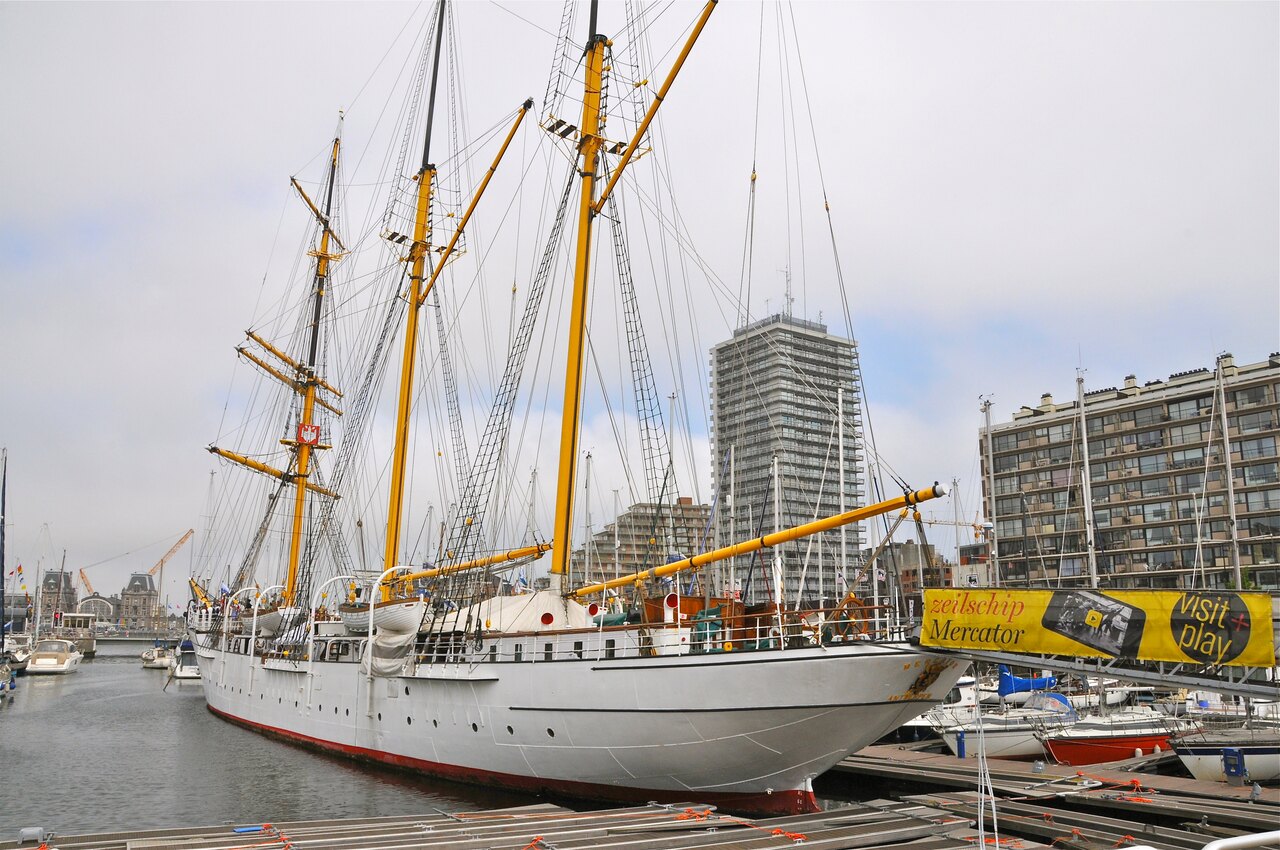
A three-masted barquentine of 1932, built at Leith to the design of the polar explorer Adrien de Gerlache as the training ship of the Belgian merchant fleet — a protected monument and probably the best-known ship in the country. Twenty-eight years of service brought fifty-four voyages and only two masters; since 1960 she has lain in the Ostend marina. The ship has no collection. What the Mercator is remembered for is no longer aboard: of the two moai brought from Easter Island, the Belgian one — Pou Hakanononga, six tonnes of andesite — stands in the Cinquantenaire in Brussels, the second went to the French, and the remains of Father Damien have long been at Leuven.
The ship herself, of 1932: fifteen sails of 1,600 square metres in all, the deck, the cadets’ quarters, the officers’ cabins, the chart room. The ship’s operating room, which served as a mortuary chapel when the Mercator carried the remains of Father Damien from New Zealand to Antwerp in 1936. The memory of the seventh voyage of 1934–1935, from which she brought back the Franco-Belgian Easter Island expedition and two moai.
Jachthaven, Jan Piersplein ··
· No. 86
Our rating scale
The rating here is our own — the judgement of those who compile this catalogue. It speaks of what a museum is worth coming for: where there is a collection, of the collection; where there is none, of the building, the ensemble or the monument and of what is shown in their rooms. Neither a queue in the street nor a loud name enters into it.
world-class
In the same rank as the world's leading museums.
outstanding
Worth a visit made for its own sake.
significant
There is something here worth coming for.
for enthusiasts
It answers those who come for the subject itself.
niche
Valued by a narrow circle and unrecognised beyond it.
A distinction apart
underrated
Worth more than its reputation: fewer people know it than it deserves
one of a kind
There is no counterpart — not in the country, not anywhere
read first
Without reading beforehand it reads as ornament; with it, the whole thing opens
quiet here
No crowds: you can look at your own pace and on your own
How we keep this list
Checked on 19 August 2026 — against museum sites and open sources. Each entry carries its own date and its own note of what it was checked against. A price we could not confirm we mark as unconfirmed; the previous one does not stay in the entry.
How long — for the most important things, along our minimum route. The café, the shop and the queue at the cloakroom are not counted. Going round the whole museum almost always takes longer.
The photographs are taken from Wikimedia Commons under free licences; the author and the licence stand under each.
18 May — International Museum Day, kept since 1977; on the night of 17 to 18 May, the Night of Museums. On those days museums keep a special timetable and admission is often free.
If we got it wrong
Every figure and date on these pages has been checked by us. Write to us if a museum has changed its hours or its prices, if a link has died, or if a museum is missing from the list. We will correct it and set a new date of checking.