Your browser is older than this page. The catalogue still reads here: the list, the filter and the cards all work. Your browser will mark filter choices with plain checkboxes, as best it can. Update your browser to see the page as it was built.
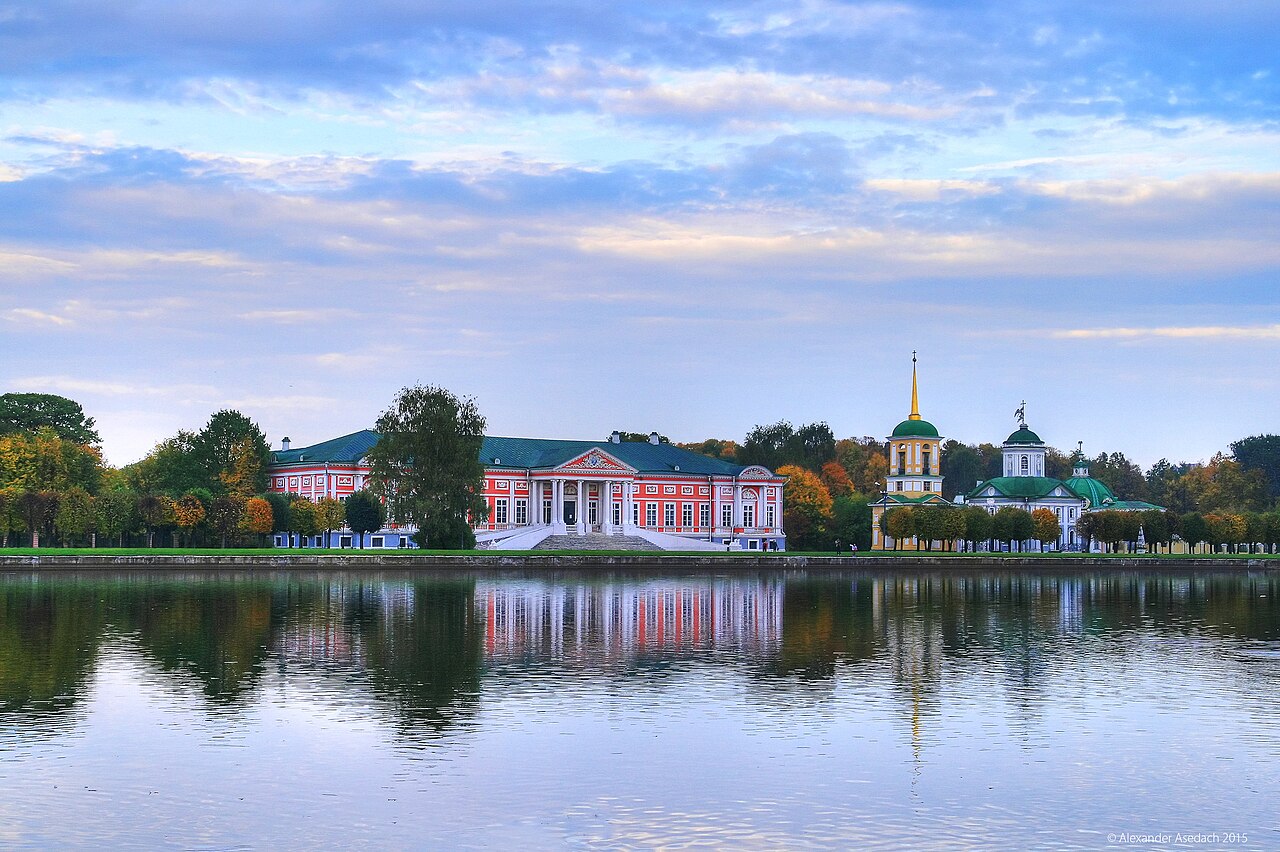
⤢In the photograph, the museum building: Kuskovo · Asedach Alexander, CC BY 3.0 ·Wikimedia Commons
Praskovya Kovalyova-Zhemchugova: daughter of a serf blacksmith, singer of the Sheremetev theatre, later the wife of Nikolai Petrovich Sheremetev. Portraits of different years and things from her rooms; a summer show in the palace.
For the seventy-fifth year of Viktor Neplyuev, chief artist of the Gzhel works from 1984 to 1989. Small genre figures in series: porcelain with underglaze painting, made by a man who knows the limits of the craft from inside.
Allegory as the language of the eighteenth century: what the figures meant that Pyotr Borisovich Sheremetev ordered for the palace and the park. A small show in the Portrait Room, and the key to what stands along the avenues at Kuskovo.
Danish porcelain from the last quarter of the eighteenth century to the second half of the twentieth — a monographic project the museum has never attempted before. The core was gathered by the Museum of Ceramics from the 1920s, when the things of Maria Fyodorovna, the Danish princess Dagmar, were handed over from the Armoury. In the Great Stone Orangery.
The plant world of the estate in the second half of the eighteenth and the early nineteenth century: what the Kuskovo orangeries and parks were proud of under Pyotr Borisovich and Nikolai Petrovich Sheremetev. Beside it, drawings and applied art of a time when artists took botanical atlases for their model. In the loggia of the Italian House.
For the seventy-fifth year since the first Novgorod letter, found on 26 July 1951 in the Nerevsky dig. More than 1250 have been found since; among them the school exercises of the boy Onfim, with drawings that have no equal in medieval Europe. What the Vindolanda tablets are to Roman Britain, these are to medieval Rus — the writing of ordinary people, kept by wet ground. In the State Rooms, one month only.
A century of the country’s largest photographic service, which shot the news on the day it happened. Shown in two spaces of the Historical Museum: the Resurrection Gate and the Artillery Yard.
A hundred artists, designers and makers from across Russia, chosen by the project’s curator. This year’s theme is the image of the future held by those who work with the inheritance of their forebears. In the exhibition complex on Revolution Square.