Your browser is older than this page. The catalogue still reads here: the list, the filter and the cards all work. Your browser will mark filter choices with plain checkboxes, as best it can. Update your browser to see the page as it was built.
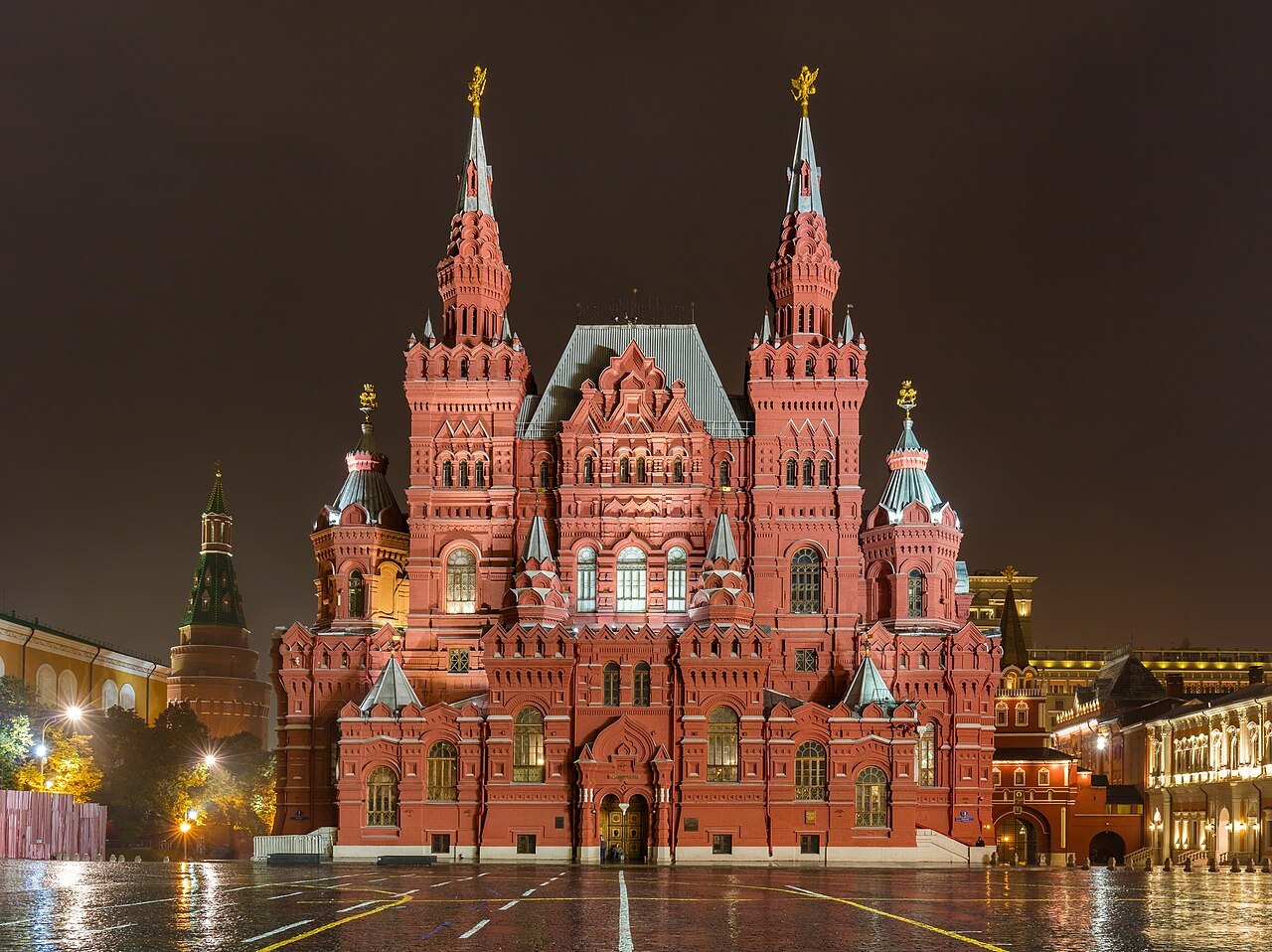
⤢In the photograph, the museum building: The Historical Museum · Diego Delso, CC BY-SA 4.0 ·Wikimedia Commons
A hundred artists, designers and makers from across Russia, chosen by the project’s curator. This year’s theme is the image of the future held by those who work with the inheritance of their forebears. In the exhibition complex on Revolution Square.
For the seventy-fifth year since the first Novgorod letter, found on 26 July 1951 in the Nerevsky dig. More than 1250 have been found since; among them the school exercises of the boy Onfim, with drawings that have no equal in medieval Europe. What the Vindolanda tablets are to Roman Britain, these are to medieval Rus — the writing of ordinary people, kept by wet ground. In the State Rooms, one month only.
A century of the country’s largest photographic service, which shot the news on the day it happened. Shown in two spaces of the Historical Museum: the Resurrection Gate and the Artillery Yard.
Tretyakov bought icons in the nineties, a few years before his death. Of this part of his collecting least is known. Sixty-odd panels of the fifteenth to the nineteenth century, many of them shown for the first time: the Novgorod «Predsta Tsaritsa» of the fifteenth century, the Igorevskaya Virgin of Tenderness from the beginning of the sixteenth, work of the tsars’ and the Stroganov masters, got together with the help of dealers and of men who knew old things. Apart from these it is told how the icons came into the rooms of the Gallery and how they travelled Europe in 1929–1932; second floor of the Engineering Building.
Over seven hundred objects: sculpture and painting of Russian Buddhism, almost none of it shown before. More than a hundred sculptures were conserved for the opening.